
 |
1. Ch'ien / The Creative
|
|
| ䷀ | Nuclear trigrams1 CH’IEN ☰ and CH’IEN ☰ |
|
The ruler of the hexagram is the nine in the fifth place. THE CREATIVE indicates the way of heaven, and the fifth place is the symbol of heaven. THE CREATIVE also indicates the way of the superior man, and the fifth place, as that of the ruler, is his appropriate place. Moreover, the nine in the fifth place possesses the four attributes of firmness, strength, moderation (central position in the upper trigram), and justice (correctness, the yang element being in the yang place). Hence this line possesses the character of heaven in all its perfection.
This hexagram is correlated with the fourth month (May-June), because the light-giving power is then at its zenith.
Miscellaneous Notes on the Hexagrams2
THE CREATIVE is strong.
Strength and firmness constitute the character of this hexagram. Its image is the trigram of heaven doubled, that is, two successive rotations or days. It is made up of positive lines only.
- THE CREATIVE works sublime success,
- Furthering through perseverance.
“Decision” is the equivalent of “Judgment.”]
Commentary on the Decision3
Note. This commentary, no doubt correctly ascribed to Confucius, explains the names of the hexagrams as well as the words appended by King Wên to the hexagram as a whole [the Judgment]. In general, the commentary first explains the name of the hexagram, taking into consideration as occasion demands its character, its image, and its structure. Next it elucidates the words of King Wên, either using the sources just named or else starting from the situation of the ruler of the hexagram or from the change of form that has given rise to the hexagram.
No explanation of the names of the eight primary trigrams is given, because it is assumed that this is known.
In the Chinese, the sentences in this commentary are for the most part rhymed, probably in order to make it easier to remember them. The rhymes have not been reproduced in this translation, because they are of no material significance. However, it is well to remember the circumstance, because it explains much of the abruptness in the style, which is often somewhat forced.
- Great indeed is the sublimity of the Creative, to which all beings owe their beginning and which permeates all heaven.4
The commentary separates the two pairs of attributes given in the Judgment into the four individual attributes of the creative power, whose visible form is heaven. The first attribute is sublimity, which, as the primal cause of all that exists, forms the most important and most inclusive attribute of the Creative. The root meaning of the Chinese word for it—yüan—is literally “head.”
- The clouds pass and the rain does its work, and all individual beings flow into their forms.
This explains the expression “success.” The success of the creative activity is revealed in the gift of water, which causes the germination and sprouting of all living things, The first passage tells of the beginning of all beings in general; here the separate species in their particular forms are instanced. These two passages show the attributes of greatness and success as they manifest themselves in the creative force in nature. The attributes of sublimity and success take shape correspondingly in the creative man, the sage, who is in harmony with the creative power of the godhead.
- Because the holy man is clear as to the end and the beginning, as to the way in which each of the six stages completes itself in its own time, he mounts on them toward heaven as though on six dragons.
The holy man, who understands the mysteries of creation inherent in end and beginning, in death and life, in dissolution and growth, and who understands how these polar opposites condition one another, becomes superior to the limitations of the transitory. For him, the meaning of time is that in it the stages of growth can unfold in a clear sequence. He is mindful at every moment and uses the six stages of growth as if they were six dragons (the image attributed to the individual lines) on which he mounts toward heaven. This is the sublimity and success of the Creative as it shows itself in man.
- The way of the Creative works through change and transformation, so that each thing receives its true nature and destiny and comes into permanent accord with the Great Harmony: this is what furthers and what perseveres.
Here the two other attributes, power to further and power to persevere, are explained in their relation to the creative force in nature. The mode of the Creative is not rest but continuous movement and development. Through this force, all things are gradually changed until they are completely transformed in their manifestations. Thus the seasons and all living beings change and alternate in their course. In this way each thing receives the nature appropriate to it, which, from the divine viewpoint, is called its appointed destiny. This explains the concept of furthering. With each thing thus finding its mode, a great and lasting harmony arises in the world: this is expressed in the concept of perseverance (lastingness and integrity).
- He towers high above the multitude of beings, and all lands are united in peace.
This describes the creative power of the holy man, who makes it possible for everything to attain its appropriate place, thus bringing about peace on earth, when he occupies an eminent ruling place.
In all these explanations there is an evident parallelism between the Creative in nature and the Creative in the world of man. What is said about the Creative in nature is based on the image of heaven symbolized by the hexagram. Heaven shows the strong, ceaseless movement that by its nature causes everything to happen in due time. The words about the Creative in man are based on the position of the ruler of the hexagram, the nine in the fifth place. The “flying dragon in the heavens” is the image of the sublimity and success of the holy ruler. The eminent place held by the holy man, through which peace comes to the world, has its basis in the line, “It furthers one to see the great man.”
Commentary on the Images5
Notes. This commentary, starting with the combination of the two trigrams, deduces from it the situation represented by the hexagram as a whole. With the attributes of the two trigrams as a basis, it then gives advice for correct behavior in this situation.
- The movement of heaven is full of power.
- Thus the superior man makes himself strong and untiring.
The doubling of the trigram Ch’ien, the Creative, gives the image of powerful and constantly repeated movement. The doubling suggests that one draws strength from within oneself, and that after each action a new one follows, without cease.
- b) “Hidden dragon. Do not act.” For the light-giving force is still below.
- It furthers one to see the great man.
- b) “Dragon appearing in the field.” Already the influence of character reaches far.
- At nightfall his mind is still beset with cares.
- Danger. No blame.
- b) “All day long the superior man is creatively active.”
- One goes to and fro on the right path.
- No blame.
- b) “Wavering flight over the depths.” Advance is not a mistake.
- It furthers one to see the great man.
- b) “Flying dragon in the heavens.” This shows the great man at work.
- b) “Arrogant dragon will have cause to repent.” For what is at the full cannot last.
- Good fortune.
- b) All the lines are nines.” It is the nature of heaven not to appear as head.
Commentary on the Words of the Text6
Note. This wing consists of four commentaries on the first two hexagrams in the Book of Changes. Of these, two commentaries deal with the text referring to the hexagram as a whole [the Judgment] and also with the Tuan Chuan [Commentary on the Decision], while all four also elucidate the individual lines. [The commentaries, here designated as a, b, c, and d, contain a different number of sections each.] In the original text the sequence is arranged as follows: a, 1-9; b, 1-7; c, 1-7; d, 1-12. In the presentation below, for the sake of clarity and to avoid unnecessary repetition, the different commentaries pertaining to the respective hexagrams have been arranged together, and are distinguishable by the classifying letters and numerals.
|
Attribute |
Chinese |
Ethical Meaning |
|||||
| Sublimity | Yuan | 元 | Humaneness | ||||
| Success | Heng | 亨 | Social harmony | ||||
| Furtherance | Li | 利 | Justice | ||||
| Perseverance | Zhen | 貞 | Wisdom | ||||
| Explanation in a) commentary | |||||||
| Structural analysis in d) commentary | |||||||
On the Hexagram as a Whole*
On the Lines
The hexagram Ch’ien, THE CREATIVE, occupies a unique position, in that it is uniformly composed of firm lines all having a certain relation to one another. They form a sequence of stages, so that a genetic development in time can be observed. For this reason the judgments attached to the individual lines in this hexagram differ from those pertaining to any of the other hexagrams. In the case of THE CREATIVE, there can be no question of relationships of correspondence and holding together8 between firm and yielding lines, such as determine the character of the other hexagrams; instead, the judgment takes into account solely the relation of the place to the nature of the line.
A characteristic difference between the upper and the lower trigram is to be noted. The lower pictures the development of the character of the creative power; the upper, the development of the external position. The first line and the fourth each mark a beginning. The first line, at the very bottom, still within the realm of earth (first and second places), is designated as hidden, latent. The fourth line, in the lowest place of the upper trigram, likewise indicates a beginning, that is, a changing of position. In themselves, the omens for this line are not favorable. Being firm in a yielding place, the line does not fit its place, and this might well imply a defect somewhere. But because the essence of the Creative is strength, it is explicitly emphasized that there is no mistake. The divergence between the character and the place of the line manifests itself instead in the potentiality of the decision, which is still in doubt.
The middle lines in the two trigrams, the second and the fifth, are extraordinarily favorable. The second line is central and as such is immediately to be conceived as correct. Since it is still in the lower trigram, it shows the inner nature of the great man, who is already becoming known (“in the field”) but does not yet hold an appropriate position. He must see the “great man” in the fifth place, with whom he is connected by kinship of character, and who, as ruler of the whole, can assign him the position suitable to him. These favorable omens hold in regard to the fifth line in a yet more marked degree. The second line shows the strong man in a weak, lowly place; in the fifth line, however, character and position accord. It is a strong line in a strong place, in the sphere of heaven (fifth and sixth places); moreover, it is the ruler of the whole. Therefore it represents the great man whom it is worth while to see. Hence the two central lines carry no warning at all; they are altogether favorable.
It is different in the case of the two end lines, the third and the top line. Of the two, the third has the more favorable position. It is indeed too strong for the place of transition (strength of character intensified by strength of place), so that it would seem that mistakes are to be feared. However, since the whole hexagram deals with creative powers, excess of strength does no harm, for at the place of transition it can be applied to inner preparation for the new conditions. For the top line, however, matters are quite different. Here the end of the whole situation is reached. Although the place is weak, the line character is still strong. This divergence between what one wants to do and what one is able to do leads to remorse, since there is no possible way out.
 |
2. K'un / The Receptive
|
|
| ䷁ | Nuclear trigrams K’UN ☷ and K’UN ☷ |
|
The ruler of the hexagram is the six in the second place. K’un, THE RECEPTIVE, represents the nature of the earth; the number two symbolizes the earth. Furthermore, THE RECEPTIVE demonstrates the nature of the man who serves, and the second place is his station. In addition, this line expresses perfectly the fourfold character of the Receptive: it is yielding, devoted, moderate (i.e., central), and correct (i.e., yielding in a yielding place). For this reason, it is the ruler of the hexagram. The statements made in the Judgment all refer to the nature of an official: “If he tries to lead, he goes astray; but if he follows, he finds guidance. It is favorable to find friends in the west and south, to forego friends in the east and north.”
This hexagram is linked with the tenth month (November-December), when the dark power in nature brings the end of the year.
Miscellaneous Notes
THE RECEPTIVE is yielding.
- THE RECEPTIVE brings about sublime success,
- Furthering through the perseverance of a mare.
- If the superior man undertakes something and tries to lead,
- He goes astray;
- But if he follows, he finds guidance.
- It is favorable to find friends in the west and south,
- To forego friends in the east and north.
- Quiet perseverance brings good fortune.
Commentary on the Decision
- Perfect indeed is the sublimity of the Receptive. All beings owe their birth to it, because it receives the heavenly with devotion.
This is the explanation of the word “sublime” in the Judgment. The greatness of the Receptive is characterized as perfect. That which attains the ideal is perfect. This means that the Receptive is dependent upon the Creative. While the Creative is the generating principle, to which all beings owe their beginning, because the soul comes from it, the Receptive is that which brings to birth, that which takes the seed of the heavenly into itself and gives to beings their bodily form.
- The Receptive in its riches carries all things. Its nature is in harmony with the boundless. It embraces everything in its breadth and illumines everything in its greatness. Through it, all individual beings attain success.
This is the explanation of the word “success” in the Judgment. Here also there is the contrasting complement to the Creative. While the Creative shields things—that is, covers them from above—the Receptive carries them, like a foundation that endures forever. Infinite accord with the Creative is its essence. This produces its success. The movement of the Creative is a direct forward movement, and its resting state is standstill; the movement of the Receptive is an opening out, and in its resting state it is closed. In the resting, closed state, it embraces all things as though in a vast womb. In the state of movement, of opening, it allows the divine light to enter, and by means of this light illuminates everything. This is the source of its success, which shows itself in the success of living beings. While the success of the Creative hes in the fact that individual beings receive their specific forms, the success of the Receptive causes them to thrive and unfold.
- A mare belongs to the creatures of the earth; she roams the earth without bound. Yielding, devoted, furthering through perseverance: thus the superior man has a direction for his way of life.
While the Creative is symbolized by the dragon flying in the heavens, the Receptive is symbolized by the mare (combining strength and devotion) coursing over the earth. Being yielding and devoted must not exclude strength, for strength is necessary to the Receptive if it is to be the helper of the Creative. This strength is expressed in the words, “furthering through perseverance,” appearing in the commentary as the model for the way of life of the superior man. (The punctuation of the commentary deviates from that of the Judgment. Because of the rhyme, the commentary requires the literal translation, “Furthering through perseverance. Thus the superior man has somewhere to go.” In the Judgment, on the other hand, most interpreters make the last words a dependent clause linked with what follows, and the sentence reads: “If the superior man undertakes something … he goes astray.”1)
- Taking the lead brings confusion because one loses his way. Following with devotion—thus does one attain his permanent place.
- In the west and south one finds friends, so that he proceeds with people of his own kind. In the east and north one must do without friends, so that he finally attains good fortune.
If the Receptive were to push ahead on its own initiative, it would deviate from its natural character and miss the way. By submitting to and following the Creative, it attains its appropriate permanent place.
The west and south, according to King Wên’s arrangement, are the region in which the feminine trigrams are placed. Here K’un is in the midst of the daughters. But the masculine trigrams (Ch’ien and the sons) are in the east and north, so that the Receptive in this region is alone. But the very fact that it is alone with the Creative is to its advantage. Thus the earth must be alone with heaven, the official must serve only the ruler, the wife must cleave only to the husband.
- The good fortune of rest and perseverance depends on our being in accord with the boundless nature of the earth.
The earth is still. It does not act of itself but is constantly receptive to the influences of heaven. Thus its life becomes inexhaustible and eternal. Man likewise attains eternity if he does not strive vaingloriously to achieve everything of his own strength but quietly keeps himself receptive to the impulses flowing to him from the creative forces.
- The earth’s condition is receptive devotion.
- Thus the superior man who has breadth of character
- Carries the outer world.
Heaven moves with power; therefore it is said of it that “it moves.” The earth completes within the form; hence, in reference to it, one says “condition.” Earth is doubled, indicating massiveness, which is necessary in order that it may dedicate itself without forfeiting its nature. Thus man too must possess inner strength, weight of character, and breadth of view, that he may endure the world without being swayed by it.
- Solid ice is not far off.
When there is hoarfrost underfoot,
The dark [power] begins to grow rigid.
If this continues,
Solid ice results
- b) “When there is hoarfrost underfoot, solid ice is not far off.” When the dark power begins to grow rigid and continues in this way, things reach the point of solid ice.2
- Without purpose,
- Yet nothing remains unfurthered.
- b) The movement of the six in the second place3 is straight and, because of this, square.
- “Without purpose, yet nothing remains unfurthered”: for in the nature of the earth lies the light.
- One is able to remain persevering.
- If by chance you are in the service of a king,
- Seek not works, but bring to completion.
- b) “Hidden lines. One is able to remain persevering.” One must let them shine forth at the right time.
- “If by chance you are in the service of a king. …”4 This shows that the light of wisdom is great.
- b) “A tied-up sack. No blame.” Through caution one remains free of harm.
- b) “A yellow lower garment brings supreme good fortune.” Beauty is within.
- Their blood is black and yellow.
- b) “Dragons fight in the meadow.” The way comes to an end.
- b) “Lasting perseverance”: it ends in great things.
Commentary on the Words of the Text
In contrast to the considerable number of commentaries on THE CREATIVE comprised in the Wên Yen, there is only one on THE RECEPTIVE.
On the Hexagram as a Whole
- The Receptive is altogether yielding, yet firm in its movement. It is altogether still, yet in its nature square.
The mare is yielding, yet strong. So likewise is the Receptive, for only in this way can it be the peer of the Creative. It is altogether still within, because wholly dependent, yet it is bound immutably to definite laws in its manifestations—the bringing to birth of the different species. “Firm in movement” is the explanation of the text words “sublime success.” “Still, yet square” is the explanation of the text words “perseverance furthers.”
- “If he follows, he finds guidance,” and thus obtains something enduring.
- “It embraces everything,” and its power to transform is light-giving.
- The way of the Receptive—how devoted it is! It receives heaven into itself and acts in its own time.
- A house that heaps good upon good is sure to have an abundance of blessings. A house that heaps evil upon evil is sure to have an abundance of ills. Where a servant murders his master, where a son murders his father, the causes do not lie between the morning and evening of one day. It took a long time for things to go so far. It came about because things that should have been stopped were not stopped soon enough.
- In the Book of Changes it is said: ““When there is hoarfrost underfoot, solid ice is not far off.” This shows how far things go when they are allowed to run on.
- Straightness means righting things; squareness means fulfillment of duty. The superior man is serious, in order to make his inner life straight; he does his duty, in order to make his outer life square. Where seriousness and fulfillment of duty stand firm, character will not become one-sided.
- “Straight, square, great. Without purpose, yet nothing remains unfurthered”: because one is never in doubt as to what one has to do.
- The dark force possesses beauty but veils it. So must a man be when entering the service of a king. He must avoid laying claim to the completed work. This is the way of the earth, the way of the wife, the way of one who serves. It is the way of the earth to make no display of completed work but rather to bring everything to completion vicariously.
- When heaven and earth are creating in change and transformation, all plants and trees flourish; but when heaven and earth close, the able man withdraws into the dark.
- In the Book of Changes it is said: “A tied-up sack. No blame, no praise.” This counsels caution.
- The superior man is yellow and moderate; thus he makes his influence felt in the outer world through reason.
- He seeks the right place for himself and dwells in the essential.
- His beauty is within, but it gives freedom to his imbs and expresses itself in his works. This is the perfection of beauty.
- When the dark seeks to equal the light principle, there is certain to be a struggle. Lest one think that nothing of the light remains, the dragon is mentioned. But to make clear that there is no deviation from their kind,5 blood is also mentioned. Black and yellow are heaven and earth in confusion. Heaven is black and earth yellow.
These sentences are amplifications of the Commentary on the Decision. The reference here is to the movement of the Receptive, which corresponds with the seasons of summer and autumn (south and west). At these times the Receptive is with “friends,” that is, obedient to the laws of heaven: it is giving life to all varieties of beings, each according to its kind—so sharing the eternity of heaven, embracing all things and bringing them to maturity, and thus in bright light showing its power to transform them.
These two activities correspond with winter and spring (north and east). The reference is to the solitary union with the Creative, the receiving of the seed, and its quiet ripening to birth.
The comments on THE RECEPTIVE are based on the character of the six in the second place, the ruler of the hexagram, just as the comments on THE CREATIVE are based on the nine in the fifth place in that hexagram.
On the Lines
See Book I, 1. Ch’ien / The Creative, n. 1.]
Here, in contrast to the relationships in the hexagram of THE CREATIVE, the single lines do not have a developmental relation to one another, but stand side by side without interrelation. Each line represents a separate situation. This is in accord with the nature of the two hexagrams. THE CREATIVE represents time, producing sequence; THE RECEPTIVE represents space, which indicates juxtaposition.
With respect to the individual lines, the following is to be noted. The first and the top line, i.e., the two outside places, are unfavorable. The inner, not the outer place, is proper to the Receptive. The first line shows the dark principle taking the initiative (cf. hexagram 44, Kou, COMING TO MEET); this means danger. Therefore the dark principle is represented as something objective that must be opposed at the right time. In the top place, the dark principle arrogates leadership to itself and enters into rivalry with the light principle. Here also it is represented objectively as the thing fought against (cf. hexagram 43, Kuai, BREAK‑THROUGH); for these two situations are not in harmony with the nature of a superior man, and the Book of Changes is written only for superior men. Hence whatever is inferior is in every case something external or objective.
The middle lines of the primary trigrams, being central, are favorable. But in contrast to the situation in Ch’ien, the ruler here is in the second place instead of the fifth, for it is the nature of the Receptive to be below. Therefore we are here shown the way of the earth, of material, spatial nature, in which everything acts spontaneously. The fifth place shows modesty in human nature. The fact that garments are spoken of points rather to the image of a princess than to that of a prince (cf. hexagram 54, Kuei Mei, THE MARRYING MAIDEN, six in the fifth place).
The two transitional lines are neutral in meaning. The third has the possibility of entering the service of a king, for the weakness of its nature is compensated by the strength of its place. But while the third line of Ch’ien is self-contained, the third line of K’un is self-effacingly concerned only with serving others. The fourth line is too weak (a yielding line in a weak place), and moreover has no relationship with the fifth line. Hence withdrawal into itself is all that is left for it. The heightened passivity of this line corresponds with the heightened activity of the nine in the third place in Ch’ien, just as the third line in K’un corresponds in its undetermined possibilities with the nine in the fourth place of Ch’ien.
 |
3. Chun / Difficulty at the Beginning
|
|
| ䷂ | Nuclear trigrams KÊN ☶ and K’UN ☷ |
|
In Chun the nine at the beginning and the nine in the fifth place are the rulers. These two are the only yang lines in the hexagram. The nine at the beginning is below and means the helper who can quiet the people. The nine in the fifth place is above; it can appoint the helper for the task of quieting the people.
The Sequence of the Hexagrams1
After heaven and earth have come into existence, individual beings develop. It is these individual beings that fill the space between heaven and earth. Hence there follows the hexagram of DIFFICULTY AT THE BEGINNING. Difficulty at the beginning is the same as filling up.
Chun does not really mean filling up. What is meant is the difficulty that arises when heaven and earth, the light and the shadowy principle, have united for the first time, and all beings are begotten and brought to birth. This produces a chaos that fills up everything, hence the idea of filling up is associated with the hexagram Chun.
Miscellaneous Notes
Chun is visible but has not yet lost its dwelling.
The grass has already pushed its tips out of the earth, that is, it is visible but still within the earth, its original dwelling place. The upper nuclear trigram, mountain, indicates visibility; the lower, earth, means dwelling.
- DIFFICULTY AT THE BEGINNING works supreme success,
- Furthering through perseverance.
- Nothing should be undertaken.
- It furthers one to appoint helpers.
Commentary on the Decision
- DIFFICULTY AT THE BEGINNING: the firm and the yielding unite for the first time, and the birth is difficult.
The lower primary trigram is Chên, the eldest son, who comes into being when the light power and the dark power first draw together. This indicates the first union. K’an, the upper primary trigram, means difficulty, danger. This indicates the difficulty of the birth.
- Movement in the midst of danger brings great success and perseverance.
The lower trigram, Chên, is movement; the upper, K’an, is danger. Hence we have movement in the midst of danger. By movement one gets out of the danger. This explains the words of the text: “Supreme success, furthering through perseverance.”
- The movement of thunder and rain fills the atmosphere. If chaos and darkness prevail while heaven is creating, it is fitting to appoint helpers, without being oneself thereby lulled to rest.
This too describes the filling up of the atmosphere with the difficulties that prevail up to the point when a thunderstorm breaks. The final effect, however, is presaged in the fact that the two images are not instanced in the sequence [predicated by the structure of the hexagram] of K’an (clouds) above and Chên (thunder) below; instead, thunder is mentioned first and then the clouds, dissolved, are spoken of as rain.
Just as in a storm, thunder and darkening clouds precede release, so in the affairs of men a chaotic time precedes a period of order. At such a time a ruler entrusted with bringing order out of chaos needs efficient helpers. At first, however, the situation remains serious and difficult, and he must not try to rely wholly on others. This saying is suggested by the two rulers of the hexagram. The nine at the beginning indicates the efficient helper who should be appointed in such dangerous times; the nine in the fifth place means that there are still difficulties that preclude yielding to inaction. Because of the precarious conditions, the nine in the fifth place must still await the proper solution and may not yet rest.
- Clouds and thunder:
- The image of DIFFICULTY AT THE BEGINNING.
- Thus the superior man
- Brings order out of confusion.
While in the Commentary on the Decision the sequence is that of thunder and rain, to indicate the end condition brought about by the movement, here clouds and thunder are named in the sequence they follow in the structure of the hexagram. This specifies the condition before the rain, which symbolizes danger (K’an). To overcome it, we must separate and combine, as happens when a thunderstorm breaks—first clouds above and thunder below, then thunder above and rain below.
- It furthers one to remain persevering.
- It furthers one to appoint helpers.
- b) Although hesitation and hindrance still prevail, the aim of the work is nonetheless to carry out what is right. When an eminent man subordinates himself to his inferiors, he wins the hearts of all people.
- Horse and wagon part.
- He is not a robber;
- He wants to woo when the time comes.
- The maiden is chaste,
- She does not pledge herself.
- Ten years—then she pledges herself.
- b) The difficulty of the six in the second place is that it rests upon a rigid line. Pledging herself after ten years means return to the general rule.
- Only loses his way in the forest.
- The superior man understands the signs of the time
- And prefers to desist.
- To go on brings humiliation.
- b) “He hunts deer without the forester,” that is, he desires the game.
- “The superior man understands the signs of the time and prefers to desist. To go on brings humiliation.” It leads to failure.
- Strive for union.
- To go brings good fortune.
- Everything acts to further.
- b) To go only when bidden—this is clarity.
- A little perseverance brings good fortune.
- Great perseverance brings misfortune.
- b) “Difficulties in blessing,” because the benefaction is not yet recognized.
- Bloody tears flow.
- b) “Bloody tears flow.” How could one tarry long in this!
The hexagram as a whole has the character of difficulty at the beginning, and the individual lines represent different single situations at the time of this difficulty. As regards the position of the lines in relation to one another, neither their intrinsic character nor their positions in the hexagram as a whole are to be taken into account; the objective position in each case is all that matters. For instance, taking the hexagram as a whole, the nine in the fifth place and the nine at the beginning are the rulers, the former being the overlord who gives office to the latter as his vassal. But taken individually, the nine at the beginning is to be regarded not as a helper of the nine in the fifth place, but only as a rival—by virtue of its extrinsic position, deflecting the six in the second place, which has a relationship of correspondence with the nine in the fifth place. This rule for evaluating the individual lines is to be borne in mind throughout.
Another idea obtaining throughout the book is that each hexagram signifies a time situation. But the application of the hexagrams depends upon men. Here for example the time of DIFFICULTY AT THE BEGINNING is indicated. The application will vary according to whether it is a ruler, an official, or a private person who is in this time situation. The fundamental lines of direction are of course the same, but they must always be fitted to the individual case.
A survey of the individual lines shows two possible courses at the time of DIFFICULTY AT THE BEGINNING. In the case of some of the lines it is the individual’s own activity, in the case of others it is external events that must overcome the difficulty at the beginning, and where these means of overcoming it fail, misfortune results. The strong places, the first, third, and fifth, represent hindrance due to one’s own activity. The nine at the beginning and the nine in the fifth place are strong, hence the advice appropriate to these places is given: the nine at the beginning needs patience, stability, and helpers; the nine in the fifth place must learn to work gradually, step by step. On the other hand, the six in the third place lacks a directive, and therefore no success is augured for it.
The weak places, the second, fourth, and sixth, must fall back on outside help—“If only something would come along and take care of me!” The six in the second place and the six in the fourth place sooner or later find this help, like a girl who finds a suitor to rescue her. The six at the top, on the other hand, is too far outside and remains isolated, so that the difficulty at the beginning is not overcome. In this case it is advisable to make a complete break and to begin a new situation.
 |
4. Mêng / Youthful Folly
|
|
| ䷃ | Nuclear trigrams K’UN ☷ and CHÊN ☳ |
|
The nine in the second place and the six in the fifth are the rulers. The nine in the second place has a firm and central character, and the six in the fifth corresponds with it. The nine in the second place is in a low position; it is the teacher, capable of teaching others. The six in the fifth place is in a high position; it is able to honor the teacher and thus to teach men through him.
The Sequence
When, after difficulties at the beginning, things have just been born, they are always wrapped at birth in obtuseness. Hence there follows the hexagram of YOUTHFUL FOLLY. For youthful folly means youthful obtuseness. This is the state of things in their youth.
Miscellaneous Notes
YOUTHFUL FOLLY means confusion and subsequent enlightenment.
In early life the various qualities and aptitudes are as yet undifferentiated and undeveloped. Through education everything is differentiated, and clarity takes the place of obtuseness. Obtuseness is symbolized by the inner trigram, abyss, and clarity by the outer trigram, mountain.
- YOUTHFUL FOLLY has success.
- It is not I who seek the young fool;
- The young fool seeks me.
- At the first oracle I inform him.
- If he asks two or three times, it is importunity.
- If he importunes, I give him no information.
- Perseverance furthers.
Commentary on the Decision
- YOUTHFUL FOLLY shows danger at the foot of a mountain. Danger and standstill: this is folly.
- The image of the hexagram, a mountain with a watery abyss in front of it, as well as the attributes of the two primary trigrams, indicating a danger before which one pauses, suggests the idea of folly.
- “Fotiy has success.” One who succeeds hits upon the right time for his undertaking.
- “It is not I who seek the young fool; the young fool seeks me.” The two positions correspond.
- “At the first oracle I answer,” because the position is firm and central.
- “If someone asks two or three times, it is importunity. If he importunes, I give no answer.” To importune is folly.
- To strengthen what is right in a fool is a holy task.
The ruler of the hexagram is the strong second line. It is in the middle of the lower trigram, therefore in a central position. Since the line is strong and central, it meets with success by acting at the right time. It represents a sage in a lowly position, qualified to counsel wisely a youthful and inexperienced ruler. The youthful ruler is represented by the weak fifth line, which stands in the relationship of correspondence to the strong second line. The fifth line, which is weak in a superior place, and the second line, which is strong in an inferior place, together express the fact that the strong teacher does not seek out the young fool; rather, the latter approaches the teacher as one asking a favor. This is the correct relationship in education.
Because the second line is strong and central, it can answer the questions of the fifth, keeping within definite bounds of moderation. But if these bounds are overstepped with importunate questions, the teacher in turn becomes disagreeable toward the pupil by refusing to answer.
The saying in the text, “Perseverance furthers,” is amplified by the final comment, “To strengthen what is right in a fool is a holy task.”
In addition to the second line, the strong line at the top is also occupied with driving out youthful folly, while the remaining four lines represent youthful fools of various kinds. The second line, which is in a central position, represents gentleness, while the strong top line stands for severity.
- A spring wells up at the foot of the mountain:
- The image of YOUTH.
- Thus the superior man fosters his character
- By thoroughness in all that he does.
The spring at the foot of the mountain is still small and in its youth. The superior man derives his course of action from the images of the two trigrams. In his nature he is thoroughgoing, and clear as a mountain spring. Hence he achieves a calmness in the face of danger that emulates the great calmness of a mountain on the edge of an abyss.
- It furthers one to apply discipline.
- The fetters should be removed.
- To go on in this way brings humiliation.
- b) “It furthers one to apply discipline’—that is, in order to give emphasis to the law.
- To know how to take women
- Brings good fortune.
- The son is capable of taking charge of the household.
- b) “The son is capable of taking charge of the household,” for firm and yielding are in union.
- Loses possession of herself.
- Nothing furthers.
- b) One should not take the maiden because her conduct is not in accord with order.
- b) The humiliation of entangled youthful folly comes from the fact that it of all things is furthest from what is real.
- b) The good fortune of the childlike fool comes from his being devoted and gentle.
- It does not further one
- To commit transgressions.
- The only thing that furthers
- Is to prevent transgressions.
- b) “It furthers to prevent transgressions,” for then those above and those below conform to order.
 |
5. Hsü / Waiting (Nourishment)
|
|
| ䷄ | Nuclear trigrams LI ☲ and TUI ☱ |
|
The ruler of the hexagram is the nine in the fifth place. All transactions require patient waiting, and it is particularly essential for a ruler that his plans should be brought to fruition through continuous influence. The remark in the Commentary on the Decision—“Occupies the places of heaven and is central and correct in its behavior”—refers to the nine in the fifth place.
The Sequence
When things are still small, one must not leave them without nourishment. Hence there follows the hexagram Hsü. Hsü means the way to eating and drinking.
The connection between the two meanings of the hexagram—nourishment and waiting—lies in the fact that we must wait to be nourished. Nourishment depends on heaven and the rain. It does not lie within the power of man.
Miscellaneous Notes
WAITING means not advancing.
- WAITING. If you are sincere,
- You have light and success.
- Perseverance brings good fortune.
- It furthers one to cross the great water.
Commentary on the Decision
- WAITING means holding back. Danger lies ahead. Being firm and strong, one does not fall into it. The meaning is that one does not become perplexed or bewildered.
The lower trigram is Ch’ien, whose attribute is strength. The upper trigram is K’an, the abyss, danger; but since we feel secure in our own strength and do not act overhastily, we avoid perplexity.
- “If you are sincere, you have light and success. Perseverance brings good fortune.” For the ruling line occupies the place of heaven and is central and correct in its behavior.
- “It furthers one to cross the great water.” Through progress the work is accomplished.
The fifth line, the ruler of the hexagram, has the sincerity of water, of which it is the symbol (K’an is a watercourse between high banks). This line corresponds in its special quality with the meaning of the trigram Ch’ien, the Creative, heaven. In that it is a firm line in an uneven (i.e., yang) place, its place and character correspond, hence it is correct. Moreover, it is in the middle of the upper primary trigram and therefore central. All of these are relationships of the ruler of the hexagram that point to success. Waiting does not mean giving up an undertaking, however. To defer is not to abandon. Therefore the work is accomplished.
- Clouds rise up to heaven:
- The image of WAITING.
- Thus the superior man eats and drinks,
- Is joyous and of good cheer.
In the heavens, water takes the form of clouds. Once the clouds rise, it will not be long before rain falls. While frequently the second portion of the Image separates the attributes of the two trigrams, in order to show how a given situation can be overcome, we have in this instance an explanation of how to accept and adapt to the situation. Even as rain rises to the heavens, it is preparing to fall—whereby all life is nourished and refreshed. The superior man acts in accordance with this, and so masters the second meaning of the hexagram, for Hsü signifies nourishment as well as waiting. Further, the two nuclear trigrams—Li, clarity, and Tui, pleasure, joyousness—also play a part.
- It furthers one to abide in what endures.
- No blame.
- b) “Waiting in the meadow.” One does not seek out difficulties overhastily.
- “It furthers one to abide in what endures. No blame.” One has not abandoned the general ground.
- There is some gossip.
- The end brings good fortune.
- b) “Waiting on the sand.” One is calm, for the line is central. Although this leads to some gossip, the end brings good fortune.
- Brings about the arrival of the enemy.
- b) “Waiting in the mud.” The misfortune is outside.1
- “Brings about the arrival of the enemy.” Seriousness and caution prevent defeat.
- Get out of the pit.
- b) “Waiting in blood.” He is yielding and obeys.
- Perseverance brings good fortune.
- b) “Meat and drink. Perseverance brings good fortune,” because of the central and correct character.
- Three uninvited guests arrive.
- Honor them, and in the end there will be good fortune.
- b) “Uninvited guests arrive. If they are honored, in the end there will be good fortune.” Although the line is not in its proper place, at least no great mistake is made.
The situation revealed in WAITING is one in which a strong, firm nature is faced with danger. What is required of the individual here is restraint. He must await the proper time; he must be yielding and remain calm. If he does not weigh the time conditions sufficiently and presses forward, ruthless, angry, and restless, he will certainly meet defeat. The nine at the beginning is still far from danger; hence if one holds to lasting things, one can avoid mistakes. The nine in the second place is approaching closer to danger, but it too can ultimately attain good fortune by yielding and by keeping to the middle way. The nine in the third place is actually under threat of danger, therefore it is said: “Seriousness and caution prevent defeat.” The six in the fourth place has been overtaken by danger, but because it is yielding and peaceful, it gets out of the pit again. The six at the top is at the peak point of danger, but through deference it too finally attains good fortune. Thus during a time of waiting, self-control and deference are the means of avoiding harm. The significance of the time of danger is great.
 |
6. Sung / Conflict
|
|
| ䷅ | Nuclear trigrams SUN ☴ and LI ☲ |
|
The ruler of the hexagram is the nine in the fifth place. All the other lines represent persons quarreling, and the nine in the fifth place stands for the person who overhears the quarrel. This is what is referred to by the following sentence from the Commentary on the Decision: “ ‘It furthers one to see the great man’: thus his central and correct position is honored.”
The Sequence
Over meat and drink, there is certain to be conflict. Hence there follows the hexagram of CONFLICT.
Miscellaneous Notes
CONFLICT means not to love.
- CONFLICT. You are sincere
- And are being obstructed.
- A cautious halt halfway brings good fortune.
- Going through to the end brings misfortune.
- It furthers one to see the great man.
- It does not further one to cross the great water.
Commentary on the Decision
- CONFLICT: strength is above, danger below. Danger and strength produce conflict.
- “The contender is sincere and is being obstructed.” The firm comes and attains the middle.
- “Going through to the end brings misfortune.” A conflict must not be allowed to become permanent.
- “It furthers one to see the great man”: thus his central and correct position is honored.
- “It does not further one to cross the great water,” for this would lead one into the abyss.
The name of the hexagram of CONFLICT is derived from the attributes of the two trigrams Ch’ien, strength, and K’an, danger. When strength is above and cunning below, conflict is sure to arise. Similarly, a person who is inwardly cunning and outwardly strong inclines to conflict with others.
The contender, the second line, is sincere and feels himself obstructed. He is in the inner trigram, and therefore it is said, “He comes.” Because the line is strong and occupies the center, it suggests sincerity, for it makes the middle “sound.” It is obstructed because it is inclosed between the two yin lines. The great man is the central and correct line in the fifth place. The judge who must render the decision abides outside the dangerous situation. He can render a just decision only by remaining impartial. The abyss into which one would fall by crossing the great water is indicated by the trigram K’an, danger. Crossing of the great water is suggested by the fact that the nuclear trigram Sun, wood, is over the lower primary trigram K’an, water.
Structurally, this hexagram is the inverse of the preceding one: hence we have conflict here, forbearance there. Although the time meaning of the hexagram is that of conflict, it nevertheless teaches at every turn that conflict should be avoided.
- Heaven and water go their opposite ways:
- The image of CONFLICT.
- Thus in all his transactions the superior man
- Carefully considers the beginning.
The movement of the upper trigram, heaven, goes upward, that of the lower, water, goes downward; thus the two draw farther and farther apart, and create conflict. To avoid conflict, all transactions (nuclear trigram Sun, work, undertaking) must be well considered at the beginning (K’an means being concerned, and the nuclear trigram Li means clarity; Ch’ien is the beginning of all things).
- There is a little gossip.
- In the end, good fortune comes.
- b) Not perpetuating the affair: one must not prolong the conflict.
- Although “there is a little gossip,” the matter is finally decided clearly.
- One returns home, gives way.
- The people of his town,
- Three hundred households,
- Remain free of guilt.
- b) “One cannot engage in conflict: one returns home, gives way.” Thus one escapes. To contend from a lowly place with someone above brings self-incurred suffering.
- Danger. In the end good fortune comes.
- If by chance you are in the service of a king,
- Seek not works.
- b) “To nourish oneself on ancient virtue.” To obey the one above brings good fortune.
- One turns back and submits to fate,
- Changes one’s attitude,
- And finds peace in perseverance.
- Good fortune.
- b) “One turns back and submits to fate, changes one’s attitude, and finds peace in perseverance.” Thus nothing is lost.
- Brings supreme good fortune.
- b) “To contend before him brings supreme good fortune,” because he is central and correct.
- By the end of a morning
- It will have been snatched away three times.
- b) To attain distinction through conflict is, after all, nothing to command respect.
The nine in the fifth place is the judge, the other lines the contenders, but only the strong lines really contend. The weak lines in the first and the third place hold back. The strong lines in the second and the fourth place are inclined by nature to contend, but cannot quarrel with the judge in the fifth place, and the weak lines below them offer no resistance. Therefore they too withdraw from the conflict in good time. Only the strong top line carries the conflict through to the end and, being in the relationship of correspondence to the weak line in the third place, it triumphs and receives a distinction. Yet the line is analogous to the top line—the “arrogant dragon”—of the hexagram Ch’ien. It will have cause to rue the matter. What is won by force is wrested away by force.
 |
7. Shih / The Army
|
|
| ䷆ | Nuclear trigrams K’UN ☷ and CHÊN ☳ |
|
The rulers of the hexagram are the nine in the second place and the six in the fifth. The former, positioned below, is the strong man, while the latter, being above, has capacity to employ the strong man.
The Sequence
When there is conflict, the masses are sure to rise up. Hence there follows the hexagram of THE ARMY. Army means mass.
Miscellaneous Notes
THE ARMY means mourning.
- THE ARMY. The army needs perseverance
- And a strong man.
- Good fortune without blame.
Commentary on the Decision
- THE ARMY means the masses. Perseverance means discipline.
- The man who can effect discipline through the masses may attain mastery of the world.
- The strong one is central and finds response.
- One does a dangerous thing but finds devotion. The man who thus leads1 the world is followed by the people.
- Good fortune. How could this be a mistake?
This hexagram consists of a mass of yielding lines in the midst of which, in a central although subordinate place, is a single strong line. As a general, not as a ruler, it holds the others under control. From this arises the idea of the mass (the many yielding lines) and of the army—a disciplined multitude. The firm line in the second place finds support, because of correspondence, in the yielding line in the fifth place, the place of the ruler. The danger of the action is indicated by the lower trigram, K’an, and devotion by the upper, K’un.
- In the middle of the earth is water:
- The image of THE ARMY.
- Thus the superior man increases his masses
- By generosity toward the people.
Owing to the compulsory military service customary in antiquity, the supply of soldiers available from the populace was as plentiful as water underground. Hence fostering the people ensured an efficient army.
Great expanse is the attribute of the earth, which also represents the masses. Water stands for serviceability; everything flows toward water.
- If the order is not good, misfortune threatens.
- b) “An army must set forth in proper order.”2 Losing order is unfortunate.
- Good fortune. No blame.
- The king bestows a triple decoration.
- b) “In the midst of the army. Good fortune.” He receives grace from heaven.
- “The king bestows a triple decoration.” He has the welfare of all countries at heart.
- Misfortune.
- b) “Perchance the army carries corpses in the wagon.” This is quite without merit.
- b) “The army retreats. No blame,” for it does not deviate from the usual way.
- It furthers one to catch it.
- Without blame.
- Let the eldest lead the army.
- The younger transports corpses;
- Then perseverance brings misfortune.
- b) “Let the eldest lead the army,” because he is central and correct.
- “The younger transports corpses.” Thus the right man is not put in charge.
- Founds states, vests families with fiefs.
- Inferior people should not be employed.
- b) “The great prince issues commands,” in order to reward merit properly.
- “Inferior people should not be employed,” because they are certain to cause confusion in the country.
 |
8. Pi / Holding Together [Union]
|
|
| ䷇ | Nuclear trigrams KÊN ☶ and K’UN ☷ |
|
The ruler is the nine in the fifth place, for the hexagram is so organized that it contains only one yang line, which occupies the place of honor and holds together with all the yin lines above and below it.
The Sequence
Among the masses there is surely a reason for uniting. Hence there follows the hexagram of HOLDING TOGETHER. Holding together means uniting.
Miscellaneous Notes
HOLDING TOGETHER is something joyous.
- HOLDING TOGETHER brings good fortune.
- Inquire of the oracle once again
- Whether you possess sublimity, constancy, and perseverance;
- Then there is no blame.
- Those who are uncertain gradually join.
- Whoever comes too late
- Meets with misfortune.
Commentary on the Decision
- “HOLDING TOGETHER brings good fortune.” Holding together means mutual help. Those below are devoted and obedient.
This hexagram is the inverse of the preceding one. In the latter the general, the nine in the second place, is the center, while here the center is the nine in the fifth place, the strong, central, and correct prince. All the other lines are yielding, hence the relationship of mutual supplementation and assistance. The yielding lines are the subordinates who obey. Thus the name of the hexagram is explained through its structure.
- “Inquire of the oracle once again whether you possess sublimity, constancy, and perseverance. Then there is no blame,” because of the firmness and central position.
- “Those who are uncertain gradually join.” Above and below are in correspondence.
- “Whoever comes too late meets with misfortune.” His way is at an end.
The line to which everything relates is the prince in the fifth place. All the yielding lines below correspond with it. These five lmes mutually hold together; thereby they attain power, and it is a joyous matter. The only one that stays apart and does not enter into the general union is the six at the top; it insists on going its own way, which leads to nothing.
The hexagram Pi, HOLDING TOGETHER, like the hexagram Ts’ui, GATHERING TOGETHER (45), has the trigram K’un below, but instead of Tui, the lake, here there is K’an, water, above. There is very little difference in meaning between the two hexagrams. “Sublimity, constancy, and perseverance” apply here to the whole hexagram, while in Ts’ui they apply only to the nine in the fifth place.
In the hexagram Mêng, YOUTHFUL FOLLY, there is a reference to “the first oracle,” and the commentary relates it to the firm central line. There K’an, meaning wisdom, darkness, oracle, is below, and the firm line appears in the first trigram. Here it is said: “Inquire of the oracle once again.” The explanation in the commentary points likewise to the firm central line. But here K’an is above, hence the firm line appears in the second, that is, the upper trigram.
- On the earth is water:
- The image of HOLDING TOGETHER.
- Thus the kings of antiquity
- Bestowed the different states as fiefs
- And cultivated friendly relations
- With the feudal lords.
The water on the earth holds together with it. From this fact a double lesson is deduced. As water penetrates and gives moisture to the earth, so should fiefs be distributed from above; and as waters flow together on the earth, so should the organization of society show union.
- This is without blame.
- Truth, like a full earthen bowl:
- Thus in the end
- Good fortune comes from without.
- b) The six at the beginning of HOLDING TOGETHER encounters good fortune from another quarter.
- Perseverance brings good fortune.
- b) “Hold to him inwardly.” Do not lose yourself.
- b) “You hold together with the wrong people.” Is this not injurious?
- Perseverance brings good fortune.
- b) Hold outwardly also to people of worth, in order thus to follow the one above.
- In the hunt the king uses beaters on three sides only
- And foregoes game that runs off in front.
- The citizens need no warning.
- Good fortune.
- b) The good fortune resulting from “manifestation of holding together” inheres in the fact that the position is correct and central.
- Discarding those who resist, accepting the devoted: this is the meaning of “foregoes game that runs off in front.”
- “The citizens need no warning,” for the one above makes them central.
- Misfortune.
- b) “He finds no head for holding together.” Therefore he also fails to find the right end.
 |
9. Hsiao Ch'u / The Taming Power of the Small
|
|
| ䷈ | Nuclear trigrams LI ☲ and TUI ☱ |
|
The six in the fourth place is the constituting ruler of the hexagram, and the nine in the fifth place its governing ruler.1 The six in the fourth place, as the only yin line, restrains the yang lines. The Commentary on the Decision refers to this as follows: “The yielding obtains the decisive place, and those above and those below correspond with it.” The nine in the fifth place accords in attitude with the six in the fourth place, thus to perfect the restraint; hence it is said in the Commentary on the Decision: “The strong is central and its will is done.”
The Sequence
Through holding together, restraint is certain to come about. Hence there follows THE TAMING POWER OF THE SMALL.
Miscellaneous Notes
THE TAMING POWER OF THE SMALL is slight.
This refers to the fact that “the small” here occupies the place of the official. Compare the hexagram Ta Yu, POSSESSION IN GREAT MEASURE (14), in which the small and yielding element is in the ruler’s place.
- THE TAMING POWER OF THE SMALL
- Has success.
- Dense clouds, no rain from our western region.
Commentary on the Decision
- THE TAMING POWER OF THE SMALL. The yielding obtains the decisive place, and those above and those below correspond with it: this is called THE TAMING POWER OF THE SMALL.
- Strong and gentle: the strong is central and its will is done, therefore “success.”
- “Dense clouds, no rain”: the movement goes still further.
- “From our western region”: the influence has not yet set in.
The small, yielding line in the place of the minister holds the decisive place. The firm lines above and below all correspond with it. This structure explains the name of the hexagram. Success is due to the character of the two trigrams, inner strength coupled with outer gentleness. This is the way to achievement. Moreover, the ruler is central and his will is done. The upper trigram Sun, wind, has enough strength to condense the mists rising up from the lower trigram Ch’ien, and so to form clouds, but its strength does not suffice to cause rain. “Western region” is suggested by the original position of Sun, in the west (in the arrangement of the trigrams called the Sequence of Earlier Heaven2; in the Sequence of Later Heaven, Tui, the lake, has the position in the west). When Tui stands over Ch’ien, we have the hexagram of BREAK‑THROUGH (43); in the latter case the water vapor is already condensed and will descend easily. In the present hexagram Tui appears over Ch’ien only as a nuclear trigram, not yet separated from it. In China, the rain clouds always come from the east, from the direction of the sea, not from the west.
- The wind drives across heaven:
- The image of THE TAMING POWER OF THE SMALL.
- Thus the superior man
- Refines the outward aspect of his nature.
The wind penetrates everywhere; this means refinement. The lower trigram is heaven; this means the essence of character. The upper nuclear trigram is Li, form. This refinement of outer form, as contrasted with the carrying out of fundamental principles, is “the small.”
- How could there be blame in this?
- Good fortune.
- b) “Return to the way.” This is something that bodes well.
- Good fortune.
- b) Being drawn into returning derives from the central position. Also, he does not lose himself.
- Man and wife roll their eyes.
- b) When “man and wife roll their eyes,” it is a sign that they cannot keep their house in order.
- No blame.
- b) “If you are sincere … fear gives way,” because the one at the top agrees in attitude.
- You are rich in your neighbor.
- b) “If you are sincere and loyally attached,” you will not be alone in your riches.
- This is due to the lasting effect of character.
- Perseverance brings the woman into danger.
- The moon is nearly full.
- If the superior man persists,
- Misfortune comes.
- b) “The rain comes, there is rest.”’ This is the continuously cumulative effect of character.
- “If the superior man persists, misfortune comes,” for there might be doubts.
 |
10. Lü / Treading [Conduct]
|
|
| ䷉ | Nuclear trigrams SUN ☴ and LI ☲ |
|
The constituting ruler of the hexagram is the six in the third place; the nine in the fifth place is the governing ruler. The six in the third place, as the only yielding line among the numerous firm ones, enters their midst with fear and trembling. Therefore the hexagram bears the name TREADING. Whoever holds an honored place must especially be constantly mindful of danger and fear. Because of this the judgment on the nine in the fifth place couples the idea of danger with perseverance. The Commentary on the Decision says of this line: “Strong, central, and correct, he treads into the place of the ruler and remains without blame.”
The Sequence
When beings are subjected to restraint the mores arise; hence there follows the hexagram of CONDUCT.
Miscellaneous Notes
That which treads does not stay.
Appended Judgments1
TREADING shows the basis of character. It is harmonious and attains its goal. It brings about harmonious conduct.
This hexagram is the inverse of the preceding one. The movement of the two primary trigrams is upward, hence the idea that the one strides behind the other. The youngest daughter walks behind the father.
- TREADING. Treading upon the tail of the tiger.
- It does not bite the man. Success.
Commentary on the Decision
- TREADING: the yielding treads upon the firm. Joyous, and in the relationship of correspondence to the Creative; hence, “Treading upon the tail of the tiger. It does not bite the man. Success.”
- Strong, central, and correct, he treads into the place of the ruler and remains without blame: his light shines bright.
The yielding that treads upon the firm is the lower trigram Tui, which follows the trigram Ch’ien. Thus the forms of the two trigrams explain the name of the hexagram.
Joyousness is the attribute of Tui, the lower trigram, which moves in the same direction as the Creative, the strong; hence the image of treading upon the tail of the tiger (Tui stands in the west, which is symbolized by the tiger). The tiger’s tail is mentioned because the weak line in Tui comes behind the three lines of Ch’ien. In addition, it is to be noted that the yielding line in the lower trigram stands over the two firm lines.
The comment “strong, central, and correct” refers to the ruler of the hexagram, the central line of the upper trigram, Ch’ien; this line occupies a place in the sphere of heaven, hence the place of the ruler. Light is the primary characteristic of the trigram Ch’ien; furthermore, the nuclear trigram Li, whose attribute is light, is contained in the hexagram.
- Heaven above, the lake below:
- The image of TREADING.
- Thus the superior man discriminates between high and low,
- And thereby fortifies the thinking of the people.
Heaven represents what is highest, the lake represents what is lowest; these differences in elevation provide a rule for conduct and mores. Thus the superior man creates in society the differences in rank that correspond with differences in natural endowment, and in this way fortifies the thinking of the people, who are reassured when these differences accord with nature.
- b) The progress of simple conduct follows in solitude its own bent.
- The perseverance of a dark man
- Brings good fortune.
- b) “The perseverance of a dark man brings good fortune.” He is central and does not get confused.
- A lame man is able to tread.
- He treads on the tail of the tiger.
- The tiger bites the man.
- Misfortune.
- Thus does a warrior act on behalf of his great prince.
- b) “A one-eyed man is able to see,” but not enough for clarity.
- “A lame man is able to tread,” but not enough to tread with others.
- The misfortune in the biting of the man is due to the fact that the place is not appropriate.
- “Thus does a warrior act on behalf of his great prince,” because his will is firm.
- Caution and circumspection
- Lead ultimately to good fortune.
- b) “Caution and circumspection lead ultimately to good fortune,” because what is willed is done.
- Perseverance with awareness of danger.
- b) “Resolute conduct. Perseverance with awareness of danger.” The place is correct and appropriate.
- When everything is fulfilled, supreme good fortune comes.
- b) “Supreme good fortune” in the topmost place carries great blessing.
This hexagram means conduct, with the secondary meaning of good manners. In practice, good manners depend on modesty and possession of a gracious ease. The hexagram consists of the Joyous below, related to the Creative, the strong, above. Thus the subordinate is cautious in the service of his superior.
Strange to note, although the hexagram as a whole, owing to the character of its two trigrams, contains the idea that the tiger on whose tail the man treads does not harm him, the line that evokes this idea, the six in the third place, is the very line whose individual fate it is to be bitten by the tiger. The reason is that on the one hand, when the hexagram is considered as a whole, the lower trigram as a unit is taken as joyous and obedient; on the other, however, in the judgment on the individual line, the latter is evaluated according to its unfavorable position, which bodes ill for it. Very often in the Book of Changes one can note such a difference between the judgment pertaining to the hexagram as a whole and that pertaining to an individual line.
 |
11. T'ai / Peace
|
|
| ䷊ | Nuclear trigrams CHÊN ☳ and TUI ☱ |
|
The rulers of the hexagram are the nine in the second place and the six in the fifth. The meaning of the hexagram is that what is above and what is below are united and of one will. The nine in the second place fulfills completely the duties of the official in relation to the ruler, and the six in the fifth place fulfills completely the duties of the ruler in relation to his subordinates. The two lines are the constituting as well as the governing rulers.
The Sequence
Good conduct, then contentment; thus calm prevails. Hence there follows the hexagram of PEACE. Peace means union, interrelation.
The Chinese word t’ai is not easy to translate. It means contentment, rest, peace, in the positive sense of unobstructed, complete union, bringing about a time of flowering and greatness. The movement of the lower trigram Ch’ien tends upward, that of the upper trigram K’un tends downward, and thus they approach each other. This hexagram is correlated with the first month (February-March).
Miscellaneous Notes
The hexagrams of STANDSTILL and PEACE stand in natural opposition to each other.
- PEACE. The small departs,
- The great approaches.
- The great approaches.
Commentary on the Decision
- PEACE. “The small departs, the great approaches. Good fortune. Success.”
- In this way heaven and earth unite, and all beings come into union.
- Upper and lower unite, and they are of one will.
- The light principle is within, the shadowy without; strength is within and devotion without; the superior man is within, the inferior without.
- The way of the superior man is waxing; the way of the inferior man is waning.
Taken as a whole and as one of the “calendar” hexagrams, this hexagram is interpreted with the idea that the strong lines entering from below are mounting, while the weak lines above are withdrawing from the hexagram. Therefore, “The small departs, the great approaches.”
The movement of the two trigrams toward each other gives rise to another interpretation. The lower, ascending trigram is Ch’ien, heaven. The upper, sinking trigram is K’un, the earth. Thus the two primary powers unite, and all things enter upon union and development. This corresponds with the state of things at the beginning of the year.
In terms of the human world, with special reference to two lines—the six in the fifth place representing the prince, and the nine in the second place representing the official—the result is unity between high and low, their wills being directed to a common goal. The positions of the two trigrams—within (below) and without (above)—lead to still another reflection. The yang power is within, the yin power without. This points to a difference in rank between the ruling yang power at the center and the dependent yin power at the periphery; this is further emphasized by the respective attributes of the trigrams, strength and devotion. These relative positions are likewise favorable for both elements.
In relation to the political field, another consideration arises from the difference in value between the superior persons symbolized by the light lines and the inferior persons symbolized by the dark lines. Good men are at the center of power and influence; inferior people are on the outside, subject to the influence of the good. This likewise works for the good of the whole.
The movement of the hexagram as a whole produces finally a victorious ascendancy of the principles of the good man and a withdrawal and defeat of the principles of inferior men.
None of this occurs arbitrarily; it is born of the time. It is the season of spring, both in the year and in history, that is represented by this hexagram.
- Heaven and earth unite: the image of PEACE.
- Thus the ruler
- Divides and completes the course of heaven and earth;
- He furthers and regulates the gifts of heaven and earth,
- And so aids the people.
Human activity must help nature in times of flowering. Nature must be kept within limits, as the earth limits the activities of heaven, in order to regulate excess. On the other hand, nature must be furthered, as heaven furthers the gifts of the earth, in order to make up for deficiencies. In this way the blessings of nature benefit the people. The Chinese word for “aid” means literally “being at the left and the right,” which in turn derives from the fact that the movement of yang is thought of as being toward the right and that of yin toward the left.
- Each according to his kind.
- Undertakings bring good fortune.
- b) “When ribbon grass is pulled up. … Undertakings bring good fortune.” The will is directed outward.
- Fording the river with resolution,
- Not neglecting what is distant,
- Not regarding one’s companions:
- Thus one may manage to walk in the middle.
- b) “Bearing with the uncultured in gentleness … thus one may manage to walk in the middle,” because the light is great.
- No going not followed by a return.
- He who remains persevering in danger
- Is without blame.
- Do not complain about this truth;
- Enjoy the good fortune you still possess.
- b) “No going not followed by a return”: this is the boundary of heaven and earth.
- Together with his neighbor,
- Guileless and sincere.
- b) “He flutters down, not boasting of his wealth”: all of them have lost what is real.
- “Guileless and sincere”: he desires it in the depths of his heart.
- Gives his daughter in marriage.
- This brings blessing
- And supreme good fortune.
- b) “This brings blessing and supreme good fortune,” because he is central in carrying out what he desires.
- Use no army now.
- Make your commands known within your own town.
- Perseverance brings humiliation.
- b) “The wall falls back into the moat.” His plans fall into confusion.
 |
12. P'i / Standstill [Stagnation]
|
|
| ䷋ | Nuclear trigrams SUN ☴ and KÊN ☶ |
|
The rulers of the hexagram are the six in the second place and the nine in the fifth. During standstill, those above are out of union with those below. The saying associated with the six in the second place is: “Standstill brings success.” The line refers to a person who takes refuge in his virtue in order to avoid difficulties. The saying associated with the nine in the fifth place is: “Standstill is giving way.” This line refers to someone who transforms standstill into peace. However, the six in the second place is the ruler having the constituting function in the hexagram, while the nine in the fifth place is the ruler that governs it.
The Sequence
Things cannot remain forever united; hence there follows the hexagram of STANDSTILL.
This hexagram is the inverse of the preceding one. Therefore the movements of the trigrams diverge. The trigram Ch’ien above withdraws always farther upward, and K’un below sinks farther and farther down. The two nuclear trigrams, Sun, gentleness, and Kên, Keeping Still, also characterize the hexagram. These trigrams form the hexagram Ku, WORK ON WHAT HAS BEEN SPOILED (18), and in the latter too have the meaning of standstill. The hexagram P’i is linked with the seventh month (August-September).
Miscellaneous Notes
The hexagrams of STANDSTILL and PEACE are opposed in their natures.
- STANDSTILL. Evil people do not further
- The perseverance of the superior man.
- The great departs; the small approaches.
Commentary on the Decision
- “Evil people of the time of STANDSTILL do not further the perseverance of the superior man. The great departs; the small approaches.”
- Thus heaven and earth do not unite, and all beings fail to achieve union.
- Upper and lower do not unite, and in the world, states go down to ruin.
- The shadowy is within, the light without; weakness is within, firmness without; the inferior is within, the superior without. The way of the inferior is waxing, the way of the superior is waning.
Point for point, these conditions are the opposite of those in the preceding hexagram. Although we are dealing with cosmic conditions, the cause is nevertheless to be sought in the wrong course taken by man. It is man who spoils conditions—aside, naturally, from the regular phenomena of decline occurring in the normal course of life as well as of the year. When heaven and earth are disunited, life in nature stagnates. When those above and those below are disunited, political and social life stagnate. Within, at the center, there should be light; instead, the dark is there, and light is pushed to the outside. Man is inwardly weak and outwardly hard; inferior men are at the center of government, and the superior men are forced to the periphery. All this indicates that the way of the inferior man is on the increase, while that of the superior man is in decrease—just as the dark lines enter the hexagram from below and press upward, and the strong lines withdraw upward.
- Heaven and earth do not unite:
- The image of STANDSTILL.
- Thus the superior man falls back upon his inner worth
- In order to escape the difficulties.
- He does not permit himself to be honored with revenue.
The way to overcome the difficulties of the time of STANDSTILL is indicated in the attributes of the two primary trigrams. K’un means frugality, retrenchment. The three strong lines of the outer trigram Ch’ien, which withdraw, symbolize escape from all the difficulties that arise from the pressing forward of the inferior men. This withdrawal also implies rejection of material rewards. While in the preceding hexagram the gifts of heaven and earth are administered by the superior man, here he stands completely aloof.
- Each according to his kind.
- Perseverance brings good fortune and success.
- b) “When ribbon grass is pulled up. … Perseverance brings good fortune.” The will is directed to the ruler.
- This means good fortune for inferior people.
- The standstill serves to help the great man to attain success.
- b) “The standstill serves to help the great man to attain success.” He does not confuse the masses.
- b) “They bear shame” because the place is not the right one.
- Remains without blame.
- Those of like mind partake of the blessing.
- b) “He who acts at the command of the highest remains without blame.” What is willed is done.
- Good fortune for the great man.
- “What if it should fail, what if it should fail?”
- In this way he ties it to a cluster of mulberry shoots.
- b) The good fortune of the great man consists in the fact that the place is correct and appropriate.
- First standstill, then good fortune.
- b) When the standstill comes to an end, it reverses. One should not wish to make it permanent.
 |
13. Tung Jên / Fellowship with Men
|
|
| ䷌ | Nuclear trigrams CH’IEN ☰ and SUN ☴ |
|
The rulers of the hexagram are the six in the second and the nine in the fifth place. The six in the second place, as the only yin line, is able to maintain fellowship with all the yang lines, and the nine in the fifth place corresponds with it. Therefore the Commentary on the Decision says: “The yielding finds its place, finds the middle, and the Creative corresponds with it.”
The Sequence
Things cannot be at a standstill forever. Hence there follows the hexagram of FELLOWSHIP WITH MEN.
Miscellaneous Notes
Fellowship with men finds love.
The movement of both primary trigrams is upward, hence parallel. In the same way the two nuclear trigrams, Ch’ien and Sun, which together form the hexagram of COMING To MEET (44), indicate fellowship. The lower primary trigram is Li, the sun, fire. Ch’ien, heaven, becomes especially brilliant because fire is given to it.
- FELLOWSHIP WITH MEN in the open.
- Success.
- It furthers one to cross the great water.
- The perseverance of the superior man furthers.
Commentary on the Decision
- FELLOWSHIP WITH MEN. The yielding finds its place, finds the middle, and the Creative corresponds with it: this means fellowship with men.
- FELLOWSHIP WITH MEN means: “Fellowship with men in the open. Success. It furthers one to cross the great water.”
- The Creative acts. Order and clarity, in combination with strength; central, correct, and in the relationship of correspondence: this is the correctness of the superior man. Only the superior man is able to unite the wills of all under heaven.
The second line is the yielding element that finds its place in the middle and with which the Creative corresponds. It is to be taken as the representative of the trigram K’un, which has established itself in the second place of Ch’ien. Therefore this line accords with the nature of the earth and of the official.
The phrase “fellowship with men in the open” is also represented by this line, which stands in the place of the field (cf. the nine in the second place in hexagram 1, THE CREATIVE). The fellowship here is brought about by the official (not by the ruler), by virtue of his character, not by virtue of the authority of his position. The kind of character capable of bringing this about is delineated in the attributes of the two primary trigrams. Order and clarity are attributes of Li, and strength characterizes Ch’ien. First knowledge, then strength—this is the road to culture.
The superior man, even when placed where he serves, fills this position correctly and unselfishly and finds the support he needs in his ruler, the representative of the heavenly principle. The will of men under heaven is represented by Li (which means enlightened will) beneath Ch’ien, heaven.
Crossing of the great water is indicated by the nuclear trigram Sun, which means wood and gives rise to the idea of a ship.
- Heaven together with fire:
- The image of FELLOWSHIP WITH MEN.
- Thus the superior man organizes the clans
- And makes distinctions between things.
Fire has the same nature as heaven, to which it flames up. It is strengthened in this trend by the nuclear trigram Sun, wind. The wind, which blows everywhere, also suggests union and fellowship. The same thought is expressed by the sun in the sky, which shines upon all things equally.
Yet there is one thing in this fellowship that the superior man must not overlook. He must not degrade himself. Hence the necessity of organization and differentiation, which is suggested by the attribute of order in the lower trigram Li.
- No blame.
- b) Going out of the gate for fellowship with men—who would find anything to blame in this?
- Humiliation.
- b) “Fellowship with men in the clan” is the way to humiliation.
- He climbs the high hill in front of it.
- For three years he does not rise up.
- b) “He hides weapons in the thicket” because he had a hard man as opponent.
- “For three years he does not rise up.” How could it be done?
- Good fortune.
- b) “He climbs up on his wall.” The situation means that he can do nothing. His good fortune consists in the fact that he gets into trouble and therefore returns to lawful ways.
- But afterward they laugh.
- After great struggles they succeed in meeting.
- b) The beginning of the men bound in fellowship is central and straight.
- “After great struggles they succeed in meeting,” that is, they are victorious.
- No remorse.
- b) “Fellowship with men in the meadow.” The will is not yet satisfied.
This hexagram embodies the ideal of the universal brotherhood of man, which, however, is not yet attained. Its demand thus points beyond all of the situations of fellowship shown in the hexagram—none of these is wholly satisfactory. None of the individual lines attains the ideal. All seek fellowship on the basis of narrower relationships. For this reason, none of them attains the great success that the hexagram as a whole envisions.
 |
14. Ta Yu / Posession in Great Measure
|
|
| ䷍ | Nuclear trigrams TUI ☱ and CH’IEN ☰ |
|
The ruler of the hexagram is the six in the fifth place. This line is empty and central, occupies an honored place, and is capable of possessing all the yang lines. Therefore it is said in the Commentary on the Decision: “The yielding receives the honored place in the great middle, and upper and lower correspond with it.”
The Sequence
Through FELLOWSHIP WITH MEN things are sure to fall to one’s lot. Hence there follows the hexagram of POSSESSION IN GREAT MEASURE.
Miscellaneous Notes
POSSESSION IN GREAT MEASURE indicates the mass.
The two primary trigrams, Ch’ien and Li, are both ascending, and so are the nuclear trigrams, Ch’ien and Tui. All these circumstances are extremely favorable. This hexagram is the inverse of the preceding one. It is more favorable than FELLOWSHIP WITH MEN, because here the ruler is at the same time in the place of authority, the fifth place.
- POSSESSION IN GREAT MEASURE.
- Supreme success.
Commentary on the Decision
- POSSESSION IN GREAT MEASURE: the yielding receives the honored place in the great middle, and upper and lower correspond with it. This is called POSSESSION IN GREAT MEASURE.
- His character is firm and strong, ordered and clear; it finds correspondence in heaven and moves with the time; hence the words, “Supreme success.”
The yielding element that receives the honored position is the six in the fifth place. As contrasted with the six in the second place in the preceding hexagram, this line occupies the “great” middle; from this vantage, possession of the five strong lines can be organized much better. The official can indeed unite people, but only the prince can possess them. In the preceding hexagram the strong lines stand only in indirect relationship to the prince; here they are directly related. Thus the structure of the hexagram gives rise to the name.
The words of the Judgment are interpreted on the basis of the attributes and structure of the hexagram. Within dwell the firmness and power of Ch’ien; to the outside, the clear and ordered form of Li appears. The six in the fifth place, the ruler to whom everything conforms, modestly conforms on his part with the nine in the second place and finds correspondence there in the center of heaven. Ch’ien, being doubled (lower primary trigram and lower nuclear trigram), indicates the flow of time. The successful execution of measures demands that firm decision dwell within the mind, while the method of execution must be ordered and clear.
- Fire in heaven above:
- The image of POSSESSION IN GREAT MEASURE.
- Thus the superior man curbs evil and furthers good,
- And thereby obeys the benevolent will of heaven.
The sun in heaven, which shines upon everything, is the image of possession in great measure. Suppression of evil is indicated by the trigram Ch’ien, the trigram that metes out judgment, and that fights the evil in living beings. Furthering of the good is indicated by the trigram Li, which clarifies and orders everything. Both are the decree of benevolent heaven (Ch’ien), to which the superior man devotes himself obediently (Li means devotion).
- There is no blame in this.
- If one remains conscious of difficulty,
- One remains without blame.
- b) If the nine at the beginning in POSSESSION IN GREAT MEASURE has no relationships, this is harmful.
- One may undertake something.
- No blame.
- b) “A big wagon for loading.” Accumulating in the middle; thus no harm results.
- A petty man cannot do this.
- b) “A prince offers it to the Son of Heaven.” A petty man harms himself.
- Between himself and his neighbor.
- No blame.
- b) “He makes a difference between himself and his neighbor. No blame.” He is clear, discriminating, and intelligent.
- Has good fortune.
- b) “He whose truth is accessible’: by his trustworthiness he kindles the will of others. The good fortune of his dignity comes from the fact that he acts easily, without prearrangements.
- Good fortune.
- Nothing that does not further.
- b) The place at the top of POossESsSION IN GREAT MEASURE has good fortune. This is because it is blessed by heaven.
 |
15. Ch'ien / Modesty
|
|
| ䷎ | Nuclear trigrams CHÊN ☳ and K’AN ☵ |
|
The ruler of the hexagram is the nine in the third place. It is the only light line in the hexagram; it is in its proper place and stands in the lower trigram. This is the symbol of modesty, therefore the judgment on this line is the same as that on the hexagram as a whole. The commentary often attributes misfortune to third lines, but this one is very favorable.
The Sequence
He who possesses something great must not make it too full; hence there follows the hexagram of MODESTY.
Miscellaneous Notes
Things are easy for the modest person.
The movement of both primary trigrams is downward, but the sinking tendency of the upper trigram is stronger than that of the lower, and in this way the connection between the two remains assured. The lower nuclear trigram sinks, while the upper rises.
Appended Judgments
MODESTY shows the handle of character. MODESTY gives honor and shines forth. MODESTY serves to regulate the mores.
Good character has modesty for a handle; by means of it good character can be grasped and made one’s own. Modesty is ready to honor others, and in so doing shows itself at its best. Modesty is the attitude of mind that underlies sincere observance of the mores.
- MODESTY creates success.
- The superior man carries things through.
Commentary on the Decision
- MODESTY creates success, for it is the way of heaven to shed its influence downward and to create light and radiance. It is the way of the earth to be lowly and to go upward.
- It is the way of heaven to make empty what is full and to give increase to what is modest. It is the way of the earth to change the full and to augment the modest. Spirits and gods bring harm to what is full and prosper what is modest. It is the way of men to hate fullness and to love the modest.
- Modesty that is honored spreads radiance. Modesty that is lowly cannot be ignored. This is the end attained by the superior man.
Here the structure of the hexagram is used to explain the saying that modesty creates success. The nine in the third place is the representative of the yang force, which has sunk down. It brings light and radiance, attributes of the trigram Kên, the mountain. The upper trigram K?’un shows the earth as having moved upward (the nuclear trigram Chên has a rising movement). The law governing the abasing of the proud and the elevation of the modest is set forth in four ways: (1) in heaven: when the sun reaches the zenith, it begins to decline; when the moon is full, it wanes; when dark, it begins to wax; (2) on earth: high mountains become valleys, valleys become hills; water turns toward the heights and wears them down; water turns toward depth and fills it up (the lower nuclear trigram is K’an, water); (3) in the effect of the forces of fate: powerful families draw down destruction upon themselves, modest ones become great; (4) among men: arrogance brings dislike in its train, modesty wins love.
The ultimate cause is never the outside world, which moreover reacts according to fixed laws, but rather man himself. For according to his conduct he draws upon himself good or evil influences. The way to expansion leads through contraction.
- Within the earth, a mountain:
- The image of MODESTY.
- Thus the superior man reduces that which is too much,
- And augments that which is too little.
- He weighs things and makes them equal.
To bring about the conditions set forth by the hexagram, the superior man moves in harmony with the increasing and decreasing movements of the nuclear trigrams. Where the lowly stands (K’un, earth) he ascends (Chên) and augments what is too little. Conversely, where the lofty stands (Kên, mountain) he descends (K’an). Thus he equalizes things.
- May cross the great water.
- Good fortune.
- b) “A superior man modest about his modesty” is lowly in order to guard himself well.
- Perseverance brings good fortune.
- b) “Modesty that comes to expression. Perseverance brings good fortune.” He has it in the depths of his heart.
- Carries things to conclusion.
- Good fortune.
- b) “A superior man of modesty and merit”: all the people obey him.
When a man does not boast of his efforts and does not count his merits a virtue, he is a man of great parts. It means that for all his merits he subordinates himself to others. Noble of nature, reverent in his conduct, the modest man is full of merit, and therefore he is able to maintain his position.
- In movement.
- b) “Nothing that would not further modesty in movement.” He does not overstep the rule.
- It is favorable to attack with force.
- Nothing that would not further.
- b) “It is favorable to attack with force” in order to chastise the disobedient.
- It is favorable to set armies marching
- To chastise one’s own city and one’s country.
- b) “Modesty that comes to expression.” The purpose is not yet attained. One may set armies marching, in order to chastise one’s own city and one’s country.
 |
16. Yü / Enthusiasm
|
|
| ䷏ | Nuclear trigrams K’AN ☵ and KÊN ☶ |
|
The ruler of the hexagram is the nine in the fourth place. It is the only light line, and stands in the place of the minister. This gives the hexagram the meaning of enthusiasm. Therefore it is said in the Commentary on the Decision: “The firm finds correspondence, and its will is done.”
The Sequence
When one possesses something great and is modest, there is sure to be enthusiasm. Hence there follows the hexagram of ENTHUSIASM.
Miscellaneous Notes
ENTHUSIASM leads to inertia.
Appended Judgments
The heroes of old introduced double gates and night watchmen with clappers, in order to deal with robbers. They probably took this from the hexagram of ENTHUSIASM.
Yü means preparation as well as enthusiasm. The upper trigram is movement (Chên), and also the sound of thunder: this suggests the image of the night watchman making his rounds with a clapper and encountering danger (nuclear trigram K’an). The lower nuclear trigram Kên means a closed door.
The two trigrams move in opposite directions. Thunder moves upward, the earth sinks down. Nevertheless, since the upper nuclear trigram K’an indicates downward movement, while the lower, Kên, is motionless, there is a certain coherence of structure. However, the hexagram is not as favorable in outlook as the preceding one, of which it is the inverse.
- ENTHUSIASM. It furthers one to install helpers
- And to set armies marching.
Commentary on the Decision
- ENTHUSIASM. The firm finds correspondence, and its will is done. Devotion to movement: this is ENTHUSIASM.
- Because ENTHUSIASM shows devotion to movement, heaven and earth are at its side. How much the more then is it possible to install helpers and set armies marching!
- Heaven and earth move with devotion, therefore sun and moon do not swerve from their courses, and the four seasons do not err.
- The holy man moves with devotion; therefore fines and punishments become just, and the people obey. Great indeed is the meaning of the time of ENTHUSIASM.
The trigram K’un means mass, hence army. Chên, the upper trigram, is the eldest son, the leader of the masses, hence the idea of the installment of helpers (feudal lords) and of the marching of armies. The commander of the army, whose will awakens enthusiasm and spurs to movement those devoted to him, is the nine in the fourth place, the ruler of the hexagram. The secret of all natural and human law is movement that meets with devotion.
- Thunder comes resounding out of the earth:
- The image of ENTHUSIASM.
- Thus the ancient kings made music
- In order to honor merit,
- And offered it with splendor
- To the Supreme Deity,
- Inviting their ancestors to be present.
Chên is the sound of the thunder that accompanies the movements of reawakening life. This sound is the prototype of music. Furthermore, Chên is the trigram in which God comes forth, hence the idea of the Supreme Deity. The nuclear trigram Ken is a door, and the nuclear trigram K’an means something deeply mysterious; this leads to the idea of the temple of the ancestors.
- Brings misfortune.
- b) The six at the beginning expresses its enthusiasm; this leads to the misfortune of having the will obstructed.
- Perseverance brings good fortune.
- b) “Not a whole day. Perseverance brings good fortune,” because it is central and correct.
- Hesitation brings remorse.
- b) “Enthusiasm that looks upward creates remorse,” because the place is not the appropriate one.
- He achieves great things.
- Doubt not.
- You gather friends around you
- As a hair clasp gathers the hair.
- b) “The source of enthusiasm. He achieves great things.” His will is done in great things.
- b) The persistent illness of the six in the fifth place is due to the fact that it rests upon a hard line. That it nevertheless does not die is due to the fact that the middle has not yet been passed.
- But if after completion one changes,
- There is no blame.
- b) Deluded enthusiasm in a high place: how could this last?
 |
17. Sui / Following
|
|
| ䷐ | Nuclear trigrams SUN ☴ and KÊN ☶ |
|
The rulers of the hexagram are the nine at the beginning and the nine in the fifth place. The reason why the hexagram means following is that the strong man brings himself to accept subordination to that which is weak. The first and the fifth line are both strong and stand under weak lines, hence they are the rulers of the hexagram.
The Sequence
Where there is enthusiasm, there is certain to be following. Hence there follows the hexagram of FOLLOWING.
Miscellaneous Notes
FOLLOWING tolerates no old prejudices.
Appended Judgments
The heroes of old tamed the ox and yoked the horse. Thus heavy loads could be transported and distant regions reached, for the benefit of the world. They probably took this from the hexagram of FOLLOWING.
This hexagram consists of movement below and joyousness above: it shows the Arousing (Chên) under the Joyous (Tui), suggesting rest, the more so since the nuclear trigrams Sun, the Gentle, and Kên, Keeping Still, likewise point to this idea. Thus the domestication of the ox and the horse is to be explained as a means to labor saving. Success derives from the inner structure of the hexagram. Transportation of heavy loads is suggested by the lower nuclear trigram Kên, mountain; the ox that carries these loads is analogous to the earth (the mountain belongs to the earth). Reaching distant regions is suggested by the upper nuclear trigram Sun, wind, which reaches everywhere. The traveling cart is drawn by the horse, which, like heaven, is characterized by movement (the wind belongs to heaven).
Tui is the youngest daughter, Chên the eldest son. In the hexagram as a whole, as well as in the case of the two rulers, the strong element places itself under the weak in order to obtain a following. In their movement the two trigrams have the same upward trend.
- FOLLOWING has supreme success.
- Perseverance furthers. No blame.
Commentary on the Decision
- FOLLOWING. The firm comes and places itself under the yielding.
- Movement and joyousness: FOLLOWING.
- Great success and perseverance without blame: thus one is followed by the whole world.
- Great indeed is the meaning of the time of FOLLOWING.
First, the name of the hexagram is explained on the basis of its structure and attributes. The firm element that comes—that is, moves from above downward and places itself under the yielding—consists on the one hand of Chên, which places itself under Tui, and on the other of the two rulers of the hexagram, in the first and the fifth place, both of which place themselves under yielding lines.
Chên has movement as its attribute, Tui has joyousness. Followers readily join a movement that is associated with joyousness. The explanation of the words of the text also gives expression to the fundamental principle that one must first of all follow in the right way, if one would be followed.
- Thunder in the middle of the lake:
- The image of FOLLOWING.
- Thus the superior man at nightfall
- Goes indoors for rest and recuperation.
The trigram Chên stands in the east, Tui in the west. The time between them is night. Similarly, the image designates the time of year—between the eighth and the second month—when thunder is at rest in the lake. This gives rise to the idea of following or being guided by the laws of nature.
Such resting steels one’s energy for fresh action. Turning inward is suggested by the upper nuclear trigram Sun, which means going into, and rest by the lower nuclear trigram Kên, which means keeping still.
- Perseverance brings good fortune.
- To go out of the door in company
- Produces deeds.
- b) “The standard is changing.” To follow what is correct brings good fortune.
- “To go out of the door in company produces deeds.” One does not lose oneself.
- One loses the strong man.
- b) “If one clings to the little boy”: one cannot be with both at once.
- One loses the little boy.
- Through following one finds what one seeks.
- It furthers one to remain persevering.
- b) “If one clings to the strong man,” one’s will gives up the one below.
- Perseverance brings misfortune.
- To go one’s way with sincerity brings clarity.
- How could there be blame in this?
- b) “Following creates success”: this bodes misfortune. “To go one’s way with sincerity”: this brings clear-sighted deeds.
- b) “Sincere in the good. Good fortune.” The place is correct and central.
- And is still further bound.
- The king introduces him
- To the Western Mountain.
- b) “He meets with firm allegiance.” At the top it ends.
 |
18. Ku / Work on What Has Been Spoiled [Decay]
|
|
| ䷑ | Nuclear trigrams CHÊN ☳ and TUI ☱ |
|
The ruler of the hexagram is the six in the fifth place; for although all of the lines are occupied in compensating for what has been spoiled, it is only at the fifth line that the work is completed. Hence all of the other lines have warnings appended to them, and only of the fifth is it said: “One meets with praise.”
The Sequence
When one follows others with pleasure, there are certain to be undertakings. Hence there follows the hexagram of WORK ON WHAT HAS BEEN SPOILED. Work on what has been spoiled means undertakings.
Miscellaneous Notes
WORK ON WHAT HAS BEEN SPOILED. Afterward there is order.
The structure of the hexagram is not favorable. The heavy Kên is above; below is the gentle, listless Sun, the eldest daughter, who is occupied with the youngest son. But this stagnation is not permanent or unalterable. The nuclear trigrams show another trend. Chên comes forth from Tui; both tend upward in movement and undertake the work of improvement energetically and joyously. This hexagram is the inverse of the preceding one.
- WORK ON WHAT HAS BEEN SPOILED
- Has supreme success.
- It furthers one to cross the great water.
- Before the starting point, three days.
- After the starting point, three days.
Commentary on the Decision
- WORK ON WHAT HAS BEEN SPOILED. The firm is above and the yielding below; gentle and standing still—that which has been spoiled.
- “WORK ON WHAT HAS BEEN SPOILED has supreme success,” and order comes into the world.
- “It furthers one to cross the great water.” On going one will have things to do.
- “Before the starting point, three days. After the starting point, three days.” That a new beginning follows every ending, is the course of heaven.
The name of the hexagram is explained in its structure and in the attributes of the trigrams. The preceding hexagram is here reversed: the strong, upward-striving force is above, and the weak, sinking force is below. In this way the movements diverge, and relationships are lacking. The attributes of the two trigrams are inner weakness, gentle, irresolute drifting, and, on the outside, inaction. This leads to spoiling.
At the same time, however, something thus spoiled imposes the task of working on it, with expectation of success. Through work on what has been spoiled the world is set in order once more. But something must be undertaken. Crossing of the great water is suggested by the lower trigram, which means wood (hence boat) and wind (hence progress), and by the lower nuclear trigram Tui, lake.
| Chia and I | east | spring | wood | love | ||||
| Ping and Ting | south | summer | fire | mores [li] | ||||
| Mou and Chi | middle | earth | loyalty | |||||
| Kêng and Hsin | west | autumn | metal | justice | ||||
| Jên and Kuei | north | winter | water | wisdom |
The phrase “before the starting point,” rendered literally, means “before the sign Chia.” The trigram Chên, in the east, means spring and love, and the cyclic sign1 Chia (with I) is next to it. Chia is the “starting point.” Before the three spring months, whose days taken together are called Chia (and I), lies winter; here the things of the past come to an end. After the spring months comes summer; from spring to summer is the new beginning. The words, “Before the sign Chia, three days. After the sign Chia, three days,” are thus explained by the words of the commentary: “That a new beginning follows every ending, is the course of heaven.” Since inner conditions are the theme of this hexagram, that is, work on what has been spoiled by the parents, love must prevail and extend over both the beginning and the end (cf. hexagram 57, Sun, THE GENTLE).
 Figure 6 |
Another explanation is suggested by the order of the trigrams in the Inner-World Arrangement [fig. 6; cf. fig. 2, p. 269]. The starting point (Chia) is Chên. Going three trigrams back from this, we come to the trigram Ch’ien, the Creative; going three trigrams forward we come to K’un, the Receptive. Now Ch’ien and K’un are the father and mother, and the hexagram refers to work on what has been spoiled by these two.
- The wind blows low on the mountain:
- The image of DECAY.
- Thus the superior man stirs up the people
- And strengthens their spirit.
The wind blowing down the mountain causes decay. But the reverse movement shows work on what has been spoiled. First there is the wind under the influence of Chên, the Arousing, which stirs things up; then comes the mountain, joined with the lake, which joyously fosters the spirit of men and nourishes it.
- If there is a son,
- No blame rests upon the departed father.
- Danger. In the end good fortune.
- b) “Setting right what has been spoiled by the father.” He receives in his thoughts the deceased father.
- One must not be too persevering.
- b) “Setting right what has been spoiled by the mother.” He finds the middle way.
- There will be a little remorse. No great blame.
- b) “Setting right what has been spoiled by the father.” In the end there is no blame.
- In continuing one sees humiliation.
- b) “Tolerating what has been spoiled by the father.” He goes, but as yet finds nothing.
- One meets with praise.
- b) “Setting right what has been spoiled by the father. One meets with praise.” He receives him in virtue.
- Sets himself higher goals.
- b) “He does not serve kings and princes.” Such an attitude may be taken as a model.
 |
19. Lin / Approach
|
|
| ䷒ | Nuclear trigrams K’UN ☷ and CHÊN ☳ |
|
The rulers of the hexagram are the nine at the beginning and the nine in the second place, of which the Commentary on the Decision says: “The firm penetrates and grows.”
The Sequence
When there are things to do, one can become great. Hence there follows the hexagram of APPROACH. Approach means becoming great.
Miscellaneous Notes
The meaning of the hexagrams of APPROACH and CONTEMPLATION is that they partly give and partly take.
The organization of this hexagram is altogether favorable. The two lines entering from below and pushing upward give the structure of the hexagram its character. Tui below moves upward, the upper trigram K’un sinks downward; thus the two movements come toward each other. The same thing takes place to an even greater extent as regards the nuclear trigrams. The lower, Chên, is thunder, which moves upward, while the upper, K’un, moves downward.
- APPROACH has supreme success.
- Perseverance furthers.
- When the eighth month comes,
- There will be misfortune.
Commentary on the Decision
- APPROACH. The firm penetrates and grows.
- Joyous and devoted. The firm is in the middle and finds correspondence. “Great success through correctness”: this is the course of heaven.
- “When the eighth month comes, there will be misfortune.” Recession is not slow in coming.
The name of the hexagram is explained through its structure. The firm element that penetrates and grows are the two yang lines. Joyousness and devotion are the attributes of the two trigrams. The firm element in the middle that finds correspondence is the nine in the second place. It is taken as the basis for the explanation of the words of the hexagram. The eighth month is suggested in the fact that the next hexagram, Kuan (CONTEMPLATION, VIEW), in which the retreat of the strong lines parallels their advance here, comes exactly eight months after this hexagram in the cycle of the year.
- The earth above the lake:
- The image of APPROACH.
- Thus the superior man is inexhaustible
- In his will to teach,
- And without limits
- In his tolerance and protection of the people.
The lake, which fructifies the earth with its inexhaustible moisture, suggests teaching, which fructifies man’s inner being. The earth means the masses, hence the upholding and protection of the people.
- Perseverance brings good fortune.
- b) “Joint approach. Perseverance brings good fortune.” His will is to act correctly.
- Good fortune.
- Everything furthers.
- b) “Joimt approach. Good fortune. Everything furthers.” One need not yield to fate.
- Nothing that would further.
- If one is induced to grieve over it,
- One becomes free of blame.
- b) “Comfortable approach.” The place is not the appropriate one. A fault that induces grief no longer exists.
- No blame.
- b) “Complete approach. No blame,” for the place is the appropriate one.
- This is right for a great prince.
- Good fortune.
- b) What is right for a great prince—this means that he should walk in the middle.
- Good fortune. No blame.
- b) “Greathearted approach.” The will is directed inward.
 |
20. Kuan / Contemplation (View)
|
|
| ䷓ | Nuclear trigrams KÊN ☶ and K’UN ☷ |
|
The rulers of the hexagram are the nine in the fifth place and the nine at the top. The sentence in the Commentary on the Decision, “A great view is above,” refers to these.
The Sequence
When things are great, one can contemplate them. Hence there follows the hexagram of CONTEMPLATION.
Miscellaneous Notes
The meaning of the hexagrams of APPROACH and CONTEMPLATION is that they partly give and partly take.
This hexagram is the inverse of the preceding one: above is a tree, under it the earth. The tree on the earth is something to be viewed. The upper nuclear trigram Kên, the mountain, gives the same idea, for it too towers up and is widely visible. The hexagram has a double meaning: it “partly gives,” i.e., provides a sublime view, and “partly takes,” i.e., contemplates, seeks to attain something by contemplation.
- CONTEMPLATION. The ablution has been made,
- But not yet the offering.
- Full of trust they look up to him.
Commentary on the Decision
- A great view is above. Devoted and gentle. Central and correct, he is something for the world to view.
- “Contemplation. The ablution has been made, but not yet the offering. Full of trust they look up to him.”
- Those below look toward him and are transformed. He affords them a view of the divine way of heaven, and the four seasons do not deviate from their rule. Thus the holy man uses the divine way to give instruction, and the whole world submits to him.
The great view above consists of the two lines in the fifth and the top place. The lower trigram K’un is devoted, the upper, Sun, is gentle. The nine in the fifth place, the ruler of the hexagram, is central and correct. The nuclear trigram Kên, mountain, appears twice in the make-up of the hexagram, the one trigram intermeshed with the other.
(Instead of ☶ there is ䷓)
Kên indicates gates and palaces; these bring to mind the temple of the ancestors, mysteriously locked. Kên is the hand, Sun means pure, hence washing of the hands. Kên means pausing, hence the uncompleted sacrifice. The rite of sacrifice is shown to the people and contemplated by them. The holy man knows the laws of heaven. He reveals them to the people, and his predictions come true. Just as the seasons of the year move under divine and immutable laws, so events do not deviate from the course he prophesies. Thus he uses his knowledge of the divine ways to teach the people, and the people trust him and look up to him.
- The wind blows over the earth:
- The image of CONTEMPLATION.
- Thus the kings of old visited the regions of the world,
- Contemplated the people,
- And gave them instruction.
The wind blows everywhere on earth and reveals all things. Thus the journeys of the kings of antiquity are symbolized by the trigram Sun, wind, and the regions of the world by the trigram K’un, earth. The contemplation is the taking and the instruction is the giving for which the hexagram stands.
- For an inferior man, no blame.
- For a superior man, humiliation.
- b) The boylike contemplation of the six at the beginning is the way of inferior people.
- Furthering for the perseverance of a woman.
- b) “Contemplation through the crack of the door” is humiliating even where there is the perseverance of a woman.
- Decides the choice
- Between advance and retreat.
- b) “Contemplation of my life decides the choice between advance and retreat.” The right way is not lost.
- It furthers one to exert influence as the guest of a king.
- b) “Contemplation of the light of the kingdom.” One is honored as a guest.
- The superior man is without blame.
- b) “Contemplation of my life,” that is, contemplation of the people.
- The superior man is without blame.
- b) “Contemplation of his life.” The will is not yet pacified.
 |
21. Shih Ho / Biting Through
|
|
| ䷔ | Nuclear trigrams K’AN ☵ and KÊN ☶ |
|
The ruler of the hexagram is the six in the fifth place. The Commentary on the Decision says of it: “The yielding receives the place of honor and goes upward.”
The Sequence
When there is something that can be contemplated, there is something that creates union. Hence there follows the hexagram of BITING THROUGH. Biting through means union.
Miscellaneous Notes
BITING THROUGH means consuming.
Appended Judgments
When the sun stood at midday, the Divine Husbandman held a market. He caused the people of the earth to come together and collected the wares of the earth. They exchanged these with one another, then returned home, and each thing found its place. Probably he took this from the hexagram of BITING THROUGH.
The hexagram is here explained in the light of the meaning of the two trigrams Li and Chên. Li represents the sun high above, while Chên represents the turmoil of the market below. The inner structure of the hexagram is by no means as favorable as the outer form might lead one to conclude. It is true that clarity and movement are present, but between them, as opposing elements, there stand the nuclear trigrams K’an, danger, and Kên, Keeping Still—both formed by reason of the one fateful line in the fourth place.
- BITING THROUGH has success. It is favorable to let justice be administered.
Commentary on the Decision
- There is something between the corners of the mouth. This is called BITING THROUGH.
- “BITING THROUGH, and moreover, success.” For firm and yielding are distinct from each other.
- Movement and clarity. Thunder and lightning are united and form lines. The yielding receives the place of honor and goes upward.
- Although it is not in the appropriate place, it is favorable to let justice be administered.
The name of the hexagram is here explained on the basis of its structure. The top line and the lowest are the jaws. The nine in the fourth place stands between the two as an obstacle to be removed by biting through. This points to the necessity of using force. The firm yang lines and the yielding yin lines are clearly set apart one from the other, without falling asunder. This is the substance of the hexagram. In the same way, innocence and guilt are clearly distinguishable in the eyes of a just judge.
Movement is the attribute of Chên, clarity that of Li; both tend upward, thus uniting and forming clearly visible lines. The movements are separate, the coming together occurs in the heavens, whereupon the line of the lightning appears.1
The ruler of the hexagram is yielding by nature, a quality desirable in legal proceedings, because it prevents cruelty. However, this yielding quality is compensated by the firmness of the place, hence does not turn into weakness.
- Thunder and lightning:
- The image of BITING THROUGH.
- Thus the kings of former times made firm the laws
- Through clearly defined penalties.
Thunder and lightning follow upon each other invariably. The phrase is “thunder and lightning,” not “lightning and thunder,” because the movement starts from below (however, the text according to Hsiang An Shih2 on an old stone tablet reads, “Lightning and thunder”). The penal severity that serves to make men avoid transgressions should be as clearly defined as lightning. “Penalties” corresponds with the upper nuclear trigram K’an, danger. The strengthening of the laws, in order to intimidate the heedless, should ensue with the decisiveness of thunder. The laws are stable and stand rooted like a mountain (lower nuclear trigram Kên).
- So that his toes disappear.
- No blame.
- b) “His feet are fastened in the stocks, so that his toes disappear. No blame.” He cannot walk.
- So that his nose disappears.
- No blame.
- b) “Bites through tender meat, so that his nose disappears.” He rests upon a hard line.
- And strikes on something poisonous.
- Slight humiliation. No blame.
- b) “Strikes on something poisonous.” The place is not the appropriate one.
- Receives metal arrows.
- It furthers one to be mindful of difficulties
- And to be persevering.
- Good fortune.
- b) “It furthers one to be mindful of difficulties and to be persevering. Good fortune.” He does not yet give light.
- Receives yellow gold.
- Perseveringly aware of danger.
- No blame.
- b) “Perseveringly aware of danger. No blame.” He has found what is appropriate.
- So that his ears disappear.
- Misfortune.
- b) “His neck is fastened in the wooden cangue, so that his ears disappear.” He does not hear clearly.
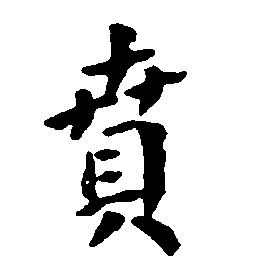 |
22. Pi / Grace
|
|
| ䷕ | Nuclear trigrams CHÊN ☳ and K’AN ☵ |
|
The rulers of the hexagram are the six in the second place and the nine at the top. The Commentary on the Decision refers to these when it says: “The yielding comes and gives form to the firm, the firm ascends and gives form to the yielding.”
The Sequence
Things should not unite abruptly and ruthlessly; hence there follows the hexagram of GRACE. Grace is the same as adornment.
Miscellaneous Notes
GRACE means being undyed.
The most perfect grace consists not in external ornamentation but in allowing the original material to stand forth, beautified by being given form. The upper trigram Kên, the mountain, is disposed to remain still; fire, Li, blazes up from below and illumines the mountain. This movement is strengthened by the nuclear trigram Chên, which likewise moves upward, while the resting weight of the mountain is activated to a falling movement by the lower nuclear trigram K’an. Thus the inner structure of the hexagram shows a harmonious equalization of movement, giving no excess of energies to the one side or the other. This hexagram is the inverse of the preceding one.
- GRACE has success.
- In small matters
- It is favorable to undertake something.
Commentary on the Decision
- “GRACE has success.” The yielding comes and gives form to the firm; therefore, “Success.” A detached firm line ascends and gives form to the yielding; therefore, “In small matters it is favorable to undertake something.” This is the form of heaven. Having form, clear and still: this is the form of men. If the form of heaven is contemplated, the changes of time can be discovered. If the forms of men are contemplated, one can shape the world.
2 [A.D. 1623-1716.]
The text of the commentary does not appear to be intact. There seems to be a sentence missing before, “This is the form of heaven.” Wang Pi1 says: “The firm and the yielding unite alternately and construct forms: this is the form of heaven.” This was taken as the original text, now missing, but Mao Ch’i Ling2 takes another view and sees in it only an explanation of the foregoing sentence. But something of the sort must in fact be presupposed.
The yielding element that comes is the six in the second place. It places itself between the two firm lines and gives them success, gives them form. The strong element that detaches itself is the nine at the top. It places itself at the head of the two upper yielding lines and gives them the possibility of attaining form. In each case, the yang principle is the content, the yin principle the form. In the first case it is the yin line that bestows form directly and therefore brings about success, whereas the ascending yang line, by lending content, only indirectly provides the material on which the otherwise empty form of the yin lines can work itself out. Hence the effect is that it is favorable for “the small” to undertake something.
The form of heaven is symbolized by the four trigrams constituting the hexagram. The lower primary trigram Li is the sun, the lower nuclear trigram K’an is the moon; the upper nuclear trigram Chên by its movement represents the Great Bear, and the upper primary trigram Kên by its stillness represents the constellations. If one observes the rotation of the Great Bear, one knows the course of the year; through contemplation of the course of the sun and the phases of the moon, one recognizes the time of day and the periods of the month.
The form of human life results from the clearly defined (Li) and firmly established (Kên) rules of conduct, within which love (light principle) and justice (dark principle) build up the combinations of content and form. Here too love is the content and justice the form.
- Fire at the foot of the mountain:
- The image of GRACE.
- Thus does the superior man proceed
- When clearing up current affairs.
- But he dare not decide controversial issues in this way.
This hexagram is the inverse of the preceding one. In the latter we find brightness and movement; these indicate a swift carrying out of penalties according to clearly understood laws. Here we have standstill (Kên) outside and clarity (Li) inside, and this means a theoretical, not a practical turn of mind. This attitude suffices for the application of the established rules of everyday affairs, but not for extraordinary things. One ruler of the hexagram is too weak, the other too far outside to be capable of taking hold of the situation.
- b) “He leaves the carriage and walks,” for it accords with duty not to ride.
- b) “Lends grace to the beard on his chin”: that is, he ascends with the one above.
- Constant perseverance brings good fortune.
- b) The good fortune of constant perseverance cannot, in the end, be put to shame.
- A white horse comes as if on wings.
- He is not a robber,
- He will woo at the right time.
- b) The six in the fourth place is in doubt; this accords with its place.
- “He is not a robber, he will woo at the right time.” In the end, one remains free of blame.
- The roll of silk is meager and small.
- Humiliation, but in the end good fortune.
- b) The good fortune of the six in the fifth place has joy.
- b) “Simple grace. No blame.” The one above attains his will.
The relationships of correspondence and holding together appear in this hexagram. The six in the fourth place and the nine at the beginning are in the relationship of correspondence; the nine at the beginning leaves the carriage and goes toward the six in the fourth place, which sees it approaching as a winged horse. The second line holds together with the third, so also the fifth with the top line. Thus all of the lines are related in one way or another, and in such a manner that it is always a reciprocal relationship between a firm and a yielding line that produces grace. Also to be noted is a tendency throughout the hexagram to counteract overemphasis of form by means of content.
 |
23. Po / Splitting Apart
|
|
| ䷖ | Nuclear trigrams K’UN ☷ and K’UN ☷ |
|
The ruler of the hexagram is the nine at the top. Although the dark force splinters the light, the light principle cannot be wholly split apart; therefore it is the ruler of the hexagram.
The Sequence
When one goes too far in adornment, success exhausts itself. Hence there follows the hexagram of SPLITTING APART. Splitting apart means ruin.
Miscellaneous Notes
SPLITTING APART means decay.
The thought here, taken together with that in the next hexagram, shows the connection between decay and resurrection. Fruit must decay before new seed can develop.
The sinking tendency of the hexagram is very strong. Both nuclear trigrams as well as the lower primary trigram are K’un, whose movement is downward. In contrast with this the upper primary trigram Kên stands still, without motion. This leads to a loosening of the structure. The tendency of the five yin lines is to bring about the downfall of the yang line at the top, in that they sink down and thus take the ground from under it. Here too the fundamental trend of the Book of Changes is expressed: the light principle is represented as invincible because in its sinking it creates new life, as does a grain of wheat when it sinks into the earth.
- SPLITTING APART. It does not further one
- To go anywhere.
Commentary on the Decision
- SPLITTING APART means ruin. The yielding changes the firm.
- “It does not further one to go anywhere.” Inferior people increase.
- Devotion and keeping still result from contemplating the image. The superior man takes heed of the alternation of increase and decrease, fullness and emptiness; for it is the course of heaven.
The yielding element changes the strong by imperceptible gradual influence. The yin lines are about to increase. This gives us the attitude of the superior man in such times, an attitude that derives from the two trigrams. In accordance with the attribute of the trigram K’un, he is devoted; in accordance with that of Kên he is calm, which means that he undertakes nothing, because the time is not yet come. Thus he submits to the course of heaven, which alternates between decrease and increase, in that whatever is full decreases and whatever is empty increases.
- The mountain rests on the earth:
- The image of SPLITTING APART.
- Thus those above can ensure their position
- Only by giving generously to those below.
The broader the base of the mountain, the less is it liable to splitting apart. Here it is not so much the condition of splitting apart that is set forth as the condition that can prevent it. Hence also it is not the waning of the light principle and the waxing of the shadowy that are to be considered, but the solidity of the foundation. Through generous giving, such as lies in the nature of the earth (K’un), an assured calm, such as lies in the nature of the mountain (Kên), is attained.
- Those who persevere are destroyed.
- Misfortune.
- b) “The leg of the bed is split,” in order to destroy those below.
- Those who persevere are destroyed.
- Misfortune.
- b) “The bed is split at the edge,” because one has no comrade.
- b) “He splits with them. No blame.” He loses the neighbor above and the one below.
- Misfortune.
- b) “The bed is split up to the skin. Misfortune.” This is a serious and immediate misfortune.
- Everything acts to further.
- b) “Favor comes through the court ladies.” In the end this is not a mistake.
- The superior man receives a carriage.
- The house of the inferior man is split apart.
- b) “The superior man receives a carriage.” He is carried by the people.
- “The house of the inferior man is split apart”: he ends up as useless.
 |
24. Fu / Return (The Turning Point)
|
|
| ䷗ | Nuclear trigrams K’UN ☷ and K’UN ☷ |
|
The ruler of the hexagram is the nine at the beginning. This is the line referred to by the Commentary on the Decision in the statement, “The firm returns.”
The Sequence
Things cannot be destroyed once and for all. When what is above is completely split apart, it returns below. Hence there follows the hexagram of RETURN.
Miscellaneous Notes
RETURN means coming back.
Appended Judgments
RETURN is the stem of character. RETURN is small, yet different from external things. RETURN leads to self-knowledge.
The hexagram of RETURN, applied to character formation, contains various suggestions. The light principle returns: thus the hexagram counsels turning away from the confusion of external things, turning back to one’s inner light. There, in the depths of the soul, one sees the Divine, the One. It is indeed only germinal, no more than a beginning, a potentiality, but as such clearly to be distinguished from all objects. To know this One means to know oneself in relation to the cosmic forces. For this One is the ascending force of life in nature and in man.
This hexagram is the inverse of the preceding one, and the movement tends very strongly upward from below—from the trigram Chên—going through the sinking trigram K’un.
- RETURN. Success.
- Going out and coming in without error.
- Friends come without blame.
- To and fro goes the way.
- On the seventh day comes return.
- It furthers one to have somewhere to go.
Commentary on the Decision
- “RETURN has success.” The firm returns.
- Movement and action through devotion. Therefore, “Going out and coming in without error.”
- “Friends come without blame. To and fro goes the way. On the seventh day comes return.” This is the course of heaven.
- “It furthers one to have somewhere to go.” The firm is on the increase.
- In the hexagram of RETURN one sees the mind of heaven and earth.
This hexagram expresses the idea that the light force is the creative principle of heaven and earth. It is an eternal cyclic movement, from which life comes forth again just at the moment when it appears to have been completely vanquished. Through the re-entrance of the yang line into the hexagram below, movement develops (Chên, the lower trigram), and this movement acts through devotion (K’un, the upper trigram). Going out and coming in are without error. The yang force has indeed gone (cf. the foregoing hexagram, Po), but like a fruit falling to earth, it has not disappeared without a trace; it has left an effect behind. This effect shows itself in the re-entrance of the yang line. The friends who come are either the other yang lines about to enter the hexagram after this first line (according to Ch’êng Tzŭ), or the five yin lines, which meet the yang line cordially. The way of yang goes to and fro, up and down. After the light force begins to diminish in Kou, COMING To MEET (44), it returns again in the hexagram Fu, after seven changes.
“It furthers one to have somewhere to go,” that is, to undertake something. Both this sentence and the image of the friends occur in the text of the second hexagram, K’un, THE RECEPTIVE.
- Thunder within the earth:
- The image of THE TURNING POINT.
- Thus the kings of antiquity closed the passes
- At the time of solstice.
- Merchants and strangers did not go about,
- And the ruler
- Did not travel through the provinces.
The hexagram is associated with the month of the winter solstice. From this are drawn the conclusions resulting in the right behavior at the time when the returning yang force is still weak and must therefore be strengthened by rest.
- No need for remorse.
- Great good fortune.
- b) “Return from a short distance”: thus one cultivates one’s character.
Yen Hui is one who will surely attain it. If he has a fault, he never fails to recognize it; having recognized it, he never commits the error a second time. In the Book of Changes it is said: “Return from a short distance. No need for remorse. Great good fortune.”
- b) The good fortune of a quiet return depends on subordination to a good man.
- b) The danger of repeated return is, in its essential meaning, deliverance from blame.
- One returns alone.
- b) “Walking in the midst of others, one returns alone,” and so follows the right way.
- b) “Noblehearted return. No remorse.” Central, therefore he is able to test himself.
- Misfortune from within and without.
- If armies are set marching in this way,
- One will in the end suffer a great defeat,
- Disastrous for the ruler of the country.
- For ten years
- It will not be possible to attack again.
- b) The misfortune in missing the return lies in opposing the way of the superior man.
Missing the return (six at the top) is the opposite of return from a short distance (nine at the beginning). The first line is not far off and comes back. Quiet return (six in the second place) and solitary return (six in the fourth place) resemble each other; both lines are related to the ruler of the hexagram. Repeated return (six in the third place) and noblehearted return (six in the fifth place) are opposites: in the one there is going back and forth, the other shows calm consistency.
 |
25. Wu Wang / Innocence (The Unexpected)
|
|
| ䷘ | Nuclear trigrams SUN ☴ and KÊN ☶ |
|
The rulers of the hexagram are the nine at the beginning and the nine in the fifth place. The nine at the beginning is the first movement of the light principle as well as the first movement of the sincere heart of man. The nine in the fifth place symbolizes the essence of the Creative, as well as the tirelessness of the supremely sincere. Therefore it is said in the Commentary on the Decision: “The firm comes from without and becomes the ruler within.” This refers to the first line. And further: “The firm is in the middle and finds correspondence.” This refers to the fifth line.
The Sequence
By turning back one is freed of guilt. Hence there follows the hexagram of INNOCENCE.
Miscellaneous Notes
THE UNEXPECTED means misfortune from without.
Innocence frees itself of mistakes, so that no misfortune of internal origin can overtake it. When misfortune comes unexpectedly, it has an external origin, therefore it will pass again.
The hexagram has a very strong ascending tendency; both the upper and the lower trigram have an upward movement. This fact suggests movement in harmony with heaven, which is man’s true and original nature. The two nuclear trigrams, Kên, Keeping Still, mountain, and Sun, the Gentle, wind (tree), yield the idea of the functioning and development of the primal trends.
- INNOCENCE. Supreme success.
- Perseverance furthers.
- If someone is not as he should be,
- He has misfortune,
- And it does not further him
- To undertake anything.
Commentary on the Decision
- INNOCENCE. The firm comes from without and becomes the ruler within. Movement and strength. The firm is in the middle and finds correspondence.
- “Great success through correctness”: this is the will of heaven.
- “If someone is not as he should be, he has misfortune, and it does not further him to undertake anything.” When innocence is gone, where can one go? When the will of heaven does not protect one, can one do anything?
The firm element coming from without is the lowest line, a yang line. It comes from heaven (Ch’ien). The Receptive, in approaching the Creative for the first time, receives the first line of Ch’ien and gives birth to Chên, the eldest son. Applied to man, this means that he receives the primal divine spirit as his guide and master. The attribute of the lower trigram, Chên, is movement, that of the upper, Ch’ien, is strength. The firm line in a central position that finds correspondence is the upper ruler of the hexagram, the nine in the fifth place, and the six in the second place corresponds with it. This all leads to success, because it shows man in the proper relationship to the divine, without ulterior designs and in primal innocence. Thus man is in harmony with heavenly fate, the will of heaven, just as the lower trigram harmonizes in movement with the upper.
But where the natural state is not this state of innocence, where desires and ideas are astir, misfortune follows of inner necessity. This hexagram differs from P’i, STANDSTILL, only in having a firm line at the beginning. If this should lose its firmness, the whole situation would change.1
- Under heaven thunder rolls:
- All things attain the natural state of innocence.
- Thus the kings of old,
- Rich in virtue, and in harmony with the time,
- Fostered and nourished all beings.
“Under heaven thunder rolls: all things attain the natural state of innocence.” This image is explained by the saying in the Discussion of the Trigrams: “God comes forth in the sign of the Arousing.” This is the beginning of all life. Here we have the Creative above in association with movement. The upper nuclear trigram is wood, the lower is mountain.
“Rich in virtue” refers to the strength of the Creative. “The time” derives from the trigram Chên (east and spring)—the trigram in which life comes forth. Fostering and nourishing are indicated by the nuclear trigram Kên, mountain. The fact that this influence extends to everything is symbolized by the nuclear trigram Sun, meaning wind and universal penetration.
- b) Innocent behavior attains its will.
- Nor on the use of the ground while clearing it,
- It furthers one to undertake something.
- b) Not plowing in order to reap: that is, one does not seek wealth.
- The cow that was tethered by someone
- Is the wanderer’s gain, the citizen’s loss.
- b) If the wanderer gets the cow, it is the citizen’s loss.
- Remains without blame.
- b) “He who can be persevering remains without blame,” for he possesses firmly.
- Incurred through no fault of your own.
- It will pass of itself.
- b) One should not try an unknown medicine.
- Nothing furthers.
- b) Action without reflection brings about the evil of bewilderment.
In this hexagram the six lines are all innocent, that is, naïve, without ulterior motives. The nine at the beginning is in its appropriate place and is the ruler of the trigram of movement; this indicates that the time has come to act. Hence action brings good fortune. The nine at the top is not in the right place and stands outermost in the trigram Ch’ien. The time to act has already passed. Hence action, even though innocent, brings misfortune. Everything depends on the time. The line at the beginning has good fortune, the second is favorable; this is due to the time. The third line bears an augury of misfortune, the fifth of illness, the top line of misfortune. All this does not happen by plan, but is likewise the result of the time conditions. It is possible for the first and second lines to advance. The time has come for them to move. The fourth should remain steadfast, the fifth should use no medicine, the top line has misfortune if it acts: all this indicates that for these lines the time has come to remain quiet.
 |
26. Ta Ch'u / The Taming Power of the Great
|
|
| ䷙ | Nuclear trigrams CHÊN ☳ and TUI ☱ |
|
The rulers of the hexagram are the six in the fifth place and the nine at the top. These are the lines referred to when it is said in the Commentary on the Decision: “The firm ascends and honors the worthy.”
The Sequence
When innocence is present, it is possible to tame. Hence there follows THE TAMING POWER OF THE GREAT.
Holding fast to heavenly virtue is the prerequisite for innocence. On the other hand, innocence is the indispensable condition for being able to hold fast to pristine heavenly virtue.
Miscellaneous Notes
THE TAMING POWER OF THE GREAT depends on the time.
The movements of the two trigrams are toward each other. The Creative below presses powerfully upward, and Keeping Still above holds it fast. The nuclear trigrams Chên and Tui also have a tendency to rise, the upper more so than the lower. These are the latent forces that are intensified by the holding fast. The two weak lines occupying the ruler’s and the minister’s place restrain the strong lines below, while showing recognition and liberality toward the strong line above. This hexagram is the inverse of the preceding one.
- THE TAMING POWER OF THE GREAT.
- Perseverance furthers.
- Not eating at home brings good fortune.
- It furthers one to cross the great water.
Commentary on the Decision
- THE TAMING POWER OF THE GREAT. Firmness and strength. Genuineness and truth. Brilliance and light. Daily he renews his virtue.
- The firm ascends and honors the worthy. He is able to keep strength still; this is great correctness,
- “Not eating at home brings good fortune,” for people of worth are nourished.
- “It furthers one to cross the great water,” because one finds correspondence in heaven.
The upper trigram Kên is firm, the lower, Ch’ien, is strong; the upper is genuine, the lower is true: the upper is brilliant, the lower light. Thus the two trigrams complement each other. Through keeping still (Kên), the powers of character (Ch’ien) are so strengthened that a daily renewal takes place. This refers to the effect of the personality. Here the first meaning of the hexagram is given—keeping still and collecting oneself.
The firm element that ascends is the nine at the top. It mounts above the six in the fifth place—the place of the ruler—and this ruler honors it in its ascent because it is worthy. The upper trigram Kên, Keeping Still, is able to hold fast the lower, Ch’ien, the strong. This explains the words of the Judgment: “Perseverance furthers.” Here we have the second meaning of the hexagram—holding fast and keeping still.
Not eating at home, that is, entering public service, brings good fortune, because the six in the fifth place represents a ruler who nourishes people of worth. This gives the third meaning—holding fast and nourishing.
“It furthers one to cross the great water.” This idea is suggested by the two nuclear trigrams—Cheên, which also means wood, over Tui, lake. This dangerous action is possible because the ruler of the hexagram, the six in the fifth place, is in the relationship of correspondence to the nine in the second place, the central line of the lower trigram, heaven (Ch’ien).
- Heaven within the mountain:
- The image of THE TAMING POWER OF THE GREAT.
- Thus the superior man acquaints himself with many sayings of antiquity
- And many deeds of the past,
- In order to strengthen his character thereby.
Heaven (Ch’ien) points to character, virtue. Strengthening is suggested by the mountain (Kên). The means to this strengthening of character are hidden in the nuclear trigrams: the lower, Tui, mouth, suggests words; the upper, Chên, movement, suggests deeds.
- b) “Danger is at hand. It furthers one to desist.” Thus one does not expose oneself to danger.
- b) “The axletrees are taken from the wagon.” In the middle there is no blame.
- Awareness of danger,
- With perseverance, furthers.
- Practice chariot driving and armed defense daily.
- It furthers one to have somewhere to go.
- b) “It furthers one to have somewhere to go.” The will of the one above is in agreement.
- Great good fortune.
- b) The great good fortune of the six in the fourth place consists in the fact that it has joy.
- Good fortune.
- b) The good fortune of the six in the fifth place consists in the fact that it has blessing.
- b) “One attains the way of heaven.” Truth works in the great.
In this hexagram, the relationships between the yin and the yang lines are not those of correspondence and furtherance, but, in accordance with the character of the hexagram, those of obstruction. The lines of the lower trigram are obstructed, those of the upper trigram are the obstructors. Only the third and the top line, which, as two yang lines, are in harmony, are free of the idea of obstruction.
The persons represented by the first two lines are still eating at home and still obstructed in crossing the great water. The fourth and fifth lines operate by obstructing the two misbehaving lines—this is easy for the one, more difficult for the other. The third line advances, though with caution and under difficulties. The top line alone has a clear path ahead, and the obstacles disappear. It stands for the person of worth who can achieve great things and who is nourished.
 |
27. I / The Corners of the Mouth
|
|
| ䷚ | Nuclear trigrams K’UN ☷ and K’UN ☷ |
|
The rulers of the hexagram are the six in the fifth place and the nine at the top. These are the lines referred to in the Commentary on the Decision: “He provides nourishment for men of worth and thus reaches the whole people.”
The Sequence
When things are held fast, there is provision of nourishment. Hence there follows the hexagram of THE CORNERS OF THE MOUTH. “The corners of the mouth” means the providing of nourishment.
Miscellaneous Notes
THE CORNERS OF THE MOUTH means providing nourishment for what is right.
The two primary trigrams are opposed in movement. Kên, the upper, stands still; Chên, the lower, moves upward. This suggests the jaws and teeth. The upper jaw is immobile, the lower moves; hence the designation of the hexagram as THE CORNERS OF THE MOUTH. In contrast to Hsü, WAITING (5), which also deals with provision of nourishment but emphasizes man’s dependence on nourishment, the theme of the hexagram I is rather the human role in the providing of nourishment. A secondary meaning is that of providing nourishment first for men of worth, in order that thereby the people also may be nourished. The two hexagrams therefore present provision of nourishment as a natural process (Hsü, WAITING) and as a social problem (I, THE CORNERS OF THE MOUTH). A similar contrast obtains between the two hexagrams denoting nourishment in itself—Ching, THE WELL (48), the water necessary for nourishment, and Ting, THE CALDRON (50), the food necessary for nourishment.
- THE CORNERS OF THE MOUTH.
- Perseverance brings good fortune.
- Pay heed to the providing of nourishment
- And to what a man seeks
- To fill his own mouth with.
Commentary on the Decision
- “THE CORNERS OF THE MOUTH. Perseverance brings good fortune.” If one provides nourishment for what is right, good fortune comes.
- “Pay heed to the providing of nourishment,” that is, pay heed to what a man provides nourishment for.
- “To what he seeks to fill his own mouth with,” that is, pay heed to what a man nourishes himself with.
- Heaven and earth provide nourishment for all beings. The holy man provides nourishment for men of worth and thus reaches the whole people. Truly great is the time of PROVIDING NOURISHMENT.
As an image the hexagram is conceived as a whole—as the image of an open mouth; consequently there is no need of explaining how it came to mean provision of nourishment. But it stresses the idea that as regards the manner of providing nourishment, everything depends on its being in harmony with what is right. In accord with the character of the two trigrams—movement and keeping still—there is no relation of correspondence between the relevant lines of the lower and the upper trigram. The lower trigram seeks nourishment for itself, the upper affords nourishment for others.
- At the foot of the mountain, thunder:
- The image of PROVIDING NOURISHMENT.
- Thus the superior man is careful of his words
- And temperate in eating and drinking.
Thunder is the trigram in which God comes forth; the mountain is the trigram in which all things are completed. This is the image of PROVIDING NOURISHMENT. From the hexagram as a whole, as representing an open mouth, are derived the movements of the mouth, speech and the taking in of food. This movement corresponds with the character of the trigram Chên. It must be moderated if it is to be correct. This is in correspondence with the character of the trigram Kên.
- And look at me with the corners of your mouth drooping.
- Misfortune.
- b) “You … look at me with the corners of your mouth drooping”: this is really not to be respected.
- Deviating from the path
- To seek nourishment from the hill.
- Continuing to do this brings misfortune.
- b) If the six in the second place continues to do this, it brings misfortune, because in going it loses its place among its kind.
- Perseverance brings misfortune.
- Do not act thus for ten years.
- Nothing serves to further.
- b) “Do not act thus for ten years,” because it is all too contrary to the right way.
- For provision of nourishment
- Brings good fortune.
- Spying about with sharp eyes
- Like a tiger with insatiable craving.
- No blame.
- b) The good fortune in turning to the summit to be provided with nourishment inheres in the fact that the one above spreads light.
- To remain persevering brings good fortune.
- One should not cross the great water.
- b) The good fortune in remaining persevering comes from following the one above devotedly.
- Awareness of danger brings good fortune.
- It furthers one to cross the great water.
- b) “The source of nourishment. Awareness of danger brings good fortune.” It has great blessing.
 |
28. Ta Kuo / Preponderance of the Great
|
|
| ䷛ | Nuclear trigrams CH’IEN ☰ and CH’IEN ☰ |
|
The rulers of the hexagram are the nine in the second place and the nine in the fourth. The nine in the second place is firm, central, and not too heavy. The nine in the fourth place is a beam that does not sag to the breaking point.
The Sequence
Without provision of nourishment one cannot move; hence there follows the hexagram of PREPONDERANCE OF THE GREAT.
Nourishing without putting to use finally evokes movement. Movement without end leads finally too far, to overweighting.
Miscellaneous Notes
PREPONDERANCE OF THE GREAT is the peak.
The peak refers to the image of the ridgepole mentioned in the Judgment. The hexagram shows great strength within. Both the nuclear trigrams are Ch’ien, whose attribute is strength. But underneath is the gentle Sun, penetrating indeed, but ethereal as well, while above is the joyous Tui, the lake. Thus the outer ends are not equal to the weight of the strong structure within; hence the great in preponderance. This hexagram is the opposite of the preceding one.
Appended Judgments
In ancient times the dead were buried by covering them thickly with brushwood and placing them in the open country, without burial mound or grove of trees. The period of mourning had no definite duration. The holy men of a later time introduced inner and outer coffins instead. They probably took this from the hexagram of PREPONDERANCE OF THE GREAT.
The hexagram represents wood that has penetrated below ground water; this gives the coffin image. Another explanation holds that the two yin lines (above and below) represent the earth and trees of the burial place, while the yang lines between indicate the coffin. When the dead are thus well cared for, they enter (Sun) the earth and are happy (Tui). This hexagram is the opposite of the preceding one in this further respect, that the former shows the provisions of nourishment for the living, and the present one shows the care provided for the dead.
- PREPONDERANCE OF THE GREAT.
- The ridgepole sags to the breaking point.
- It furthers one to have somewhere to go.
- Success.
Commentary on the Decision
- PREPONDERANCE OF THE GREAT. The great preponderates. The ridgepole sags to the breaking point because beginning and end are weak.
- The firm preponderates and is central. Gentle and joyous in action: then it furthers one to have somewhere to go, then one has success.
- Great indeed is the time of PREPONDERANCE OF THE GREAT.
The name is explained on the basis of the structure. The great, that is, the yang element, outnumbers with its four lines the two lines of the yin element. This by itself would not mean preponderance, but the great is within, although it belongs without. Similarly, the small preponderates (cf. hexagram 62) when weak lines are in the majority and without, for by their nature they belong within. As representing preponderance of the great, the hexagram suggests the image of a ridgepole, the top beam of a house, on which the whole roof rests. Since beginning and end are weak, there arises the danger of a too great inner weight and of consequent sagging to the breaking point.
Despite this extraordinary situation, action is important. If the weight were to remain where it is, misfortune would arise. By means of movement, however, one gets out of the abnormal condition, chiefly because the ruler in the lower trigram is central and strong. The attributes of the trigrams, joyousness and gentleness, also indicate the right behavior for successful action.
- The lake rises above the trees:
- The image of PREPONDERANCE OF THE GREAT.
- Thus the superior man, when he stands alone,
- Is unconcerned,
- And if he has to renounce the world,
- He is undaunted.
The ideas of standing alone and of renunciation of the world are derived from the situation indicated by the hexagram as a whole. Standing alone unconcerned is suggested by the symbol of Sun, the tree, and undauntedness by the attribute of Tui, joyousness.
- No blame.
- b) “To spread white rushes underneath”: the yielding is underneath.
It does well enough simply to place something on the floor. But if one puts white rushes underneath, how could that be a mistake? This is the extreme of caution. Rushes in themselves are worthless, but they can have a very important effect. If one is as cautious as this in all that one does, one remains free of mistakes.
- An older man takes a young wife.
- Everything furthers.
- b) “An older man takes a young wife.” The extraordinary thing is their coming together.
- Misfortune.
- b) The misfortune of the sagging and breaking of the ridgepole is due to its finding no support.
- If there are ulterior motives, it is humiliating.
- b) The good fortune of the braced ridgepole lies in the fact that it does not sag downward and break.
- An older woman takes a husband.
- No blame. No praise.
- b) “A withered poplar puts forth flowers.” How could this last long?
- “An older woman takes a husband.” It is nevertheless a disgrace.
- It goes over one’s head.
- Misfortune. No blame.
- b) One should not join blame to the misfortune of going through the water.
As in the hexagrams I (42), Chung Fu (61), and Hsiao Kuo (62), the relationship of correspondence is not valid in this hexagram; instead, the upper and lower lines, reckoned from the middle, stand in contrast to one another. Thus the third and the fourth line both symbolize the ridgepole. But the third, a firm line in a firm place, is unlucky, and the ridgepole sags and breaks, while the fourth, a firm line in a yielding place, is lucky; the ridgepole is braced. The second and the fifth line are both old poplars. The second, a firm line in a yielding place, is lucky; it “sprouts at the root.” The fifth, a firm line in a firm place, is unlucky; it begins to blossom and consumes its last remnant of strength. The lowest line, which is yielding in a firm place, is lucky by dint of great caution; the top line, which is yielding in a yielding place, is unlucky by reason of courage and stubborn tenacity. All the lines standing in places opposed to their natures are lucky, because place and character complement each other. All the lines standing in places that accord with their natures are unlucky, for this creates overweighting.
|
29. K'an / The Abysmal (Water)
|
|
| ䷜ | Nuclear trigrams KÊN ☶ and CHÊN ☳ |
|
The rulers of the hexagram are the two yang lines in the second and the fifth place. The fifth, however, is ruler in a more marked degree; it represents water, which flows on when it has filled up a given place.
The Sequence
Things cannot be permanently in an overweighted state. Hence there follows the hexagram of THE ABYSMAL. The Abysmal means a pit.
Miscellaneous Notes
THE ABYSMAL is directed downward.
Water moves from above downward; it comes from the earth, but here it is in the heavens, hence its tendency to return earthward.
This hexagram is one of the eight formed by doubling of a trigram. The trigram K’an contains the middle line of the Creative (in the Inner-World Arrangement this trigram has shifted to the north, the place occupied by the Receptive in the Primal Arrangement1). Therefore this hexagram and the next following one, Li—which bears the same relation to the Receptive that K’an bears to the Creative—stand together at the end of Book I, which begins with THE CREATIVE and THE RECEPTIVE.
- The Abysmal repeated.
- If you are sincere, you have success in your heart,
- And whatever you do succeeds.
Commentary on the Decision
- The Abysmal repeated is twofold danger. Water flows on and nowhere piles up; it goes through dangerous places, never losing its dependability.
- “You have success in your heart,” for the firm form the middle.
- “Whatever you do succeeds’: advancing brings about achievements.
- The danger of heaven lies in the fact that one cannot climb it. The dangers of earth are the mountains and rivers, hills and heights. The kings and princes make use of danger to protect their realms.
- The effects of the time of danger are truly great.
The hexagram is explained in two ways. First, man finds himself in danger, like water in the depths of an abyss. The water shows him how to behave: it flows on without piling up anywhere, and even in dangerous places it does not lose its dependable character. In this way the danger is overcome. The trigram K’an further means the heart. In the heart the divine nature is locked within the natural inclinations and tendencies, and is thus in danger of being engulfed by desires and passions. Here likewise the way to overcome danger is to hold firmly to one’s innate disposition to good. This is indicated by the fact that the firm lines form each the middle in one of the trigrams. Hence action results in good. Second, danger serves as a protective measure—for heaven, earth, and the prince. But it is never an end in itself. Therefore it is said: “The effects of the time of danger are great.”
- Water flows on uninterruptedly and reaches its goal:
- The image of the Abysmal repeated.
- Thus the superior man walks in lasting virtue
- And carries on the business of teaching.
Water is constant in its flow; thus the superior man is constant in his virtue, like the firm line in the middle of the abyss. And just as water flows on and on, so he makes use of practice and repetition in the business of teaching.
- In the abyss one falls into a pit.
- Misfortune.
- b) “Repetition of the Abysmal.” One falls into the abyss because one has lost the way; this brings misfortune.
- One should strive to attain small things only.
- b) “One should strive to attain small things only.” For the middle has not yet been passed.
- In danger like this, pause at first and wait,
- Otherwise you will fall into a pit in the abyss.
- Do not act in this way.
- b) “Forward and backward, abyss on abyss”: here any effort ends up as impossible.
- Earthen vessels
- Simply handed in through the window.
- There is certainly no blame in this.
- b) “A jug of wine, a bowl of rice with it.” It is the boundary line between firm and yielding.
- It is filled only to the rim.
- No blame.
- b) “The abyss is not filled to overflowing,” for the central line is not yet great.
- Shut in between thorn-hedged prison walls:
- For three years one does not find the way.
- Misfortune.
- b) The six at the top has lost the way. This misfortune continues for three years.
The whole hexagram of THE ABYSMAL is based on the idea that the light lines are inclosed by the dark lines, and thus endangered. This idea of danger not only gives the hexagram its character, but also dominates the individual lines. It appears that the two strong lines (the second and the fifth) fare better than the others and have the prospect of getting out of danger, while the six at the beginning and the six in the third place fall into abyss after abyss, and the six at the top sees no way out for three years. Thus the danger threatening the dark lines is even greater. It often happens, however, that the idea of a given hexagram as a whole is differently expressed in some of the lines.
|
30. Li / The Clinging, Fire
|
|
| ䷝ | Nuclear trigrams TUI ☱ and SUN ☴ |
|
The rulers of the hexagram are the two yin lines in the second and the fifth place; of these, the line in the second place is ruler in a more marked degree, for fire is brightest when it first flames up.
The Sequence
In a pit there is certain to be something clinging within. Hence there follows the hexagram of THE CLINGING. The Clinging means resting on something.
Miscellaneous Notes
THE CLINGING is directed upward.
Appended Judgments
Fu Hsi made knotted cords and used them for nets and baskets in hunting and fishing. He probably took this from the hexagram of THE CLINGING.
This hexagram, divided within and closed without, is an image of the meshes of a net in which animals remain snared.1 It is the opposite of the preceding hexagram, not only in structure but also in its entire meaning.
- THE CLINGING. Perseverance furthers.
- It brings success.
- Care of the cow brings good fortune.
Commentary on the Decision
- Clinging means resting on something. Sun and moon cling to heaven. Grain, plants, and trees cling to the soil.
- Doubled clarity, clinging to what is right, transforms the world and perfects it.
- The yielding clings to the middle and to what is right, hence it has success. Therefore it is said: “Care of the cow brings good fortune.”
Here the co-operation of the two world principles is shown. The light principle becomes visible only in that it clings to bodies. Sun and moon attain their brightness by clinging to heaven, from which issue the forces of the light principle. The plant world owes its life to the fact that it clings to the soil (the Chinese character here is t’u, not ti2), in which the forces of life express themselves. On the other hand, bodies are likewise needed, that the forces of light and of life may find expression in them.
It is the same in the life of man. In order that his psychic nature may be transfigured and attain influence on earth, it must cling to the forces of spiritual life.
The yielding element in Li is the central line of the Receptive, hence the image of the strong but docile cow.
- That which is bright rises twice:
- The image of FIRE.
- Thus the great man, by perpetuating this brightness,
- Illumines the four quarters of the world.
Fire flames upward, hence the phrase, “That which is bright rises.” Twice is implied by the doubling of the trigram. In relation to the spiritual realm, brightness means the innate light-imbued predispositions of man, which through their consistency illumine the world. The trigram Li stands in the south and represents the summer sun, which illumines all earthly things.
- If one is seriously intent, no blame.
- b) Seriousness when footprints run crisscross serves in avoiding blame.
- b) The supreme good fortune of yellow light lies in the fact that one has found the middle way.
- Men either beat the pot and sing
- Or loudly bewail the approach of old age.
- Misfortune.
- b) How can one wish to hold for long the light of the setting sun?
- It flames up, dies down, is thrown away.
- b) “Its coming is sudden.” Yet in itself it has nothing that would cause it to be accepted.
- Good fortune.
- b) The good fortune of the six in the fifth place clings to king and prince.
- Then it is best to kill the leaders
- And take captive the followers. No blame.
- b) “The king uses him to march forth and chastise’: in order to bring the country under discipline.
|
31. Hsien / Influence (Wooing)
|
|
| ䷞ | Nuclear trigrams CH’IEN ☰ and SUN ☴ |
|
The nine in the fourth place is in the place of the heart. The heart holds mastery in influence, hence the fourth line is here a ruler of the hexagram. The nine in the fifth place is in the place of the back and therefore means keeping still in the midst of the influence. In the midst of movement, it is able to remain quiet and is therefore ruler of the hexagram to a still greater degree.
The Sequence
After there are heaven and earth, there are the individual things.
After individual things have come into being, there are the two sexes.
After there are male and female, there is the relationship between husband and wife.
After the relationship between husband and wife exists, there is the relationship between father and son.
After the relationship between father and son exists, there is the relationship between prince and servitor.
After the relationship between prince and servitor exists, there is the difference between superior and inferior.
After the difference between superior and inferior exists, the rules of propriety and of right can operate.
Miscellaneous Notes
INFLUENCE fulfills itself quickly.
- INFLUENCE. Success.
- Perseverance furthers.
- To take a maiden to wife brings good fortune.
Commentary on the Decision
- INFLUENCE means stimulation. The weak is above, the strong below. The forces of the two stimulate and respond to each other, so that they unite.
- Keeping Still and joyousness.1 The masculine subordinates itself to the feminine. Hence it is said: “Success. Perseverance furthers. To take a maiden to wife brings good fortune.”
- Heaven and earth stimulate each other, and all things take shape and come into being. The holy man stimulates the hearts of men, and the world attains peace and rest. If we contemplate the outgoing stimulating influences, we can know the nature of heaven and earth and all beings.
Hsien differs from the character kan, “to stimulate,” in that the heart is not a constituent part of it, as it is of the latter. Hence it represents an influence that is unconscious and involuntary, not one that is conscious and willed. It is a matter of objective relationships of a general kind, not those of a subjective, individual character.
The “weak above” is the trigram Tui, the youngest daughter; its attribute is joyousness, its image is the lake. The “strong below” is Kên, the youngest son; its attribute is keeping still, its image is the mountain.
The explanation of the Judgment is based on the organization of the hexagram (the weak element above, the strong below), the attributes, and the symbols (the youngest son, the youngest daughter).
- A lake on the mountain:
- The image of INFLUENCE.
- Thus the superior man encourages people to approach him
- By his readiness to receive them.2
The mountain lake gives of its moisture to the mountain; the mountain collects clouds, which feed the lake. Thus their forces have a reciprocal influence. The relation of the two images shows how this influence comes about: it is only when a mountain is empty at its summit, that is, deepened into a hollow, that a lake can form. Thus the superior man receives people by virtue of emptiness. The superior man is compared to the mountain, the people to the lake. The relation is formed through the initiative of the mountain, the superior man.
The stimulation here shows itself step by step. The individual lines denote the respective parts of the body: the three lower lines are the legs, including toe, calf, and thigh; the three upper lines are the trunk, with the heart, the back of the neck, and the organs of speech.
- b) Influence in the big toe: the will is directed outward.
- Misfortune.
- Tarrying brings good fortune.
- b) Even though misfortune threatens, tarrying brings good fortune. One does not come to harm through devotion.
- Holds to that which follows it.
- To continue is humiliating.
- b) “The influence shows itself in the thighs.” For he cannot keep still.
- When the will is directed to things that one’s followers hold to, this is very base.
- Remorse disappears.
- If a man is agitated in mind,
- And his thoughts go hither and thither,
- Only those friends
- On whom he fixes his conscious thoughts
- Will follow.
- b) “Perseverance brings good fortune. Remorse disappears.” Because in this way one does not stir up anything injurious.
- Thoughts going hither and thither in agitation: by this one shows that one has as yet no clear light.
What need has nature of thought and care? In nature all things return to their common source and are distributed along different paths; through one action, the fruits of a hundred thoughts are realized. What need has nature of thought, of care?
- No remorse.
- b) “The influence shows itself in the back of the neck.” The will is directed to the ramifications.
- b) “The influence shows itself in the jaws, cheeks, and tongue.” He opens his mouth and chatters,
 |
32. Hêng / Duration
|
|
| ䷟ | Nuclear trigrams TUI ☱ and CH’IEN ☰ |
|
DURATION means that which always is. What is in the middle abides always. In the hexagram the second and the fifth place are middle positions. But the six in the fifth place, although central, is weak, whereas the nine in the second place is central and strong as well. Hence the second line is the ruler of the hexagram.
While in the preceding hexagram the correspondence of the lines comes into account as more of a hindrance than a help, here the fact that all the lines correspond is proof of a firm inner organization of the hexagram that guarantees duration. The strong second line stands in the relationship of correspondence to the weak six in the fifth place.
The Sequence
The way of husband and wife must not be other than long-lasting. Hence there follows the hexagram of DURATION. Duration means long-lasting.
Miscellaneous Notes
DURATION means that which lasts long.
Appended Judgments
DURATION brings about firmness of character. DURATION shows manifold experiences without satiety. DURATION brings about unity of character.
- DURATION. Success. No blame.
- Perseverance furthers.
- It furthers one to have somewhere to go.
Commentary on the Decision
- DURATION means that which lasts long. The strong is above, the weak below; thunder and wind work together.
- Gentle and in motion. The strong and the weak all correspond: this signifies duration.
- “Success. No blame. Perseverance furthers”: this means lasting perseverance in one’s course. The course of heaven and earth is enduring and long and never ends.
- “It furthers one to have somewhere to go.” This means that an end is always followed by a new beginning.
- Sun and moon have heaven and can therefore shine forever. The four seasons change and transform, and thus can forever bring to completion. The holy man remains forever in his course, and the world reshapes itself to completion. If we meditate on what gives duration to a thing, we can understand the nature of heaven and earth and of all beings.
The organization of the hexagram shows the strong Chên above and the weak Sun below; this is the enduring condition in the world. Here the eldest son and the eldest daughter are united in marriage, in contrast to the situation in the preceding hexagram, which represents entering into marriage.
The images show thunder, which is carried still farther by the power of wind, and wind, which is strengthened by the power of thunder. Their combined action imparts duration to both. The attribute of the trigram Sun is gentleness, that of Chên is movement. The outer movement, supported within by devotion, is likewise such that it is capable of duration.
Finally, the hexagram is given inner firmness by the correspondence between the individual lines. The six in the first place corresponds with the nine in the fourth; the nine in the second place with the six in the fifth; the nine in the third place with the six at the top.
All this serves to explain the name of the hexagram.
On the basis of the Judgment, the conditions necessary for duration are then set forth. They consist in perseverance in the right course, that is to say, continuity in change. This is the secret of the eternity of the universe.
Perseverance in a course leads to the goal, the end. However, since the course is cyclic, a new beginning is joined with every end. Movement and rest beget each other. This is the rhythm of all happening. The operation of this principle in specific instances, in relation to the macrocosm and the microcosm, is then pointed out.
- Thunder and wind: the image of DURATION.
- Thus the superior man stands firm
- And does not change his direction.
Thunder is that which is mobile, wind is that which is penetrating—the most mobile of all things that have duration under the law of motion. Wood is an attribute of both Chên and Sun, hence the idea of standing firm. Sun is within and penetrates, Chên is without and moves; hence the idea of a fixed direction.
- Nothing that would further.
- b) The misfortune of seeking duration too hastily arises from wanting too much immediately at the outset.
- b) Remorse disappears for the nine in the second place, because it is permanently central.
- Meets with disgrace.
- Persistent humiliation.
- b) “He who does not give duration to his character’ meets with no toleration.
- b) When one is forever absent from one’s place, how can one find game?
- This is good fortune for a woman, misfortune for a man.
- b) Perseverance brings good fortune for a woman, because she follows one man all her life. A man must hold to his duty; if he follows the woman, the results are bad.
- b) Restlessness as an enduring condition in a high position is wholly without merit.
 |
33. Tun / Retreat
|
|
| ䷠ | Nuclear trigrams CH’IEN ☰ and SUN ☴ |
|
The constituting rulers of the hexagram are the two yin lines in the first and the second place. They show the dark principle pressing forward, with the light principle in retreat. The ruler of the action is the strong, central line in the fifth place, which finds correspondence in the weak, central line in the second place. This is the line referred to in the Commentary on the Decision: “The firm is in the appropriate place and finds correspondence. This means that one is in accord with the time.”
The lower trigram is Kên, Keeping Still, hence the three lower lines show themselves hampered in retreating. The upper trigram is Ch’ien, strong movement, hence the retreat of these three lines is free and unhampered.
The Sequence
Things cannot abide forever in their place: hence there follows the hexagram of RETREAT. Retreat means withdrawing.
Miscellaneous Notes
RETREAT means withdrawing.
- RETREAT. Success.
- In what is small, perseverance furthers.
Commentary on the Decision
- “RETREAT. Success”: this means that success lies in retreating.
- The firm is in the appropriate place and finds correspondence. This means that one is in accord with the time.
- “In what is small, perseverance furthers”: this means that it is pressing forward, and on the increase.
- Great indeed is the meaning of the time of RETREAT.
Success lies in being able to retreat at the right moment and in the right manner. This success is made possible by the fact that the retreat is not the forced flight of a weak person but the voluntary withdrawal of a strong one, as is implicit in the nature of the strong ruler of the hexagram, the nine in the fifth place, which finds correspondence in the weak six in the second place. Strength is shown in that one does not attempt to force anything but shows perseverance in small matters alone, because the dark element, represented by the two yin lines below, is pressing forward and on the increase.
The meaning of the time of RETREAT is great; that is, it is vitally important to hit upon the moment when retreat is called for.
- Mountain under heaven: the image of RETREAT.
- Thus the superior man keeps the inferior man at a distance,
- Not angrily but with reserve.
The question is to what extent the mountain under heaven suggests the image of RETREAT. One interpretation is that the mountain under heaven is so high and steep that men cannot come near to it. However, the other interpretation—that heaven represents the superior man, the mountain the inferior man—is more in harmony with the movement of the trigrams. Heaven has a strong upward movement and therefore automatically retreats from the mountain, whose character is immobility. An even greater divergence occurs in the hexagram P’i, STANDSTILL (12), in which the movements are directly opposed.
What the situation in the present hexagram teaches is, as in the case of P’i, deduced from the attributes of the trigrams taken separately. The superior man keeps the inferior at a distance by being as reserved and inaccessible as heaven; thus he brings the inferior man to a standstill (this is the attribute of the lower trigram, Kên, mountain).
- One must not wish to undertake anything.
- b) If one undertakes nothing while exposed to the danger of the retreating tail, what misfortune could befall one?
- No one can tear him loose.
- b) “He holds him fast with yellow oxhide”: this means a firm will.
- Is nerve-wracking and dangerous.
- To retain people as men- and maidservants
- Brings good fortune.
- b) The danger of a halted retreat is nerve-wracking; this brings fatigue.
- “To retain people as men- and maidservants brings good fortune.” True enough, but one cannot use them in great things.
- And downfall to the inferior man.
- b) The superior man retreats voluntarily; this brings downfall for the inferior man.
- b) “Friendly retreat. Perseverance brings good fortune,” because the will thereby reaches a correct decision.
- b) “Cheerful retreat. Everything serves to further,” because there is no longer any possibility of doubt.
 |
34. Ta Chuang / The Power of the Great
|
|
| ䷡ | Nuclear trigrams TUI ☱ and CH’IEN ☰ |
|
The ruler of the hexagram is the yang line in the fourth place, because the four yang lines are the basis of the power of the hexagram, with the fourth at their head.
The Sequence
Things cannot retreat forever, hence there follows THE POWER OF THE GREAT.
Miscellaneous Notes
The meaning of THE POWER OF THE GREAT shows itself in the fact that one pauses.
Appended Judgments
In the most ancient times people dwelt in caves and lived in forests. The holy men of a later time made the change to buildings. At the top was a ridgepole, and sloping down from it there was a roof, to keep off wind and rain. They probably took this from the hexagram of THE POWER OF THE GREAT.
The four strong lines taken together are regarded as a ridgepole, as also in the hexagram T’a Kuo, PREPONDERANCE OF THE GREAT (28). The two divided lines at the top represent rain and wind.
The hexagram can be thought of as formed by the lines of Tui taken twice each. Tui has the sheep (or goat) for its animal, hence the goat is used as an image in several of the lines. The two upper lines are the horns.
It is the contrast between power and violent force that is expressed in the meaning of the hexagram. In structure it is the inverse of the preceding one.
- THE POWER OF THE GREAT. Perseverance furthers.
Commentary on the Decision
- THE POWER OF THE GREAT means that the great are powerful. Strong in movement—this is the basis of power.
- “THE POWER OF THE GREAT. Perseverance furthers,” for what is great must be right.
- Great and right: thus we can behold the relations of heaven and earth.
䷊The hexagram linked with the first month is T’ai, PEACE (11). Although in it the light lines are advancing, they are not yet in the majority.
䷪The hexagram correlated with the third month is Kuai, BREAK‑THROUGH (43). In this instance the light lines are markedly in the majority, but downfall is already imminent.
Neither of these situations can be said to denote power.
But the presence of four yang lines [in Ta Chuang] indicates power. Strength is the attribute of the ner trigram, the Creative, and movement that of the outer, the Arousing. Strength makes it possible to master the egotism of the sensual drives; movement makes it possible to execute the firm decision of the will. In this way all things can be attained. This is the foundation upon which power rests. When the statement is made that what is great must be right, it means not that great and right are two different things, but that without rightness there is no greatness. The relations of heaven and earth are never other than great and right.
- Thunder in heaven above:
- The image of THE POWER OF THE GREAT.
- Thus the superior man does not tread upon paths
- That do not accord with established order.
The upper trigram is Chên, thunder; the lower is Ch’ien, heaven. Thunder in the heavens shows the power of something great in full expansion. The trigram Chên also has as its image the foot, and the attribute of Ch’ien is “great and right.” Thus the foot treads upon the great and right and takes its way thereon. The strength of the trigram Ch’ien imparts to the movement of the trigram Chên the force resolutely to do what is good, and this is the basis of great power.
- Continuing brings misfortune.
- This is certainly true.
- b) “Power in the toes.” This certainly leads to failure.
- b) The nine in the second place finds good fortune through perseverance because it is in a central place.
- The superior man does not act thus.
- To continue is dangerous.
- A goat butts against a hedge
- And gets its horns entangled.
- b) The inferior man uses his power. This the superior man does not do.
- Remorse disappears.
- The hedge opens; there is no entanglement.
- Power depends upon the axle of a big cart.
- b) “The hedge opens; there is no entanglement.” It can go upward.
- No remorse.
- b) “Loses the goat with ease,” because the place is not the appropriate one.
- It cannot go backward, it cannot go forward.
- Nothing serves to further.
- If one notes the difficulty, this brings good fortune.
- b) “It cannot go backward, it cannot go forward.” This does not bring luck.
- “If one notes the difficulty, this brings good fortune.” The mistake is not lasting.
 |
35. Chin / Progress
|
|
| ䷢ | Nuclear trigrams K’AN ☵ and KÊN ☶ |
|
This hexagram is characterized by light rising out of the earth. The six in the fifth place is the ruler of the trigram Li (light), because it is in the middle place of heaven. Hence it is the ruler of the hexagram, referred to in the sentence of the Commentary on the Decision: “The weak progresses and goes upward.”
The Sequence
Beings cannot stay forever in a state of power; hence there follows the hexagram of PROGRESS. Progress means expansion,
Miscellaneous Notes
PROGRESS means the day.
The hexagrams Chin, Shêng, PUSHING UPWARD (46), and Chien, DEVELOPMENT (53), all mean progress. Chin has for its image the sun mounting over the earth. It is the finest of these three hexagrams. Shêng is symbolized by wood rising above the earth. Chien shows the still more gradual development of a tree on a mountain. It is true that a too rapid expansion has its dangers, as the next hexagram shows.
In terms of human society, the present hexagram indicates a wise ruler with obedient servitors at his side.
- PROGRESS. The powerful prince
- Is honored with horses in large numbers.
- In a single day he is granted audience three times.
Commentary on the Decision
- PROGRESS means making advance. Clarity rises high over the earth. Devoted, and clinging to this great clarity, the weak progresses and goes upward. Hence it is said: “The powerful prince is honored with horses in large numbers. In a single day he is granted audience three times.”
The structure of the hexagram points to progress—indeed, to progress on all sides, to expansion. Devoted refers to the lower trigram K’un, here meaning servitor. The great clarity is the upper trigram Li, here meaning the ruler. The weak element that progresses is the middle line of K’un, which occupies the middle place in the upper trigram, originally Ch’ien, the father; hence it is the ruler of the hexagram, the wise prince. The ruler needs the loyalty of his servitors, and being possessed of great wisdom, he knows how to reward them fittingly. This explains the words of the Judgment.
- The sun rises over the earth:
- The image of PROGRESS.
- Thus the superior man himself
- Brightens his bright virtue.
The Image is directly explained through the relative positions of the two trigrams: Li, light, stands above IKCun, the earth. Here we have a model for a philosophy of life: what is innately light rises over that which darkens. It can do this of its own power because it is not obstructed by the earth, which is devoted and compliant in its nature.
- Perseverance brings good fortune.
- If one meets with no confidence, one should remain calm.
- No mistake.
- b) “Progressing, but turned back.” Solitary, he walks in the right. Composure is not a mistake. One has not yet received the command.
- Perseverance brings good fortune.
- Then one obtains great happiness from one’s ancestress.
- b) “One obtains great happiness,” because of the central and correct position.
- b) “All are in accord,” because there is a will to go upward.
- Perseverance brings danger.
- b) A hamster gets into danger through perseverance; the place is not appropriate.
- Take not gain and loss to heart.
- Undertakings bring good fortune.
- Everything serves to further.
- b) “Take not gain and loss to heart.” Undertaking brings blessing.
- Only for the purpose of punishing one’s own city.
- To be conscious of danger brings good fortune.
- No blame.
- Perseverance brings humiliation.
- b) “Permissible only for the purpose of punishing one’s own city.” The way is not yet in the light.
 |
36. Ming / Darkening of the Light
|
|
| ䷣ | Nuclear trigrams CHÊN ☳ and K’AN ☵ |
|
This hexagram has for its characterizing image the sun sunk below the earth. The six at the top stands for the greatest accumulation of earth, hence it is the line that damages and darkens the light of the others. It is the ruler determining the meaning of the hexagram. Both the six in the second place and the six in the fifth place have the attributes of central and devoted character, and it is they that are injured. They are the rulers governing the hexagram. Hence it is said in the Commentary on the Decision: “King Wên experienced this, Prince Chi experienced this.”
The Sequence
Expansion will certainly encounter resistance and injury. Hence there follows the hexagram of DARKENING OF THE LIGHT. Darkening means damage, injury.
Miscellaneous Notes
DARKENING OF THE LIGHT means injury.
The whole hexagram has a historical background. For at the time when King Wên wrote the judgments on the hexagrams, conditions in China were just as this hexagram pictures them. In the judgments on the lines, the Duke of Chou refers to Prince Chi as exemplifying the situation. Confucius carries this further in the Commentary on the Decision by adding the example of King Wên.
Later on—quite in keeping with the meaning—historical personages came to be linked with each of the lines. The evil ruler was Chou Hsin,1 the last king of the Yin dynasty. He is symbolized by the six at the top. Under him the most able princes of the realm were all made to suffer severely, and their fates are mirrored in the individual lines. The high-minded Po I withdrew into hiding with his brother, Shu Ch’i. He is represented by the nine at the beginning. The six in the second place pictures King Wên, who, as the foremost of the feudal princes, was long held prisoner by the tyrant, with constant danger to his life. The nine in the third place represents his son, afterward King Wu of Chou, who overthrew the tyrant. The six in the fourth place depicts the situation of Prince Wei Tzu, who was able to save himself by timely flight abroad. Finally, the six in the fifth place depicts the situation of Prince Chi, who could save his life only by dissembling.
This hexagram is the inverse of the preceding one.
- DARKENING OF THE LIGHT. In adversity
- It furthers one to be persevering.
Commentary on the Decision
- The light has sunk into the earth: DARKENING OF THE LIGHT. Beautiful and clear within, gentle and devoted without, hence exposed to great adversity—thus was King Wên.
- “In adversity it furthers one to be persevering”: this means veiling one’s light. Surrounded by difficulties in the midst of his closest kin, nonetheless keeping his will fixed on the right—thus was Prince Chi.
The inner trigram is Li, light, whose attributes are beauty and clarity; the outer trigram is K’un, the Receptive, whose attributes are yieldingness and devotion. King Wên, in whom these attributes are seen united, is depicted in one of the rulers of the hexagram, the six in the second place.
Prince Chi is depicted by the six in the fifth place. He too is in difficulties; these are represented by the nuclear trigram K’an, the Abysmal, danger. King Wên is as it were hidden by this nuclear trigram over him. For the six in the fifth place the difficulties lie within, that is, below. It is not overcome by them because it is at the top of the upper nuclear trigram Chên, movement. By movement it gets clear of the difficulties, and the light, although jeopardized, cannot be extinguished.
- The light has sunk into the earth:
- The image of DARKENING OF THE LIGHT.
- Thus does the superior man live with the great mass:
- He veils his light, yet still shines.
The upper trigram K’un means the mass. Amid the multitude are the two dominating rulers of the hexagram, as the superior men. Their behavior is explained on the basis of the relative positions of the two trigrams: Earth stands over light, and this suggests a veiling of the light. But the lower trigram Li is not injured in its character by this combination. Its light is only veiled, not extinguished.
- He lowers his wings.
- The superior man does not eat for three days
- On his wanderings.
- But he has somewhere to go.
- The host has occasion to gossip about him.
- b) It is the obligation of the superior man to refrain from eating during his wanderings.
- He gives aid with the strength of a horse.
- Good fortune.
- b) The good fortune of the six in the second place comes from its devotion to the rule.
- Their great leader is captured.
- One must not expect perseverance too soon.
- b) The purpose of the hunt in the south has great success.
- One gets at the very heart of the darkening of the light,
- And leaves gate and courtyard.
- b) “He penetrates the left side of the belly,” that is, he finds out the inmost sentiment of the heart.
- Perseverance furthers.
- b) The perseverance of Prince Chi shows that the light cannot be extinguished.
- First he climbed up to heaven,
- Then he plunged into the depths of the earth.
- b) “First he climbed up to heaven.” Thus he might have been able to illumine the lands of all the four quarters of the earth.
- “Then he plunged into the depths of the earth,” because he had lost the rule.
 |
37. Chia Jên / The Family [The Clan]
|
|
| ䷤ | Nuclear trigrams LI ☲ and K’AN ☵ |
|
The rulers of the hexagram are the nine in the fifth place and the six in the second, hence it is said in the Commentary on the Decision: “The correct place of the woman is within; the correct place of the man is without.”
The Sequence
He who is injured without, of a certainty draws back into his family. Hence there follows the hexagram of THE FAMILY.
Miscellaneous Notes
THE FAMILY is inside.
The upper trigram Sun means influence, the lower, Li, means clarity; accordingly the hexagram points to the outgoing influence that emanates from inner clarity.1
- THE FAMILY. The perseverance of the woman furthers.
Commentary on the Decision
This phrase “the greatest concept in nature” is not intended as a social prescription or a claim of personal superiority. In the symbolic language of the I Ching, “woman” and “man” represent complementary principles—within and without, holding and acting, yin and yang. The passage points to the importance of right placement and functional differentiation as a foundational ordering principle of nature. When complementary forces occupy their proper domains, coherence and continuity are possible; when roles are confused or collapsed, disorder follows. The statement operates at the level of cosmology and structure, not biography or social custom.
- THE FAMILY. The correct place of the woman is within; the correct place of the man is without. That man and woman have their proper places is the greatest concept in nature.*
- Among the members of the family there are strict rulers; these are the parents. When the father is in truth a father and the son a son, when the elder brother is an elder brother and the younger brother a younger brother, the husband a husband and the wife a wife, then the house is on the right way.
- When the house is set in order, the world is established in a firm course.
While the Judgment speaks only of the perseverance of woman, because of the fact that the hexagram consists of the two elder daughters, Sun and Li, who are in their proper places—the elder above, the younger below—the commentary is based on the two rulers of the hexagram, the nine in the fifth place and the six in the second, and speaks accordingly of both man and woman, whose proper places are respectively without and within. These positions of man and woman correspond with the relative positions of heaven and earth, hence this is called the greatest concept in nature (literally, heaven and earth).
The proper positions of the individual lines have been discussed above. The action of the family on the world corresponds with the action of fire, which creates the wind.
- Wind comes forth from fire:
- The image of THE FAMILY.
- Thus the superior man has substance in his words
- And duration in his way of life.
Wind is an effect of fire. Similarly, the effect of order within the family is to create an influence that brings order into the world. It is achieved when the head of the family has substance in his words, just as flame must rely upon fuel, and duration in his way of life, just as the wind blows without cease.
- Remorse disappears.
- b) “Firm seclusion within the family”: the will has not yet changed.
- She must attend within to the food.
- Perseverance brings good fortune.
- b) The good fortune of the six in the second place depends upon devotion and gentleness.
- Too great severity brings remorse.
- Good fortune nonetheless.
- When woman and child dally and laugh,
- It leads in the end to humiliation.
- b) “When tempers flare up in the family,” nothing is as yet lost.
- “When woman and child dally,” the discipline of the house is lost.
- Great good fortune.
- b) “She is the treasure of the house. Great good fortune.” For she is devoted and in her place.
- Fear not.
- Good fortune.
- b) “As a king he approaches his family”: they associate with one another in love.
- In the end good fortune comes.
- b) “Commands respect” and “good fortune”: this indicates that one makes demands first of all upon oneself.
 |
38. K'uei / Opposition
|
|
| ䷥ | Nuclear trigrams K’AN ☵ and LI ☲ |
|
The rulers of the hexagram are the six in the fifth place and the nine in the second. Therefore it is said in the Commentary on the Decision: “The yielding progresses and goes upward, attains the middle, and finds correspondence in the firm.”
The Sequence
When the way of THE FAMILY draws to an end, misunderstandings come. Hence there follows the hexagram of opposition. Opposition means misunderstandings.
Miscellaneous Notes
OPPOSITION means estrangement.
Appended Judgments
The men of ancient times strung a piece of wood for a bow and hardened pieces of wood in the fire for arrows. The use of bow and arrow is to keep the world in fear. They probably took this from the hexagram of OPPOSITION.
The upper primary trigram Li means weapons; the lower, Tui, is associated with the west, metal, and killing; hence the idea of bow and arrow to keep the world in fear and alarm.1 The correspondences between the lines are of great importance in this hexagram. In all the lines the situation is that of opposition; throughout, however, the tendency is toward smoothing out misunderstandings. This is why at the first line no search is made for the horse, which returns of its own accord, and why at the fourth line one meets a person of like mind. At the second place it is said, “One meets his lord,” and correspondingly at the fifth place, “The companion bites his way through the wrappings.” Again, the pronouncement at the third place, “Not a good beginning, but a good end,” is related to that at the topmost place: “As one goes, rain falls.” This hexagram is the inverse of the preceding one.
- OPPOSITION. In small matters, good fortune.
Commentary on the Decision
- OPPOSITION: fire moves upward, the lake moves downward. Two daughters live together, but their minds are not directed to common concerns.
- Joyousness and dependence upon clarity: the yielding progresses and goes upward, attains the middle, and finds correspondence in the firm. This is why there is good fortune in small matters.
- Heaven and earth are opposites, but their action is concerted. Man and woman are opposites, but they strive for union. All beings stand in opposition to one another: what they do takes on order thereby. Great indeed is the effect of the time of OPPOSITION.
The name of the hexagram is derived from the relationships developing out of the movement of the two trigrams. Fire flames upward, water seeps downward: when they are quiescent, their movements can unite; when they are in motion, they draw farther and farther apart. The two daughters are originally together in the parental house. Their ways part as they grow up and marry into different families. Thus the movement leads more and more to opposition. However, since this movement is a natural one, it comes of itself to a turning when it has reached an extreme.
The trigram Tui has joyousness as an attribute; the trigram Li, dependence upon clarity. Joyousness unites, clarity finds the right way for this. Furthermore, the relations of the two rulers of the hexagram are favorable, so that there is a possibility of success at least in small matters.
However, Confucius goes still further. He shows that opposition is actually the natural prerequisite for union. As a result of opposition, a need to bridge it arises; this is true as regards heaven and earth, man and woman. Similarly, it is the individual differences between things that enable us to differentiate them clearly and hence to classify them. This is the effect of the phase of opposition—a phase that must be transcended.
- Above, fire; below, the lake:
- The image of OPPOSITION.
- Thus amid all fellowship
- The superior man retains his individuality.
The images belonging to the trigrams, whose tendencies combat each other, create the condition of opposition, while their attributes lead to its being overcome. The joyousness of Tui symbolizes fellowship; the clarity of Li symbolizes clearly recognizable individuality.
The reason why the two daughters tend to opposition is that the eldest, whose authority would maintain order, is absent.
- If you lose your horse, do not run after it;
- It will come back of its own accord.
- When you see evil people,
- Guard yourself against mistakes.
- b) “When you see evil people,” avoid mistakes.
- No blame.
- b) If one meets his lord in a narrow street, one has not lost his way.
- The oxen halted,
- A man’s hair and nose cut off.
- Not a good beginning, but a good end.
- b) “One sees the wagon dragged back”: this happens because the place is not the right one.
- “Not a good beginning, but a good end”: this happens through meeting one that is firm.
- One meets a like-minded man
- With whom one can associate in good faith.
- Despite the danger, no blame.
- b) Association in good faith, without blame: this means that the will effects its purpose.
- The companion bites his way through the wrappings.
- If one goes to him,
- How could it be a mistake?
- b) “The companion bites his way through the wrappings.” If one goes to him, it brings blessing.
- One sees one’s companion as a pig covered with dirt,
- As a wagon full of devils.
- First one draws a bow against him,
- Then one lays the bow aside.
- He is not a robber; he will woo at the right time.
- As one goes, rain falls; then good fortune comes.
- b) The good fortune of the rainfall means that all doubts disappear.
 |
39. Chien / Obstruction
|
|
| ䷦ | Nuclear trigrams LI ☲ and K’AN ☵ |
|
The ruler of the hexagram is the nine in the fifth place. Therefore it is said in the Commentary on the Decision: “He goes and attains the middle.” The reference to “the great man” in the Judgment always relates to the fifth place.
The Sequence
Through opposition difficulties necessarily arise. Hence there follows the hexagram of OBSTRUCTION. Obstruction means difficulty.
Miscellaneous Notes
OBSTRUCTION means difficulty.
The idea of obstruction is expressed by danger without (K’an), in the face of which one keeps still within (Kên). This distinguishes the hexagram from YOUTHFUL FOLLY (4), where K’an is within and Kên is without. The obstruction is not a lasting condition, hence everything in the hexagram is centered on overcoming it. It is overcome in that the strong line moves outward to the fifth place and from there initiates a countermovement. The obstruction is overcome not by pressing forward into danger nor by idly keeping still, but by retreating, yielding. Hence the text alludes to the words of the hexagram K’un, THE RECEPTIVE (2). K’un is in the southwest, it is the earth, that which is level; friends are there. Kên is in the northeast, it is the mountain, that which is steep; there it is lonely. For overcoming danger one has need of fellowship, hence retreat. The great man is seen because he stands at the top of the nuclear trigram Li, which means light and the eye. The movement indicated is expressed also in the individual lines.
- OBSTRUCTION. The southwest furthers.
- The northeast does not further.
- It furthers one to see the great man.
- Perseverance brings good fortune.
Commentary on the Decision
- OBSTRUCTION means difficulty. The danger is ahead. To see the danger and to know how to stand still, that is wisdom.
- In OBSTRUCTION “the southwest furthers,” because he goes and attains the middle.
- “The northeast does not further,” because there the way comes to an end.
- “It furthers one to see the great man,” because he goes and wins merits.
- In the right place, “perseverance brings good fortune,” because through it the country comes into order.
- The effect of a time of OBSTRUCTION is great indeed.
Danger, the trigram K’an, is in front. To see the danger (upper nuclear trigram Li, light, eye) and to stop short in time (inner trigram Kên, Keeping Still) is true wisdom, in contrast to the situation in YOUTHFUL FOLLY, where the positions of danger and standstill are reversed. In order to overcome the danger it is important to take the safe road, the road toward the southwest, where one attains the middle, that is, sees oneself surrounded by helpers. The nine in the fifth place does this..When the ruler of the hexagram is in the outer trigram it is said, “He goes,” and when it is in the inner trigram, “He comes.” In the northeast (north means danger, northeast means mountain) one comes to an impassable road, leading no farther. It is favorable to see the great man—the nine in the fifth place, standing at the top of the nuclear trigram Li. Through going something is achieved: in that the ruler of the hexagram “goes,” he takes part in the downward movement of the trigram K’an, water, which flows toward the earth and thus accomplishes something. Abiding in the right place brings good fortune, because one’s activity is directed not outward but inward, to one’s own country. Turning inward is achieved through obstructions, and the improvement brought about by this turning inward (“conversion”) is the great value inhering in the effect of a time of obstruction.
- Water on the mountain:
- The image of OBSTRUCTION.
- Thus the superior man turns his attention to himself
- And molds his character.
Water on the top of a mountain cannot flow down in accordance with its nature, because rocks hinder it. It must stand still. This causes it to increase, and the inner accumulation finally becomes so great that it overflows the barriers. The way of overcoming obstacles lies in turning inward and raising one’s own being to a higher level.
- Coming meets with praise.
- b) “Going leads to obstructions, coming meets with praise,” because it is right to wait.
- But it is not his own fault.
- b) “The king’s servant is beset by obstruction upon obstruction.” But in the end there is no blame in this.
- Hence he comes back.
- b) “Going leads to obstructions; hence he comes back.” Those within rejoice over it.
- Coming leads to union.
- b) “Going leads to obstructions, coming leads to union.” In the appropriate place one finds support.
- Friends come.
- b) “In the midst of the greatest obstructions, friends come.” For they are ruled by the central position.
- Coming leads to great good fortune.
- It furthers one to see the great man.
- b) “Going leads to obstructions, coming leads to great good fortune,” for the will is directed to inner things.
- “It furthers one to see the great man.” For thus does one follow a man of rank.
 |
40. Hsieh / Deliverance
|
|
| ䷧ | Nuclear trigrams K’AN ☵ and LI ☲ |
|
The rulers of the hexagram are the nine in the second and the six in the fifth place. Therefore it is said in the Commentary on the Decision, “By going he wins the multitude,” this referring to the fifth place, and further, “He wins the central position,” this referring to the second place.
The Sequence
Things cannot be permanently amid obstructions. Hence there follows the hexagram of DELIVERANCE. Deliverance means release from tension.
Miscellaneous Notes
DELIVERANCE means release from tension.
The idea of release and deliverance is expressed in the fact that the trigram Chên, movement, stands above (without) and moves away from the lower (inner) trigram K’an, danger. In one aspect, this hexagram is a further development of the situation described in Chun, DIFFICULTY AT THE BEGINNING (3): in the latter, there is movement within danger, here movement brings deliverance from danger. In another aspect, this hexagram is the inverse of the preceding one. The obstruction is removed, deliverance has come.
In terms of the Image, thunder—electricity—has penetrated the rain clouds. There is release from tension. The thunderstorm breaks, and the whole of nature breathes freely again.
- DELIVERANCE. The southwest furthers.
- If there is no longer anything where one has to go,
- Return brings good fortune.
- If there is still something where one has to go,
- Hastening brings good fortune.
Commentary on the Decision
- DELIVERANCE. Danger produces movement. Through movement one escapes danger: this is deliverance.
- During deliverance “the southwest furthers”: by going he wins the multitude.
- “His return brings good fortune,” because he wins the central position.
- “If there is still something where one has to go, hastening brings good fortune.” Then going is meritorious.
- When heaven and earth deliver themselves, thunder and rain set in. When thunder and rain set in, the seed pods of all fruits, plants, and trees break open.
- The time of DELIVERANCE is great indeed.
Danger incites to movement, and this movement leads out of the danger: this explanation of the name of the hexagram is derived from the attributes of the two primary trigrams. The southwest is the place of the trigram K’un, the Receptive. Its opposite, the northeast, is no longer mentioned, because here the difficulties have already been overcome. K’un also means the multitude. This refers to the six in the fifth place. When deliverance has only just come, a certain protection is needed, a quiet nurturing under the maternal care of the Receptive. By returning when there is nothing more to be attended to, the nine in the second place attains the center of the lower trigram. If there is still something to be done, it brings good fortune to do it as quickly and carefully as possible, because the movement is then crowned with success; it is not a purposeless, futile effort. Lastly there is mentioned, as an analogy, the release from atmospheric tension that comes with a thunderstorm, which clears the air and causes all seed pods to burst open. Thus the time of DELIVERANCE also has its greatness.
- Thunder and rain set in:
- The image of DELIVERANCE.
- Thus the superior man pardons mistakes
- And forgives misdeeds.
K’an means lawsuits and transgressions. Chên moves upward and lets the mistakes sink down behind it. In life this brings a release from tension similar to that produced in nature by the clearing of the air after a thunderstorm.
- b) On the border between firm and yielding there should be no blame.
- And receives a yellow arrow.
- Perseverance brings good fortune.
- b) The good fortune of the perseverance of the nine in the second place is due to its attaining the middle way.
- And nonetheless rides in a carriage,
- He thereby encourages robbers to draw near.
- Perseverance leads to humiliation.
- b) “If a man carries a burden on his back and nonetheless rides in a carriage,” he should really be ashamed of himself.
- When I myself thus attract robbers, on whom shall I lay the blame?
- Then the companion comes,
- And him you can trust.
- b) “Deliver yourself from your great toe”: for the place is not the appropriate one.
- It brings good fortune.
- Thus he proves to inferior men that he is in earnest.
- b) The superior man delivers himself, because inferior men then retreat.
- He kills it. Everything serves to further.
- b) “The prince shoots at a hawk”: thereby he delivers himself from those who resist.
 |
41. Sun / Decrease
|
|
| ䷨ | Nuclear trigrams K’UN ☷ and CHÊN ☳ |
|
The hexagram Sun is based on the idea that the top line of the lower trigram is decreased in order to increase the top line of the upper trigram; hence it is the six in the third place and the nine at the top that are the constituting rulers of the hexagram. But, since the ruler is the one who is enriched through decrease of what is below and increase of what is above, the governing ruler of the hexagram is the six in the fifth place.
The Sequence
Through release of tension something is sure to be lost. Hence there follows the hexagram of DECREASE.
Miscellaneous Notes
The hexagrams of DECREASE and INCREASE are the beginning of flowering and of decline.
This hexagram consists of Tui below and Kên above. The depth of the lake is decreased in favor of the height of the mountain. The top line of the lower trigram is decreased in favor of the top line of the upper trigram. In both cases, what is below is decreased in favor of what is above, and this means out-and-out decrease.
When decrease has reached its goal, flowering is sure to begin. Hence DECREASE is the beginning of flowering, as INCREASE, through fullness, ushers in decline.
Appended Judgments
DECREASE shows the cultivation of character. It shows first what is difficult and then what is easy. Thus it keeps harm away.
- DECREASE combined with sincerity
- Brings about supreme good fortune
- Without blame.
- One may be persevering in this.
- It furthers one to undertake something.
- How is this to be carried out?
- One may use two small bowls for the sacrifice.
Commentary on the Decision
- DECREASE. What is below is decreased, what is above is increased; the direction of the way is upward.
- “DECREASE combined with sincerity brings about supreme good fortune without blame. One may be persevering in this. It furthers one to undertake something. How is this to be carried out? One may use two small bowls for the sacrifice.”
- “Two small bowls” is in accord with the time. There is a time for decreasing the firm, and a time for increasing the yielding. In decreasing and increasing, in being full and being empty, one must go with the time.
The firm top line of the lower trigram is decreased, that is, replaced by a yielding line; at the same time, the yielding top line of the upper trigram is increased, that is, replaced by a strong line, and this strong line makes its way upward. The upper element is enriched at the expense of the lower. Those below bring a sacrifice to the ruler. If this sacrifice is offered sincerely it is not wrong; rather, it results in success and all things desirable. Nor is thrift then a disgrace. All that matters is that things should happen at the right time.
- At the foot of the mountain, the lake:
- The image of DECREASE.
- Thus the superior man controls his anger
- And restrains his instincts.
The lake evaporates; its waters decrease and benefit the mountain’s vegetation, which thereby is furthered in its growth and enriched. Anger rises mountain high; the instincts drown the heart like the depths of a lake. Inasmuch as the two primary trigrams represent the youngest son and youngest daughter, passions are especially strong. The anger aroused must be restrained by keeping still (upper trigram Kên), and the instincts must be curbed by the confining quality of the lower trigram Tui, as the lake confines its waters within its banks.
- Is without blame.
- But one must reflect on how much one may decrease others.
- b) “Going quickly when one’s tasks are finished”: this is right because the mind of the one above accords with one’s own.
- To undertake something brings misfortune.
- Without decreasing oneself,
- One is able to bring increase to others.
- b) That the nine in the second place furthers through perseverance is due to the fact that it has the correct mean in its mind.
- Their number decreases by one.
- When one man journeys alone,
- He finds a companion.
- b) If a person should seek to journey as one of three, mistrust would arise.
Heaven and earth come together, and all things take shape and find form. Male and female mix their seed, and all creatures take shape and are born. In the Book of Changes it is said: “When three people journey together, their number decreases by one. When one man journeys alone, he finds a companion.” This refers to the effect of becoming one.
- It makes the other hasten to come and rejoice.
- No blame.
- b) “If a man decreases his faults,” it is indeed something that gives cause for joy.
- Ten pairs of tortoises cannot oppose it.
- Supreme good fortune.
- b) The supreme good fortune of the six in the fifth place comes from its being blessed from above.
- There is no blame.
- Perseverance brings good fortune.
- It furthers one to undertake something.
- One obtains servants
- But no longer has a separate home.
- b) Without decreasing, he is increased; that is, he attains his will in great measure.
 |
42. I / Increase
|
|
| ䷩ | Nuclear trigrams KÊN ☶ and K’UN ☷ |
|
The idea of increase is here expressed through the fact that the lowest line in the upper trigram is decreased, whereby the lowest line of the lower trigram is increased. Hence the six in the fourth place and the nine in the first place are the constituting rulers of the hexagram. But since the decrease above is at the hands of the prince, and the increase below is received by the official, the nine in the fifth place and the six in the second place are the governing rulers of the hexagram.
The Sequence
If decrease goes on and on, it is certain to bring about increase. Hence there follows the hexagram of INCREASE.
Miscellaneous Notes
The hexagrams of DECREASE and INCREASE are the beginning of flowering and of decline.
The two hexagrams with which part II begins, namely, INFLUENCE (31) and DURATION (32), after ten changes become the hexagrams of DECREASE (41) and INCREASE (42)—just as the first two hexagrams of part I, THE CREATIVE and THE RECEPTIVE, after ten changes become the hexagrams of PEACE (11) and STANDSTILL (12). PEACE and STANDSTILL have an inner connection with DECREASE and INCREASE, because through the transference of a strong line from the lower to the upper trigram, DECREASE develops from PEACE, and through the transference of a strong line from the upper to the lower trigram, INCREASE develops from STANDSTILL. Thus when in P’i, STANDSTILL,
䷋
the lowest line of the upper trigram is transferred to the bottom, the resultant new hexagram is I, INCREASE:
䷩
The fact that continuous decrease finally leads to a change into its opposite, increase, lies in the course of nature, as can be perceived in the waning and waxing of the moon and in all of the regularly recurring processes of nature.
The hexagram consists of the primary trigrams of wind and thunder, which increase each other. The decrease above and the strengthening below produce a stability that means increase for the whole. This hexagram is the inverse of the preceding one.
Appended Judgments
When Pao Hsi’s clan was gone, there sprang up the clan of the Divine Husbandman. He split a piece of wood for a plowshare and bent a piece of wood for the plow handle, and taught the whole world the advantage of laying open the earth with a plow. He probably took this from the hexagram of INCREASE.
Both parts of the hexagram have wood for a symbol. The outer trigram means penetration, the inner means movement. Movement combined with penetration has brought the greatest increase to the world.
INCREASE shows fullness of character. INCREASE shows the growth of fullness without artifices. Thus INCREASE furthers what is useful.
- INCREASE. It furthers one
- To undertake something.
- It furthers one to cross the great water.
Commentary on the Decision
- INCREASE. Decreasing what is above
- And increasing what is below;
- Then the joy of the people is boundless.
- What is above places itself under what is below:
- This is the way of the great light.
- And it furthers one to undertake something:
- Central, correct, and blessed.
- It furthers one to cross the great water:
- The way of wood creates success.
- INCREASE moves, gentle and mild:
- Daily progress without limit.
- Heaven dispenses, earth brings forth:
- Thereby things increase in all directions.
- The way of INCREASE everywhere
- Proceeds in harmony with the time.
The name of the hexagram is explained on the basis of its structure: increase of what is below at the cost of what is above is out-and-out increase, because it benefits the whole people. The fourth line, in descending from the upper trigram to the lowest place in the lower trigram, shows a self-abnegation that gives proof of great clarity. In times of INCREASE it is favorable to undertake something, for the rulers of the hexagram, the nine in the fifth place and the six in the second, are centrally placed and correct—a strong line in a strong place and a weak line in a weak place. Crossing of the great water is suggested by the upper trigram, Sun, which means wood and so gives the idea of a ship, while the lower trigram guarantees the movement of the ship. The attributes of the trigrams Chên, movement, and Sun, gentleness, guarantee lasting progress.
The idea of increase in the cosmic sphere is expressed through the fact that the first line of heaven (Ch’ien) places itself below the earth (K’un); this gives rise to the trigram Chên, in which all beings come into existence. This process of increase also is bound up with the right time, within which it comes to consummation.
- Wind and thunder: the image of INCREASE.
- Thus the superior man:
- If he sees good, he imitates it;
- If he has faults, he rids himself of them.
Wind and thunder generate and reinforce each other. Thunder corresponds in its nature with the light principle, which it sets in motion; wind is connected in its nature with the shadowy principle, which it breaks up and dissolves. What is light corresponds to the good, which is attained by moving toward it, in accordance with the trigram Chên. The shadowy corresponds to evil, which is destroyed by being broken up and dissolved, as Sun, wind, breaks up clouds. Both principles further increase, for in the moral realm the good is the equivalent of the light, the positive, and furthering of this principle signifies increase.
- Supreme good fortune. No blame.
- b) “Supreme good fortune. No blame.” Those below do not use it for their own convenience.
- Ten pairs of tortoises cannot oppose it.
- Constant perseverance brings good fortune.
- The king presents him before God.
- Good fortune.
- b) “Someone does indeed increase him.” This comes from without.
- No blame, if you are sincere
- And walk in the middle,
- And report with a seal to the prince.
- b) “One is enriched through unfortunate events.” This is something that certainly is one’s due.
- And report to the prince,
- He will follow.
- It furthers one to be used
- In the removal of the capital.
- b) “If you report to the prince, he will follow,” because his purposes are thereby increased.
- Supreme good fortune.
- Truly, kindness will be recognized as your virtue.
- b) “If in truth you have a kind heart, ask not.” If kindness is recognized as your virtue, you have attained your purpose completely.
- Indeed, someone even strikes him.
- He does not keep his heart constantly steady.
- Misfortune.
- b) “He brings increase to no one.” This is a saying that pictures one-sidedness.
- “Someone even strikes him.” This comes from without.
 |
43. Kuai / Break-through (Resoluteness)
|
|
| ䷪ | Nuclear trigrams CH’IEN ☰ and CH’IEN ☰ |
|
The meaning of the hexagram is based on the fact that a dark line is at the top, in the outermost place, hence the six at the top is the constituting ruler. But the five light lines turn resolutely against the dark one. The fifth line is at their head, and furthermore in the place of honor; therefore the nine in the fifth place is the governing ruler of the hexagram.
The Sequence
If increase goes on unceasingly, there is certain to be a break-through. Hence there follows the hexagram of BREAK‑THROUGH. Break-through means resoluteness.
Miscellaneous Notes
BREAK‑THROUGH means resoluteness. The strong turns resolutely against the weak.
Appended Judgments
In primitive times people knotted cords in order to govern. The holy men of a later age introduced written documents instead, as a means of governing the various officials and supervising the people. They probably took this from the hexagram of BREAK‑THROUGH.
The hexagram Kuai actually means a break-through as when a river bursts its dams in seasons of flood. The five strong lines are thought of as mounting from below, resolutely forcing the weak upper line out of the hexagram. The same idea evolves from the images. The lake has evaporated and mounted to the sky. There it will discharge itself as a cloudburst. Here again we have the idea of a break-through.
The hexagram consists of the trigram Tui, words, above, and Ch’ien, whose attribute is strength, below. Thus the hexagram indicates that words should be made strong and enduring.
- BREAK‑THROUGH. One must resolutely make the matter known
- At the court of the king.
- It must be announced truthfully. Danger.
- It is necessary to notify one’s own city
- It does not further to resort to arms.
- It furthers one to undertake something.
Commentary on the Decision
- BREAK‑THROUGH is the same as resoluteness. The firm resolutely dislodges the yielding. Strong and joyous—this means resolute and harmonious.
- “One must make the matter known at the court of the king.” The weak rests upon five hard lines.
- Truthful announcement is fraught with danger. However, this danger leads to the light.
- “It is necessary to notify one’s own city. It does not further to resort to arms.” What that man holds high cemes ts nothing.
- “It furthers one to undertake something,” because the firm grow and lead through to the end.
In forcing out the dark line at the top it is essential that it be done in the right spirit. For the issue of this struggle is not in doubt. What happens is inevitable, therefore a serenely cheerful and calm resoluteness is the correct attitude of mind, as denoted by the character of the two trigrams (Tui, the Joyous, without, and Ch’ien, the Creative, strength, within). One must make the truth known at the court of the king: the weak six at the top stands over five strong lines, of which the uppermost occupies the place of the prince. The weak line symbolizes an inferior man in a high position. The trigram Tui means mouth; hence the making known, announcing. Ch’ien also means battle and danger; Ch’ien and Tui both mean metal, hence the image of weapons. But since the situation in itself promises success, there is no need of using weapons against outside forces.
- The lake has risen up to heaven:
- The image of BREAK‑THROUGH.
- Thus the superior man
- Dispenses riches downward
- And refrains from resting on his virtue.
The lake has evaporated and its waters are gathering high in the heavens as mist and clouds: this points to an imminent break-through, in which the water will come down again as rain. In order to avoid a violent break-through, it is necessary to take advantage of the attributes of the two trigrams. Tui means pleasure; therefore, instead of piling up wealth in dangerous places and thus inviting a breach, one will be continuously giving and thus causing joy. In self-education we should be mindful of the stern judgment meted out by Ch’ien. Then we shall never be self-satisfied, which would also lead to catastrophe, but shall always retain a sense of awe. When joy has mounted high, as a lake mounts to the heavens, it easily leads to excessive pride; hence it must be supplemented by the beneficent way of heaven. When strength perceives weakness above it, as does heaven under the lake, it leads easily to defiance; hence it must be moderated by the friendly way of Tui.
- When one goes and is not equal to the task,
- One makes a mistake.
- b) When one goes without being equal to the task, it is a mistake.
- Fear nothing.
- b) Despite weapons, no fear—because one has found the middle way.
- Brings misfortune.
- The superior man is firmly resolved.
- He walks alone and is caught in the rain.
- He is bespattered,
- And people murmur against him.
- No blame.
- b) “The superior man is resolutely resolved.” Ultimately this is not a mistake.
- And walking comes hard.
- If a man were to let himself be led like a sheep,
- Remorse would disappear.
- But if these words are heard
- They will not be believed.
- b) “Walking comes hard.” The place is not the appropriate one.
- “If these words are heard they will not be believed.” There is no clear comprehension.
- Firm resolution is necessary.
- Walking in the middle
- Remains free of blame.
- b) “Walking in the middle remains free of blame.” The middle is not yet in the light.
- In the end misfortune comes.
- b) The misfortune of not crying out should in the end not be allowed to persist.
 |
44. Kou / Coming to Meet
|
|
| ䷫ | Nuclear trigrams CH’IEN ☰ and CH’IEN ☰ |
|
The hexagram of COMING TO MEET takes its meaning from the one dark line that develops at the bottom; therefore this first line is the constituting ruler of the hexagram. But the five yang lines have the duty of restraining the yin power. Among the five, the second and the fifth have a strong and central character. The one stands near to the yin power in order to restrain it, the other holds the place of honor and comes down from above to restrain it. Therefore the nine in the fifth place and the nine in the second are the governing rulers of the hexagram.
The Sequence
Through resoluteness one is certain to encounter something. Hence there follows the hexagram of COMING TO MEET. Coming to meet means encountering.
Miscellaneous Notes
COMING TO MEET means encountering.
Coming to meet means encountering. The lower trigram is Sun, wind, which drives along beneath Ch’ien, heaven, the upper trigram, and hence encounters all things. Furthermore, a yin line develops below, so that the dark principle thus unexpectedly encounters the light. The movement is initiated by the dark principle, the feminine, which advances to meet the light principle, the masculine. This hexagram is the inverse of the preceding one.
- COMING TO MEET. The maiden is powerful.
- One should not marry such a maiden.
Commentary on the Decision
- COMING TO MEET means encountering. The weak advances to meet the firm.
- “One should not marry such a maiden.” This means that one cannot live with her permanently.
- When heaven and earth meet, all creatures settle into firm lines.
- When the firm finds the middle and the right, everything under heaven prospers splendidly.
- Great indeed is the meaning of the time of COMING TO MEET.
Sun is the eldest daughter. A yin line develops within and rules the hexagram, while the yang lines stand aside as guests. In this way the yin element becomes increasingly powerful. This is the line of the trigram K’un of which it is said: “When there is hoarfrost underfoot, solid ice is not far off.” Hence the gradual expansion must be checked in time, for the way of inferior people increases only because superior men entrust them with power. If this is avoided when the inferior element first appears, the danger can be averted.
When the strong element appears for the first time in the midst of yin lines, the hexagram is called RETURN. The superior man always stays where he belongs. He comes only into his own domain. When the weak element first appears in the midst of yang lines, the hexagram is called COMING TO MEET (or ENCOUNTERING). The inferior man always has to depend on a lucky chance.
Marriage is an institution that is meant to endure. But if a girl associates with five men, her nature is not pure and one cannot live with her permanently. Therefore one should not marry her.
However, things that must be avoided in human society have meaning in the processes of nature. Here the meeting of earthly and heavenly forces is of great significance, because at the moment when the earthly force enters and the heavenly force is at its height—in the fifth month—all things unfold to the high point of their material manifestation, and the dark force cannot injure the light force. The two rulers of the hexagram, the nine in the fifth place and the nine in the second, likewise symbolize such a fortunate meeting. Here a strong and central assistant meets a strong, central, and correct ruler. A great flowering results, and the inferior element below can do no harm. Thus it is an important time, the time of the meeting of the light with the dark.
- Under heaven, wind:
- The image of COMING TO MEET.
- Thus does the prince act when disseminating his commands
- And proclaiming them to the four quarters of heaven.
The prince is symbolized by the upper trigram Ch’ien, heaven. His commands are symbolized by the lower trigram Sun, wind, whose attribute is penetration. The spreading to the four quarters of heaven is symbolized by the wind driving along under heaven.
- Perseverance brings good fortune.
- If one lets it take its course, one experiences misfortune.
- Even a lean pig has it in him to rage around.
- b) To check with a brake of bronze. This means that it is the way of the weak to be led.
- Does not further guests.
- b) “There is a fish in the tank.” It is a duty not to let it reach the guests.
- And walking comes hard.
- If one is mindful of the danger,
- No great mistake is made.
- b) “Walking comes hard.” He still walks without being led.
- This leads to misfortune.
- b) The misfortune inhering in the fact that there is no fish in the tank comes from his having kept aloof from the people.
- Hidden lines.
- Then it drops down to one from heaven.
- b) The nine in the fifth place hides its lines, for it is in the middle and correct.
- “Then it drops down to one from heaven,” because the will does not give up what has been ordained.
- Humiliation. No blame.
- b) “He comes to meet with his horns.” At the top it comes to an end, hence humiliation.
 |
45. Ts'ui / Gathering Together [Massing]
|
|
| ䷬ | Nuclear trigrams SUN ☴ and KÊN ☶ |
|
The rulers of the hexagram are the nine in the fifth place and, secondarily, the nine in the fourth. Only these two yang lines are in high places. They gather all the yin lines around them.
The Sequence
When creatures meet one another, they mass together. Hence there follows the hexagram of GATHERING TOGETHER. Gathering together means massing.
Miscellaneous Notes
GATHERING TOGETHER Means massing.
In the two light lines, of which one is in the place of the prince or father, and the other in the place of the minister or son, the hexagram has a strong focus for gathering together the other lines, all of which belong to the dark principle. While the two primary trigrams, K’un and Tui (crowd and joyousness), indicate the basis of the gathering together, the two nuclear trigrams have the meaning of standing still (Kên) and exerting influence (Sun), which likewise indicates gathering together.
- GATHERING TOGETHER. Success.
- The king approaches his temple.
- It furthers one to see the great man.
- This brings success.
- Perseverance furthers.
- To bring great offerings creates good fortune.
- It furthers one to undertake something.
Commentary on the Decision
- GATHERING TOGETHER means massing. Devoted and at the same time joyous.
- The strong stands in the middle and finds correspondence. Therefore the others mass around it.
- “The king approaches his temple.” This brings about reverence and success.
- “It furthers one to see the great man. This brings success.” The massing takes place on a correct basis.
- “To bring great offerings creates good fortune. It furthers one to undertake something,” for that is devotion to the command of heaven.
- By observing what they gather together, one can behold the relationships of heaven and earth and of all creatures.
The strong line in the fifth place represents the king, the great man, whom it is favorable to see. Below him is the nuclear trigram Kên, meaning mountain and house. By his side there stands moreover the strong line in the fourth place, that of the minister. The mountain indicates perseverance. Mountain and temple are both places where great offerings are brought. Wind, the upper nuclear trigram Sun, means the influence of what is above, as a result of which works begun will meet with success.
The name of the hexagram is explained in the Commentary on the Decision in a number of ways: (1) the attributes of the two trigrams are devotion and joyousness, on the basis of which gathering together takes place; (2) a gathering needs a head, a center of crystallization, and this is provided in the nine in the fifth place, around which the other lines gather. In order to gather the people together, the ruler above needs joyousness (Tui); the people below show themselves devoted (K’un).
There is in addition a reference to religion as the basis of gathering together in a community. Heaven is the bond of union in nature, as the ancestors are the bond of union among men. If one knows these forces, all relationships become clear.
- Over the earth, the lake:
- The image of GATHERING TOGETHER.
- Thus the superior man renews his weapons
- In order to meet the unforeseen.
The juxtaposition of the two trigrams provides the image of GATHERING TOGETHER. In that the lake is over the earth and therefore threatens to overflow, the danger connected with gathering together is also indicated. The primary trigrams and the nuclear trigrams, taken individually, show how these dangers are to be met. Tui means metal, hence weapons. K’un means renewal (earth produces metal). The nuclear trigram Sun means the penetrating, the unforeseen. The nuclear trigram Kên means keeping still, obstruction.
- There will sometimes be confusion, sometimes gathering together.
- If you call out,
- Then after one grasp of the hand you can laugh again.
- Regret not. Going is without blame.
- b) “Sometimes confusion, sometimes gathering together.” The will is in confusion.
- Brings good fortune and remains blameless.
- If one is sincere,
- It furthers one to bring even a small offering.
- b) “Letting oneself be drawn brings good fortune and remains blameless.” The middle is still unchanged.
- Nothing that would further.
- Going is without blame.
- Slight humiliation.
- b) “Going is without blame.” The Gentle is above.
- b) “Great good fortune. No blame,” for the place demands nothing.1
- This brings no blame.
- If there are some who are not yet sincerely in the work,
- Sublime and enduring perseverance is needed.
- Then remorse disappears.
- b) If in gathering together one has only position, the will does not yet shine forth sufficiently.
- No blame.
- b) “Lamenting and sighing, floods of tears.” He is not tranquil at the top.
 |
46. Shêng / Pushing Upward
|
|
| ䷭ | Nuclear trigrams CHÊN ☳ and TUI ☱ |
|
The ruler of the hexagram is the six in the fifth place. The Commentary on the Decision refers to it as follows: “The yielding pushes upward with time.” The six in the fifth place is the most honored line among those pushing up. However, the pushing up certainly begins at the bottom. The hexagram pictures wood growing within the earth. But the six at the beginning is the ruler of the trigram Sun and the root of wood; therefore it is at least a constituting ruler of the hexagram.
The Sequence
Massing toward the top is called pushing upward. Hence there follows the hexagram of PUSHING UPWARD.
Miscellaneous Notes
That which pushes upward does not come back.
On the face of it this hexagram is very favorably organized. The movement of the upper trigram K’un is downward, hence the lower trigram Sun (penetration, wood) strives unhindered toward the top. However, the pushing upward is neither as easy nor as extensive as the rising of the sun in the hexagram of PROGRESS (35). The upward movement is furthermore reinforced by the nuclear trigrams, Chên and Tui, both of which tend upward. This hexagram is the inverse of the preceding one.
- PUSHING UPWARD has supreme success.
- One must see the great man.
- Fear not.
- Departure toward the south
- Brings good fortune.
Commentary on the Decision
- The yielding pushes upward with the time. Gentle and devoted.
- The firm is in the middle and finds correspondence, hence it attains great success.
- “One must see the great man. Fear not,” for it brings blessing.
- “Departure toward the south brings good fortune.” What is willed is done.
The yielding element that, borne by the time, pushes upward, is the yielding line at the beginning; it stands for the root of wood, the lower trigram. The lower trigram is gentle, the upper devoted. These are preconditions of the time that make it possible for the strong line in the second place—which finds correspondence in the weak line in the place of the ruler—to achieve great success. It is said, “One must see the great man,” and not, “It furthers one to see the great man,” as is usually the case. For the ruler of the hexagram is not the great man; it is, on the contrary, a yielding line. The reason for success is not an earthly but a transcendental one. Therefore it is said further, “Fear not,” and, “It brings blessing.” The favorableness of the conditions comes from the invisible world; we must make the most of them, however, through work. Departure toward the south means work. The south is the region of the heavens between Sun and K’un, the two components of the hexagram.
- Within the earth, wood grows:
- The image of PUSHING UPWARD.
- Thus the superior man of devoted character
- Heaps up small things
- In order to achieve something high and great.
The heaping up of small things—steady, imperceptible progress—is suggested by the gradual and invisible growth of wood in the earth. “Devoted character” corresponds with the trigram K’un; “something high and great” corresponds with Sun, whose image is a tree.
- Brings great good fortune.
- b) “Pushing upward that meets with confidence brings great good fortune”: those above agree in purpose.
- It furthers one to bring even a small offering.1
- b) The sincerity of the nine in the second place brings joy.
- b) “One pushes upward into an empty city”: there is no reason to hesitate.
- Good fortune. No blame.
- b) “The king offers him Mount Ch’i.” This is the way of the devoted.
- One pushes upward by steps.
- b) “Perseverance brings good fortune. One pushes upward by steps.” One achieves one’s will completely.
- To be unremittingly persevering.
- b) “Pushing upward in darkness.” At the top is decrease and not wealth.
 |
47. K'un / Oppression (Exhaustion)
|
|
| ䷮ | Nuclear trigrams SUN ☴ and LI ☲ |
|
The rulers of the hexagram are the nine in the second place and the nine in the fifth. The idea of the hexagram is based on the penning in of the firm element. The second and the fifth line are by nature firm and central, and each is inclosed between dark lines. Hence both these lines are constituting as well as governing rulers of the hexagram.
The Sequence
If one pushes upward without stopping, he is sure to meet with oppression. Hence there follows the hexagram of OPPRESSION.
Miscellaneous Notes
OPPRESSION means an encounter.
Oppression is something that happens by chance. The fact that there is no water in the lake is due to certain exceptional conditions.
Appended Judgments
OPPRESSION is the test of character. OPPRESSION leads to perplexity and thereby to success. Through OPPRESSION one learns to lessen one’s rancor.
The hexagram is full of danger in its structure—a lake, with an abyss opening under it, through which the water flows off downward. Wind and fire, as the nuclear trigrams, are likewise at work, oppressing the water from within. The forces trend in opposite directions. K’an, the lower trigram, sinks downward, while Tui, the upper, evaporates upward. As regards the lines, the yang element is oppressed by the yin element. The two upper strong lines are hemmed in by two weak ones, and so likewise is the middle line of the lower trigram.
- OPPRESSION. Success. Perseverance.
- The great man brings about good fortune.
- No blame.
- When one has something to say,
- It is not believed.
Commentary on the Decision
- OPPRESSION. The firm is hemmed in. Danger and joyousness. The superior man alone is capable of being oppressed without losing the power to succeed.
- “Perseverance. The great man brings about good fortune,” because he is firm and central.
- “When one has something to say, it is not believed.” He who considers the mouth important falls into perplexity.
The name of the hexagram is explained in its structure, because in various ways the firm lines are hemmed in between dark ones. Success is achieved in the time of OPPRESSION by maintaining cheerfulness (upper trigram Tui) in face of danger (lower trigram K’an). The firm and central lines that in each case indicate the great man are the rulers of the hexagram in the second and the fifth place. The trigram Tui also suggests speech. But one gets no hearing; the trigram K’an means earache, hence disinclination to listen.
- There is no water in the lake:
- The image of EXHAUSTION.
- Thus the superior man stakes his life
- On following his will.
The Image derives from the relative positions of the two primary trigrams: water is under the lake, therefore drained off. The trigrams individually yield advice for conduct in the time of EXHAUSTION: K’an, abyss, danger, indicates staking one’s life; Tui, Joyousness, indicates following one’s own will.
- And strays into a gloomy valley.
- For three years one sees nothing.
- b) “One strays into a gloomy valley.” One is gloomy and not clear.
- The man with the scarlet knee bands is just coming.
- It furthers one to offer sacrifice
- To set forth brings misfortune.
- No blame.
- b) “Oppressed while at meat and drink.” The middle brings blessing.
- And leans on thorns and thistles.
- He enters his house and does not see his wife.
- Misfortune.
- b) “He leans on thorns and thistles”: he rests on a hard line. “He enters his house and does not see his wife’: this bodes misfortune.
- Humiliation, but the end is reached.
- b) “He comes very quietly”: his will is directed downward. Though the place is not appropriate, he nevertheless has companions.
- Oppression at the hands of the man with the purple knee bands.
- Joy comes softly.
- It furthers one to make offerings and libations.
- b) Cutting off of the nose and feet means that he does not yet attain his will.
- “Joy comes softly,” because the line is straight and central.
- “It furthers one to make offerings and libations.” Thus one attains good fortune.
- He moves uncertainly and says, “Movement brings remorse.”
- If one feels remorse over this, and makes a start,
- Good fortune comes.
- b) “He is oppressed by creeping vines.” That is, he is not yet suitable.
- “Movement brings remorse.” If there is remorse, this is an auspicious change.
 |
48. Ching / The Well
|
|
| ䷯ | Nuclear trigrams LI ☲ and TUI ☱ |
|
The ruler of the hexagram is the nine in the fifth place. The influence of the well depends on water, and the nine in the fifth place is the ruler of the trigram K’an, water. The meaning of the hexagram is nourishment of the people, and the nine in the fifth place is the prince who provides them with nourishment.
The Sequence
He who is oppressed above is sure to turn downward. Hence there follows the hexagram of THE WELL.
Miscellaneous Notes
THE WELL means union.
Appended Judgments
THE WELL shows the field of character. THE WELL abides in its place, yet has influence on other things. THE WELL brings about discrimination as to what is right.
The well remains in its place; it has a firm, never-failing foundation. Similarly, character must have a deep foundation and a lasting connection with the springs of life. The well itself does not change, yet through the water that is drawn from it, it exerts a far-reaching influence. The well is the image of a tranquil dispensing of bounty to all who approach it. Character likewise must be tranquil and clear, so that ideas of what is right can become clear. This hexagram refers to nourishment, like Hsü, WAITING (5), I, THE CORNERS OF THE MOUTH (27), and Ting, THE CALDRON (50). THE WELL refers to the water necessary for nourishment, as indispensable to life.
The two nuclear trigrams tend to rise. Hence the text lines indicate, from the first line upward, ever increasing clarification and auspiciousness in the situations, in contrast to the danger indicated in the judgment on the hexagram as a whole.
- THE WELL. The town may be changed,
- But the well cannot be changed.
- It neither decreases nor increases.
- They come and go and draw from the well.
- If one gets down almost to the water
- And the rope does not go all the way,
- Or the jug breaks, it brings misfortune.
Commentary on the Decision
- Penetrating under water and bringing up the water: this is THE WELL.
- The well nourishes and is not exhausted.
- “The town may be changed, but the well cannot be changed,” because central position is combined with firmness.
- “If one gets down almost to the water and the rope does not go all the way,” one has not yet achieved anything.
- “If the jug breaks”: this brings misfortune.
It seems as though the text at the beginning of the commentary were somewhat incomplete. Yet nothing of the essential meaning has been lost. The first half of the Judgment refers to the nature of the well. It is the unchangeable within change. The upper trigram K’an indicates a well, and the lower trigram Sun symbolizes a town. The ruler of the hexagram is in the upper trigram, hence the idea of no change. The second half of the text refers to the dangers connected with using the well. The trigram Sun means a rope, the nuclear trigram Li a hollow vessel, the nuclear trigram Tui means to break in pieces. In this way the danger of breaking the jug is indicated.
The hexagram also contains a symbolic meaning. Just as water in its inexhaustibility is the basic requisite of life, so the “way of kings”—good government—is the indispensable foundation of the life of the state. Place and time may change, but the methods for regulating the collective life of the people remain forever the same. Evil conditions arise only when the right people are not at hand to execute the plan. This is symbolized by the shattering of the jug before it has reached the water.
- Water over wood: the image of THE WELL.
- Thus the superior man encourages the people at their work
- And exhorts them to help one another.
The well symbolism is here again applied to government, the well itself being regarded as the center of the social structure. There is likewise an allusion to the agrarian system ascribed to remotest antiquity. In this system the fields were so divided that eight families with their fief lands were grouped around a center that held the well and the settlement, and that had to be cultivated in common for the benefit of the central government. The form of the settlement was suggested in the ideogram for ching,井. The fields were divided as follows:
| 1 | 4 | 6 |
| 2 | 9 | 7 |
| 3 | 5 | 8 |
Fields 1 to 8 were used by the individual families; field 9 contained the well, together with the settlement and the lord’s fields. Under this arrangement, the members of the settlement naturally had to rely on co-operative work.
The influence of the government on the people is suggested by the two trigrams. Encouragement of the people at their work corresponds with the trigram K’an, which symbolizes work or drudgery (lao). Exhortation corresponds with the trigram Sun, which denotes dissemination of commands.
- No animals come to an old well.
- b) “One does not drink the mud of the well”: it is too far down.
- “No animals come to an old well”: time forsakes it.
- The jug is broken and leaks.
- b) “At the wellhole one shoots fishes”: he has no one to do it with him.
- This is my heart’s sorrow,
- For one might draw from it.
- If the king were clear-minded,
- Good fortune might be enjoyed in common.
- b) The well is cleaned, but no one drinks from it.” This is the sorrow of the active people.
- They beg that the king may be clear-minded, in order to attain good fortune.
- b) “The well is being lined. No blame,” because the well is being put in working order.
- From which one can drink.
- b) Drinking from the clear, cold spring depends on its central and correct position.
- Without hindrance.
- It is dependable.
- Supreme good fortune.
- b) “Supreme good fortune.” In the top place, this means great perfection.
 |
49. Ko / Revolution (Molting)
|
|
| ䷰ | Nuclear trigrams CH’IEN ☰ and SUN ☴ |
|
The ruler of the hexagram is the nine in the fifth place, for a man must be in an honored place in order to have the authority to bring about a revolution. One who is central and correct is able to bring out all the good of such a revolution. Therefore it is said of this line: “The great man changes like a tiger.”
The Sequence
The setup of a well must necessarily be revolutionized in the course of time. Hence there follows the hexagram of REVOLUTION.
A well must be cleaned out from time to time or it will become clogged with mud. Therefore the hexagram Ching, THE WELL, which means a permanent setup, is followed by the hexagram of REVOLUTION, showing the need of changes in long-established institutions, in order to keep them from stagnating.
Miscellaneous Notes
REVOLUTION means removal of that which is antiquated.
The hexagram is so constructed that the influences of the two primary trigrams are in opposition; hence a revolution develops inevitably. Fire (Li), below, is quickened by the nuclear trigram Sun, meaning wind or wood, The upper nuclear trigram Ch’ien provides the necessary firmness. The entire movement of the hexagram is directed upward.
- REVOLUTION. On your own day
- You are believed.
- Supreme success,
- Furthering through perseverance.
- Remorse disappears,
Commentary on the Decision
- REVOLUTION. Water and fire subdue each other. Two daughters dwell together, but their views bar mutual understanding. This means revolution.
- “On your own day you are believed”: one brings about a revolution and in doing so is trusted.
- Enlightenment, and thereby joyousness: you create great success through justice,
- If in a revolution one hits upon the right thing, “remorse disappears.”
- Heaven and earth bring about revolution, and the four seasons complete themselves thereby.
- T’ang and Wu1 brought about political revolutions because they were submissive toward heaven and in accord with men.
- The time of REVOLUTION is truly great.
3 [Mou and Chi do not appear in the diagram showing the cyclic signs in relation to the trigrams in the Inner-World Arrangement (see Book III, 18. Ku / Work on What Has Been Spoiled, THE JUDGMENT, Figure 6), since this pair of cyclic signs stands for the center, not for one of the cardinal points. K’un is connected with Mou and Chi, since it too symbolizes the center. The cyclic signs and the primary trigrams represent two different systems of speculation, the one based on the “five stages of change,” the other on the dualism of yin and yang. Therefore the two systems cannot coincide point for point.]
Molting depends on fixed laws; it is prepared in advance. The same is true of political revolutions. The expression “on your own day” points—as in the case of the hexagram Ku, WORK ON WHAT HAS BEEN SPOILED (18)—to one of the ten cyclic signs. These ten cyclic signs are: (1) Chia, (2) I, (3) Ping, (4) Ting, (5) Wu,2 (6) Chi, (7) Kêng, (8) Hsin, (9) Jên, (10) Kuei. As noted earlier in connection with hexagram 18, the eighth of these signs, Hsin [metal, autumn], has also the secondary meaning of renewal, and the seventh, Kêng, means change. Now the sign before Kêng is Chi, hence it is on the day before the change takes place that one is believed (therefore the rendering “your own day”; chi also means “own”). If the cyclic signs are combined with the eight trigrams as correlated with the cardinal points in the Sequence of Later Heaven [Inner-World Arrangement], it will be found that K’un stands for Chi—which means earth—in the southwest,3 midway between Tui in the west and Li in the south, that is, between the two trigrams that combat and subdue each other. The earth in the middle balances their influences, so that the clarity of fire (Li) and the joyousness of water (Tui) can manifest themselves separately. Hence the need of enlightenment and joyousness in gaining the popular confidence necessary for a revolution.
As revolutions in nature take place according to fixed laws and thus give rise to the cycle of the year, so political revolutions—these can become necessary at times for doing away with a state of decay—must follow definite laws. First, one must be able to await the right moment. Second, one must proceed in the right way, so that one will have the sympathy of the people and so that excesses will be avoided. Third, one must be correct and entirely free of all selfish motives. Fourth, the change must answer a real need. This was the character of the great revolutions brought about in the past by the rulers T’ang and Wu.
- Fire in the lake: the image of REVOLUTION.
- Thus the superior man
- Sets the calendar in order
- And makes the seasons clear.
Fire in the lake causes a revolution. The water puts out the fire, and the fire makes the water evaporate. Arrangement of the calendar is suggested by Tui, which means a magician, a calendar maker. Making clear is suggested by Li, whose attribute is clarity.
- b) “Wrapped in the hide of a yellow cow.” One should not act thus.
- Starting brings good fortune. No blame.
- b) “When one’s own day comes, one may create revolution.” Action brings splendid success.
- Perseverance brings danger.
- When talk of revolution has gone the rounds three times,
- One may commit himself,
- And men will believe him.
- b) “When talk of revolution has gone the rounds three times, one may commit himself.” If not, how far are things to be allowed to go?
- Changing the form of government brings good fortune.
- b) The good fortune in changing the form of government is due to the fact that one’s conviction meets with belief.
- Even before he questions the oracle
- He is believed.
- b) “The great man changes like a tiger”: his marking is distinct.
- The inferior man molts in the face.
- Starting brings misfortune.
- To remain persevering brings good fortune.
- b) “The superior man changes like a panther.” His marking is more delicate.
- “The inferior man molts in the face.” He is devoted and obeys the prince.
 |
50. Ting / The Caldron
|
|
| ䷱ | Nuclear trigrams TUI ☱ and CH’IEN ☰ |
|
The rulers of the hexagram are the six in the fifth place and the nine at the top. The idea on which the hexagram Ting is based is that of the nourishing of worthy men. The six in the fifth place honors the venerable man represented by the nine at the top. The image is derived from the way in which the rings and ears of the ting1 fit into each other.
The Sequence
Nothing transforms things so much as the ting. Hence there follows the hexagram of THE CALDRON.
The transformations wrought by Ting are on the one hand the changes produced in food by cooking, and on the other, in a figurative sense, the revolutionary effects resulting from the joint work of a prince and a sage.
Miscellaneous Notes
THE CALDRON means taking up the new.
This hexagram is structurally the inverse of the preceding one; in meaning also it presents a transformation. While Ko treats of revolution as such in its negative aspect, Ting shows the correct way of going about social reorganization. The two primary trigrams move in such a way that their action is mutually reinforcing. The nuclear trigrams Ch’ien and Tui, which mean metal, complete the idea of the ting as a sacred ceremonial vessel. These old bronze vessels—as still occasionally found in excavations—have been connected throughout all time with the loftiest expressions of Chinese civilization.
- THE CALDRON. Supreme good fortune.
Commentary on the Decision
- THE CALDRON is the image of an object. When one causes wood to penetrate fire, food is cooked. The holy man cooks in order to sacrifice to God the Lord, and he cooks feasts in order to nourish the holy and the worthy.
- Through gentleness the ear and eye become sharp and clear. The yielding advances and goes upward. It attains the middle and finds correspondence in the firm; hence there is supreme success.
The whole hexagram, with its sequence of divided and undivided lines, is the image of a ting, from the legs below to the handle rings at the top. The trigram Sun below means wood and penetration; Li above means fire. Thus wood is put into fire, and the fire is kept up for the preparation of the meal. Strictly speaking, food is of course not cooked in the ting but is served in it after being cooked in the kitchen; nevertheless, the symbol of the ting carries also the idea of the preparation of food. The ting is a ceremonial vessel reserved for use in sacrifices and banquets, and herein lies the contrast between this hexagram and Ching, THE WELL (48), which connotes nourishment of the people. In a sacrifice to God only one animal is needed, because it is not the gift but the sentiment that counts. For the entertainment of guests abundant food and great lavishness are needed. The upper trigram Li is eye, the fifth line stands for the ears of the ting; thus the image of eye and ear is suggested. The lower trigram Sun is the Gentle, the adaptive. Thereby the eye and ear become sharp and clear (clarity is the attribute of the trigram Li).
The yielding element that moves upward is the ruler of the hexagram in the fifth place; it stands in the relationship of correspondence to the strong assistant, the nine in the second place, hence has success. In ancient China nine ting were the symbol of sovereignty, hence the favorable oracle.
- Fire over wood;
- The image of THE CALDRON.
- Thus the superior man consolidates his fate
- By making his position correct.
Fire over wood is the image not of the ting itself but of its use. Fire burns continuously when wood is under it. Life also must be kept alight, in order to remain so conditioned that the sources of life are perpetually renewed. Obviously the same is true of the life of a community or of a state. Here too relationships and positions must be so regulated that the resulting order has duration. In this way the decree of fate whereby rulership falls to a particular house becomes established.
- Furthers removal of stagnating stuff,
- One takes a concubine for the sake of her son.
- No blame.
- b) “A ting with legs upturned.” This is still not wrong. “Furthers removal of stagnating stuff,” in order to be able to follow the man of worth.
- My comrades are envious,
- But they cannot harm me.
- Good fortune.
- b) “There is food in the ting.” Be cautious about where you go.
- “My comrades are envious.” This brings no blame in the end.
- One is impeded in his way of life.
- The fat of the pheasant is not eaten.
- Once rain falls, remorse is spent.
- Good fortune comes in the end.
- b) “The handle of the ting is altered.” He has missed the idea.
- The prince’s meal is spilled
- And his person is soiled.
- Misfortune.
- b) “The prince’s meal is spilled.” How can one still trust him?
- Perseverance furthers.
- b) The yellow handles of the ting are central, in order to receive what is real.
- Great good fortune.
- Nothing that would not act to further.
- b) The jade rings in the highest place show the firm and the yielding complementing each other properly.
 |
51. Chên / The Arousing (Shock, Thunder)
|
|
| ䷲ | Nuclear trigrams K’AN ☵ and KÊN ☶ |
|
The rulers of the hexagram Chên are the two light lines. But since it is implicit in the idea of the hexagram of SHOCK that the light element is moving upward from below, the fourth line is not regarded as a ruler, and only the line at the beginning is so considered.
The Sequence
Among the custodians of the sacred vessels, the eldest son stands first. Hence there follows the hexagram of THE AROUSING, The Arousing means movement.
Miscellaneous Notes
THE AROUSING means beginning, arising.
This hexagram is one of the eight in which a primary trigram is doubled. It is formed by doubling of the trigram Chên, which symbolizes the eldest son, the beginning of things in the east—the spring. This is also suggested by the Image, which shows the upward movement of electricity, thunder, making itself heard again in the spring.
- SHOCK brings success.
- Shock comes—oh, oh!
- Laughing words—ha, ha!
- The shock terrifies for a hundred miles,
- And he does not let fall the sacrificial spoon and chalice.
Commentary on the Decision
- “SHOCK brings success. Shock comes—oh, oh!” Fear brings good fortune.
- “Laughing words—ha, ha!” Afterward one has a rule.
- “The shock terrifies for a hundred miles.” If one causes fear far and wide and has concern for what is near by, one may come forth and protect the temple of the ancestors and the altar of the earth, and be the leader of the sacrifice.
“Shock comes—oh, oh”: the exclamatory words mean first a frightened tiger, then a lizard running in fright hither and thither on the wall. Thus the meaning of fear became attached to the two onomatopoeic characters. The fear thus aroused makes one cautious, and caution brings good fortune. “Laughing words—ha, ha”: the words are suggested by the sound of thunder, which sounds like “ha, ha.” They are a symbol of inner calm in the midst of the storm of outer movement.
“The shock terrifies for a hundred miles”: this is the sound of thunder, which is at the same time the symbol of a mighty ruler (suggested by the idea of the eldest son) who knows how to make himself respected by all those about him, yet is careful and exact in the smallest detail. The concluding sentence also refers to this. The lord of the sacrifices is at the same time the lord of the house or of the realm. In this regard also the eldest son had his special task. The trigram Chên means the coming forth of God in the spring and also the reawakening of the life force, which stirs again from below.
- Thunder repeated: the image of SHOCK.
- Thus in fear and trembling
- The superior man sets his life in order
- And examines himself.
The phrase is “thunder repeated” because the trigram Chên is doubled. The first thunder denotes fear and trembling, the second denotes shaping and exploring.
- Then follow laughing words—ha, ha!
- Good fortune.
- b) “Shock comes—oh, oh!” Fear brings good fortune. “Laughing words—ha, ha!’ Afterward one has a rule.
- A hundred thousand times
- You lose your treasures
- And must climb the nine hills.
- Do not go in pursuit of them.
- After seven days you will get them back again.
- b) “Shock comes bringing danger.” It rests upon a firm line.
- If shock spurs to action
- One remains free of misfortune.
- b) “Shock comes and makes one distraught.” The place is not the appropriate one.
- b) “Shock is mired.” It is not yet brilliant enough.
- Danger.
- However, nothing at all is lost.
- Yet there are things to be done.
- b) “Shock goes hither and thither. Danger.” One walks in danger.
- The “things to be done” are in the middle, hence nothing at all is lost.
- Going ahead brings misfortune.
- If it has not yet touched one’s own body
- But has reached one’s neighbor first,
- There is no blame.
- One’s comrades have something to talk about.
- b) “Shock brings ruin.” He has not attained the middle. Misfortune, but no blame. One is warned by the fear for one’s neighbor.
 |
52. Kên / Keeping Still, Mountain
|
|
| ䷳ | Nuclear trigrams CHÊN ☳ and K’AN ☵ |
|
Here also, strictly speaking, the two light lines are the rulers of the hexagram. But since the meaning of the hexagram of KEEPING STILL is based on the fact that the light element stands still, the third line does not count as a ruler, and only the line at the top is so regarded.
The Sequence
Things cannot move continuously, one must make them stop. Hence there follows the hexagram of KEEPING STILL. Keeping Still means stopping.
Miscellaneous Notes
KEEPING STILL means stopping.
This hexagram is the inverse of the preceding one. It is formed by doubling of the trigram Kên, the youngest son, the mountain. The place of Kên is in the northeast, between K’an in the north and Chên in the east. It is the mysterious place where all things begin and end, where death and birth pass one into the other. The attribute of the hexagram is keeping still, because the strong lines, whose trend is upward, have attained their goal.
- KEEPING STILL. Keeping his back still
- So that he no longer feels his body.
- He goes into his courtyard
- And does not see his people.
- No blame.
Commentary on the Decision
- KEEPING STILL means stopping.
- When it is time to stop, then stop.
- When it is time to advance, then advance.
- Thus movement and rest do not miss the right time,
- And their course becomes bright and clear.
Keeping his stopping still1 means stopping in his place. Those above and those below are in opposition and have nothing in common. Therefore it is said: “He does not feel his body. He goes into his courtyard and does not see his people. No blame.”
The nature of the hexagram predicates a separation of the upper and the lower trigram. This is indicated also by the divergent movements of the nuclear trigrams, the upper going upward and the lower downward. Keeping still is the meaning of the hexagram itself, movement is the meaning of the nuclear trigrams. Therefore it is explained that movement and stopping, each at the right time, are both features of rest: the one is continuance in a state of movement, the other continuance in a state of rest. The hexagram Kên has an inner brilliance, because the light line at the top is above the two dark ones and so is not darkened; hence the saying: “Their course becomes bright and clear.”
The back is that part of the body which is invisible to oneself; keeping the back still symbolizes making the self still. The lower primary trigram indicates this keeping still of the back, so that one is no longer aware of one’s body, that is, of one’s personality. The upper primary trigram means courtyard. The individual lines of the upper trigram have no relation to the corresponding lines of the lower trigram, hence the upper and the lower trigram turn their backs on each other, as it were. Hence one does not see the other persons in the courtyard.
- Mountains standing close together:
- The image of KEEPING STILL.
- Thus the superior man
- Does not permit his thoughts
- To go beyond his situation.
The corresponding lines of the upper and the lower trigram do not stand in the relationship of correspondence in any of the hexagrams formed by doubling of a trigram. But only in the hexagram of KEEPING STILL is it expressly noted that the mountains have merely an outward connection; in the case of the other hexagrams so formed, a reciprocal movement [of the trigrams] is always presupposed. In KEEPING STILL the opposite of movement and interchange is represented. Accordingly, the lesson taught by the Image is that of restriction to what is within the limits of one’s position.
- No blame.
- Continued perseverance furthers.
- b) “Keeping his toes still”: what is right is not yet lost.
- He cannot rescue him whom he follows.
- His heart is not glad.
- b) “He cannot rescue him whom he follows.” Because this one does not turn toward him to listen to him.
- Making his sacrum stiff.
- Dangerous. The heart suffocates.
- b) “Keeping his hips still.” There is danger that the heart may suffocate.
- No blame.
- b) “Keeping his trunk still.” He stops within his own body.
- The words have order.
- Remorse disappears.
- b) “Keeping his jaws still,” as a result of central and correct behavior.
- Good fortune.
- b) The good fortune of noblehearted keeping still comes from the fact that there is an ample end.
 |
53. Chien / Development (Gradual Progress)
|
|
| ䷴ | Nuclear trigrams LI ☲ and K’AN ☵ |
|
The basic idea of the hexagram of DEVELOPMENT is the marriage of a girl. Only the six in the second place stands in the relationship of correspondence to the nine in the fifth. It represents the girl who is to be married. Hence the six in the second place is a ruler of the hexagram. However, development also connotes progress, and the nine in the fifth place has progressed, occupies a high position, and has a firm and central character; hence it also is a ruler of the hexagram.
The Sequence
Things cannot stop forever; hence there follows the hexagram of DEVELOPMENT. Development means to progress.
Miscellaneous Notes
DEVELOPMENT shows how the maiden is given in marriage and in this must await the actions of the man.
Like the hexagrams Chin, PROGRESS (35), and Shêng, PUSHING UPWARD (46), this hexagram pictures progress. But while PROGESS is like the rising sun spreading light over the earth, and Shêng shows a tree pushing up through the earth, what is meant here is slow growth such as that of a tree on a mountainside. In another aspect the hexagram is one of those dealing with the relation of man and woman, and therefore most closely related to the hexagram Hsien, INFLUENCE (31). In the latter the youngest daughter is being influenced by the youngest son. The effect is quick and mutual, expressing the natural attraction between the sexes. In the present hexagram, the mature elder daughter is being influenced by the youngest son; hence in this instance the emphasis is rather on the mores with their restraining effect. Thus we are reminded here of the gradual development in the case of marriage, which in the course of time came to require the carrying out of six different rites (cf. the next hexagram).
- DEVELOPMENT. The maiden
- Is given in marriage.
- Good fortune.
- Perseverance furthers.
Commentary on the Decision
- The progress of DEVELOPMENT means the good fortune of the maiden’s marriage.
- Progressing and thereby attaining the right place: going brings success.
- Progressing in what is right—thus one may set the country in order.
- His place is firm, and he has attained the middle.
- Keeping still and penetrating: this makes the movement inexhaustible.
The meaning of the name of the hexagram is explained in terms of the first part of the Judgment, the rest of which is elucidated on the basis of the structure of the hexagram. The two rulers of the hexagram, the second and the fifth line, show a progressing and therefore attain their correct and natural places. Attainment of a proper place bespeaks a correct attitude of mind; thereby undertakings meet with success, and the state can be set in order. The emphasis here is on the combination of personal moral effort and such strength as is required to set the state in order. The ruler of the hexagram, standing in the fifth place—that of command—combining strength and central correctness, is especially well qualified for achieving successful results of this kind. The latter part of the commentary deals with the two primary trigrams and points out that the inexhaustible source of progress is inner calm combined with adaptability to circumstances. Calm is the attribute of the inner trigram, Kên, adaptability that of the outer trigram, Sun.
- On the mountain, a tree:
- The image of DEVELOPMENT.
- Thus the superior man abides in dignity and virtue,
- In order to improve the mores.
The tree on the mountain grows larger slowly and imperceptibly. It spreads and gives shade, and thus through its nature influences its surroundings. Thus it is an example of the active power by which an individual improves the mores of his environment through consistent cultivation of his own moral qualities. The tree on the mountain, like the tree on the earth in Kuan, VIEW (20), represents influence by example. The keeping still of the mountain is a symbol for abiding in dignity and virtue. The penetrating attribute of wood (or wind) is a symbol of the positive influence emanating from a good example.
- The young son is in danger.
- There is talk. No blame.
- b) The danger besetting the little son implies no blame.
- Eating and drinking in peace and concord.
- Good fortune.
- b) “Eating and drinking in peace and concord”: he does not merely eat his fill.
- The man goes forth and does not return.
- The woman carries a child but does not bring it forth.
- Misfortune.
- It furthers one to fight off robbers.
- b) “The man goes forth and does not return.” He leaves the group of his companions.
- “The woman carries a child but does not bring it forth.” She has lost the right way.
- “It furthers one to fight off robbers.” Devotion and mutual protection.
- Perhaps it will find a flat branch. No blame.
- b) “Perhaps it will find a flat branch.” It is devoted and gentle.
- For three years the woman has no child.
- In the end nothing can hinder her.
- Good fortune.
- b) In the end nothing can hinder good fortune. One attains one’s wish.
- Its feathers can be used for the sacred dance.
- Good fortune.
- b) “Its feathers can be used for the sacred dance. Good fortune.” He is not to be disconcerted.
 |
54. Kuei Mei / The Marrying Maiden
|
|
| ䷵ | Nuclear trigrams K’AN ☵ and LI ☲ |
|
The hexagram of THE MARRYING MAIDEN is based on the idea that the girl is marrying on her own initiative. Her character is not good, therefore the Commentary on the Decision says: “‘Nothing that would further.’ The yielding rests upon the hard.” This refers to the six in the third place and to the six at the top, which are thus the constituting rulers of the hexagram. The six in the fifth place, on the other hand, is in the place of honor and associates with those below; thus it changes what is not good into good and transforms misfortune into good fortune. Because of this the six in the fifth place is the governing ruler of the hexagram.
The Sequence
Through progress one is sure to reach the place where one belongs. Hence there follows the hexagram of THE MARRYING MAIDEN.1
Miscellaneous Notes
THE MARRYING MAIDEN shows the end of maidenhood.
This hexagram is judged in very different ways. In later times it was considered immoral for a girl to marry on her own initiative. The mores demanded that the girl wait for the man to take the lead, as set forth in the preceding hexagram. This goes back to patriarchal times. But the present hexagram has also so to speak a cosmic meaning. For, according to the arrangement of the eight trigrams by King Wên [Inner-World Arrangement2], the upper trigram Chên belongs in the east and denotes spring, the beginning of life; the lower trigram Tui belongs in the west and denotes autumn, the end of life, and the two nuclear trigrams K’an and Li represent the north (winter) and the south (summer) respectively. Consequently the whole cycle of life is contained in this hexagram.
- THE MARRYING MAIDEN.
- Undertakings bring misfortune.
- Nothing that would further.
Commentary on the Decision
- THE MARRYING MAIDEN describes the great meaning of heaven and earth. If heaven and earth do not unite, all creatures fail to prosper.
The phrase “the end and beginning of humanity” is used here in a symbolic and cosmological sense. THE MARRYING MAIDEN represents a threshold or hinge moment: the end of undifferentiated, pre‑relational existence, and the beginning of humanity as a relational, generative process. “End” and “beginning” do not refer to literal extinction or origin, but to the transition by which humanity becomes a continuous order sustained through relationship. The statement operates at the level of cosmic structure and human continuity, not individual biography or social prescription.
- THE MARRYING MAIDEN means the end and beginning of humanity.*
- Joyousness in movement: she who marries is the young girl.
- “Undertakings bring misfortune.” The places are not the appropriate ones.
- “Nothing that would further.” The yielding rests upon the hard.
In the sequence of the trigrams in the Primal Arrangement,3 which corresponds with the world of the idea, Ch’ien is in the south and K’un in the north; Li is in the east as the sun and K’an in the west as the moon. In the Inner-World Arrangement, which corresponds with the phenomenal world, the action is transferred to the four trigrams Chên (east), Li (south), Tui (west), and K’an (north). Sun and moon here take the place of heaven and earth as active forces. Heaven, Ch’ien, has withdrawn to the northwest, and the eldest son, Chên, in the east, is the originator of life. The earth, K’un, has withdrawn to the southwest, and the youngest daughter, Tui, in the west, presides over harvest and birth. Thus the present hexagram indicates the cosmic order of the relations of the sexes and the cycle of life.
The interpretation given by Liu Yüan4 in the Chow I Hêng Chieh is significant. He sees in the hexagram not the maiden (Tui) following an older man (Chên), but the elder brother (Chên) leading his younger sister to her husband. A certain basis for this view is afforded by the words accompanying the fifth line. We are dealing here with reminiscences of matriarchal times disseminated in popular romance by the story of how Chung K’uei gave his sister in marriage.
THE MARRYING MAIDEN means the beginning and end of humanity, as Chên in the east means spring, ascent, and Tui in the west means autumn, decline. The commentary then explains the name of the hexagram by citing the attributes of the two trigrams—Tui, joyousness, and Chên, movement. The judgment on the hexagram, “Undertakings bring misfortune,” is derived from the position of the four middle lines, none of which is in its proper place. “Nothing that would further” results from the position of the six in the third place (one of the rulers of the hexagram), which is over the hard nine in the second place, and from the positions of the other two rulers, the six in the fifth place and the six at the top, both over the hard nine in the fourth place.
- Thunder over the lake:
The image of THE MARRYING MAIDEN,
- Thus the superior man
- Understands the transitory
- In the light of the eternity of the end.
In the autumn everything comes to its end. When thunder is over the lake, this end is near. The eternity of the end is suggested by the trigram Chên, which comes forth in the east (spring) and reaches the end of its activity in the west (autumn), in accordance with fixed laws. At that moment the death-dealing power of autumn, which destroys all transient beings, becomes active. Through knowledge of these laws, one reaches those regions which are beyond beginning and end, birth and death.
- A lame man who is able to tread.
- Undertakings bring good fortune.
- b) “The marrying maiden as a concubine,” because that gives duration.
- “A lame man who is able to tread. Good fortune,” because they receive each other.
- The perseverance of a solitary man furthers.
- b) “The perseverance of a solitary man furthers.” The permanent law is not changed.
- She marries as a concubine.
- b) “The marrying maiden as a slave”: she is not yet in the appropriate place.
- A late marriage comes in due course.
- b) The state of mind that leads to drawing out of the allotted time indicates a desire to wait for something before going.
- The embroidered garments of the princess
- Were not as gorgeous
- As those of the servingmaid.
- The moon that is nearly full
- Brings good fortune.
- b) “The sovereign I gave his daughter in marriage. Her embroidered garments were not as gorgeous as those of the servingmaid.” The place is in the middle, hence action has value.
- The man stabs the sheep, but no blood flows.
- Nothing that acts to further.
- b) The reason why the six at the top has no fruits is because it holds an empty basket.
 |
55. Fêng / Abundance [Fullness]
|
|
| ䷶ | Nuclear trigrams TUI ☱ and SUN ☴ |
|
The ruler of the hexagram is the six in the fifth place. When it is said in the Judgment, “The king attains abundance. Be not sad. Be like the sun at midday,” the reference is to this line, for this is the king’s place. The line is yielding and in the center—the character of the sun at midday.
The Sequence
That which attains a place in which it is at home is sure to become great. Hence there follows the hexagram of ABUNDANCE. Abundance means greatness.
Miscellaneous Notes
ABUNDANCE means many occasions.
This hexagram is composed of Chên, which strives upward, and Li, which also moves upward. The nuclear trigrams are Tui, the Joyous, the lake, and Sun, the Penetrating, the wind. Hence wind and water, and thunder and lightning, are together here and all this points to great power. Something of a climax is indicated in that Chên, which is the more vigorous in movement, is above. While Shih Ho, BITING THROUGH (21) deals with the problem of surmounting a hindrance, here the hindrance is already surmounted. Still, greatness at a pinnacle suggests the danger of regression. The light is darkened in varying degree by the nuclear trigram Sun, wood, contained within the hexagram. The hexagram is one of those referring to the mutability of all earthly things. This is most likely also the meaning of the saying, “ABUNDANCE means many occasions,” that is, occasions for care and sorrow.
- ABUNDANCE has success.
- The king attains abundance.
- Be not sad.
- Be like the sun at midday.
Commentary on the Decision
- ABUNDANCE means greatness. Clarity in movement, hence abundance.
- “The king attains abundance.” In this way greatness is emphasized.
- “Be not sad: Be like the sun at midday.” One should give light to the whole world.
- When the sun stands at midday, it begins to set; when the moon is full, it begins to wane. The fullness and emptiness of heaven and earth wane and wax in the course of time. How much truer is this of men, or of spirits and gods!
Fêng represents a time when clarity and progress bring about greatness and prosperity in public life. To achieve these, there is needed a strong and leading personality, drawing to itself others of like nature. Therefore it is not the relation of correspondence but that of congruity between the lines which must be taken into account (cf. the nine at the beginning and the nine in the fourth place, as well as the six in the second place and the six in the fifth place). But such a time of very great culture also carries hidden dangers. For according to the universal law of events, every increase is followed by decrease, and all fullness is followed by emptiness. There is only one means of making foundations firm in times of greatness, namely, spiritual expansion. Every sort of limitation brings a bitter retribution in its train. Abundance can endure only if ever larger groups are brought to share in it, for only then can the movement continue without turning into its opposite.
- Both thunder and lightning come:
- The image of ABUNDANCE.
- Thus the superior man decides lawsuits
- And carries out punishments.
The Image is immediately intelligible, especially in association with the hexagram of BITING THROUGH (21). The trigrams Li, clarity, and Chên, shock, terror, give the prerequisites for a clearing of the atmosphere by the thunderstorm of a criminal trial.
- They can be together ten days,
- And it is not a mistake.
- Going meets with recognition.
- b) “They can be together ten days, and it is not a mistake.” More than ten days is harmful.
- That the polestars can be seen at noon.
- Through going one meets with mistrust and hate.
- If one rouses him through truth,
- Good fortune comes.
- b) “If one rouses him through truth”—that is, one must rouse his will through trustworthiness.
- That the small stars can be seen at noon.
- He breaks his right arm. No blame.
- b) “The underbrush is of such abundance” that one can carry out no great transactions.
- “He breaks his right arm”: in the end, one must not try to do anything.
- That the polestars can be seen at noon.
- He meets his ruler, who is of like kind.
- Good fortune.
- b) “The curtain is of such fullness”: the place is not the appropriate one.
- “The polestars can be seen at noon.” He is dark and not light-giving.
- “He meets his ruler, who is of like kind. Good fortune.” This means action.
- Blessing and fame draw near.
- Good fortune.
- b) The good fortune of the six in the fifth place comes from the fact that it bestows blessing.
- He screens off his family.
- He peers through the gate
- And no longer perceives anyone.
- For three years he sees nothing.
- Misfortune.
- b) “His house is in a state of abundance.” He flutters about at the border of heaven.
- “He peers through the gate and no longer perceives anyone.” He screens himself off.
 |
56. Lü / The Wanderer
|
|
| ䷷ | Nuclear trigrams TUI ☱ and SUN ☴ |
|
The ruler of the hexagram is the six in the fifth place. Therefore it is said in the Commentary on the Decision, “The yielding attains the middle outside,” and also, “Keeping still and adhering to clarity.” The fifth line is in the outer trigram; this symbolizes the wanderer in foreign parts. It is in the middle place as ruler of the trigram Li; this symbolizes attainment of the mean and adherence to clarity.
The Sequence
Whatever greatness may exhaust itself upon, this much is certain: it loses its home. Hence there follows the hexagram of THE WANDERER.
Miscellaneous Notes
He who has few friends: this is THE WANDERER.
This hexagram is so organized that the two primary trigrams tend to pull apart. Li, flame, goes upward, Kên, the mountain, presses downward; their union is only temporary. Kên (mountain) is a hostel, Li (fire) is the wanderer who does not tarry there long but must push on. This hexagram is the inverse of the preceding one.
- THE WANDERER. Success through smallness.
- Perseverance brings good fortune
- To the wanderer.
Commentary on the Decision
- “THE WANDERER. Success through smallness”: the yielding attains the middle outside and submits to the firm.
- Keeping still and adhering to clarity; hence success in small things.
- “Perseverance brings good fortune to the wanderer.” The meaning of the time of THE WANDERER is truly great.
The ruler of the hexagram is the six in the fifth place. It is yielding, hence it represents reserve and unpretentiousness. It is in the middle, hence it cannot be humiliated, though it is outside, in a strange land. It submits to the strong lines above and below, hence does not provoke misfortune. The lower trigram Kên indicates keeping still, inner reserve, while the upper trigram Li indicates clinging to outside things. A wanderer in a foreign country cannot easily find his proper place, hence it is a great thing to grasp the meaning of the time.
- Fire on the mountain:
- The image of THE WANDERER.
- Thus the superior man
- Is clear-minded and cautious
- In imposing penalties,
- And protracts no lawsuits.
Usually, it is a question of criminal cases when clarity and movement come together (hexagrams 21, BITING THROUGH, and 55, ABUNDANCE). Here also we have clarity, in the upper trigram; the calm of the mountain signifies caution in imposing penalties. Dispatch in the settlement of criminal cases 1s moreover indicated in the mutual relationship of the trigrams. Fire does not linger on the mountain, but passes on rapidly.
- He draws down misfortune upon himself.
- b) “If the wanderer busies himself with trivial things”: thereby his will is spent, and this is a misfortune.
- He has his property with him.
- He wins the steadfastness1 of a young servant.
- b) “He wins the steadfastness of a young servant.” This is not a mistake in the end.
- He loses the steadfastness of his young servant.
- Danger.
- b) “The wanderer’s inn burns down.” This is a loss for him personally.
- If he deals like a stranger with his subordinate, it is only right that he should lose him.
- He obtains his property and an ax.
- My heart is not glad.
- b) “The wanderer rests in a shelter.” He has not yet obtained his place.
- “He obtains his property and an ax.” But he is not yet glad at heart.
- It drops with the first arrow.
- In the end this brings both praise and office.
- b) In the end he rises through praise and office.
- The wanderer laughs at first,
- Then must needs lament and weep.
- Through carelessness he loses his cow.
- Misfortune.
- b) Being at the top as a wanderer rightly leads to being burnt up.
- “Through carelessness he loses his cow.” In the end he hears nothing.
 |
57. Sun / The Gentle (Penetrating, Wind)
|
|
| ䷸ | Nuclear trigrams LI ☲ and TUI ☱ |
|
Although this hexagram is conditioned by the two yin lines, there is only one feminine hexagram, namely Li, THE CLINGING, in which the yin lines are the rulers. They are rulers because they occupy middle places. The two yin lines here are the constituting rulers of the hexagram but cannot be regarded as the governing rulers. The governing ruler is rather the nine in the fifth place, for only one who is in an honored place can “spread his commands abroad and carry out his undertakings.” When therefore it is said in the Commentary on the Decision, “The firm penetrates to the middle and to the correct, and its will is done,” the reference is to the fifth line.
The Sequence
The wanderer has nothing that might receive him; hence there follows the hexagram of THE GENTLE, THE PENETRATING. The Gentle means going into.
This means that the wanderer in his forlornness has no place to stay in, and that hence there follows Sun, the hexagram of homecoming.
Miscellaneous Notes
THE GENTLE means crouching.
The dark line is below, it crouches down beneath the light lines, and through this gentle crouching succeeds in penetrating among the strong lines.
Appended Judgments
THE GENTLE shows the exercise of character. Through THE GENTLE one is able to weigh things and remain hidden. Through THE GENTLE one is able to take special circumstances into account.
Gentle penetration makes the character capable of influencing the outside world and gaining control over it. For thus one can understand things in their inner nature without having to step into the forefront oneself. Herein lies the power of influence. In this position, one is able to make the exceptions demanded by the time, without being inconsistent.
Among the eight trigrams, Sun occupies the southeast between spring and summer. It means the flowing of beings into their forms, it means baptism and giving life.
- THE GENTLE. Success through what is small.
- It furthers one to have somewhere to go.
- It furthers one to see the great man.
Commentary on the Decision
- Penetration repeated, in order to spread commands abroad.
- The firm penetrates to the middle and to the correct, and its will is done.
- Both of the yielding lines submit to the strong; therefore it is said: “Success through what is small. It furthers one to have somewhere to go. It furthers one to see the great man.”
This hexagram is constituted by a doubling of the trigram Sun, which means on the one hand gentleness, adaptability, on the other penetration. In the issuing of commands, it is all-important that they really penetrate the consciousness of the subordinates. This is effected by adaptation of the commands to their understanding. A twofold penetration is required: first, penetration of a command to the feeling of the vassals, scattering the evil hidden in secret recesses, as the wind scatters clouds; second, a still deeper penetration, to the depths of consciousness, where the hidden good must be awakened. To obtain this effect, commands must be given repetitively.1
The text is further explained in the light of the structure of the hexagram. The strong line that has penetrated to the center—the correct place for it—is the nine in the fifth place; therefore its will is done, and it is favorable to undertake something. The yielding lines in the first and the fourth place obey the firm ruler of the hexagram above them. Hence success ps connected with the small, which is furthered by seeing the great man (the nine in the fifth place).
- Winds following one upon the other:
- The image of THE GENTLY PENETRATING.
- Thus the superior man
- Spreads his commands abroad
- And carries out his undertakings.
Of the two winds the first disperses resistances, “spreads his commands abroad,” and the second accomplishes the work, “carries out his undertakings.”
- The perseverance of a warrior furthers.
- b) “In advancing and in retreating”: the will wavers.
- “The perseverance of a warrior furthers.” The will is controlled.
- Priests and magicians are used in great number.
- Good fortune. No blame.
- b) The good fortune of the great number is due to the fact that one has attained the middle.
- b) The humiliation of repeated penetration comes from the fact that the will exhausts itself.
- During the hunt
- Three kinds of game are caught.
- b) “During the hunt three kinds of game are caught.” This is meritorious.
- Remorse vanishes.
- Nothing that does not further.
- No beginning, but an end.
- Before the change, three days.
- After the change, three days.
- Good fortune.
- b) The good fortune of the nine in the fifth place inheres in the fact that the place is correct and central.
- He loses his property and his ax.
- Perseverance brings misfortune.
- b) “Penetration under the bed.” At the top, the end has come.
- “He loses his property and his ax.” Is this right? It brings misfortune.
 |
58. Tui / The Joyous, Lake
|
|
| ䷹ | Nuclear trigrams SUN ☴ and LI ☲ |
|
The two yin lines are the constituting rulers of the hexagram but are incapable of acting as governing rulers. The second and the fifth line are the governing rulers. Therefore it is said in the Commentary on the Decision: “The firm is in the middle, the yielding is without. Joyousness and perseverance further.”
The Sequence
When one has penetrated something, one rejoices. Hence there follows the hexagram of THE JOYOUS. The Joyous means to rejoice.
Miscellaneous Notes
THE JOYOUS is manifest.
Tui is the lake, which rejoices and refreshes all living things. Furthermore, Tui is the mouth. When human beings give joy to one another through their feelings, it is manifested by the mouth. A yin line becomes manifest above two yang lines; this indicates how these two principles give joy to each other and how this becomes manifest outwardly. On the other hand Tui is linked with the west and with autumn. Its “stage of change”1 is metal. The cutting and destroying quality is the other side of its meaning. This hexagram is the inverse of the preceding one.
- THE JOYOUS. Success.
- Perseverance is favorable.
Commentary on the Decision
- THE JOYOUS means pleasure. The firm is in the middle, the yielding is without. To be joyous—and with this to have perseverance—furthers; thus does one submit to heaven and accord with men.
- When one leads the way for the people joyously, they forget their drudgery; when one confronts difficulty joyously, the people forget death. The greatest thing in making the people joyous is that they keep one another in order.2
The firm in the middle are the two lines in the second and the fifth place, while the yielding without are the six in the third place and the six at the top. That is the right kind of joy which is inwardly firm and outwardly gentle. This joy is also the best means of government.
- Lakes resting one on the other:
- The image of THE JOYOUS.
- Thus the superior man joins with his friends
- For discussion and practice.
Tui means lake, also mouth. The repetition of mouth means general discussion, the repetition of lake means practice.
- b) The good fortune of contented joyousness lies in the fact that one’s way has not yet become doubtful.
- Remorse disappears.
- b) The good fortune of sincere Joyousness consists in having faith in one’s own will.
- b) The misfortune of coming joyousness lies in the fact that its place is not the proper one.
- After ridding himself of mistakes a man has Joy.
- b) The joy of the nine in the fourth place brings blessing.
- b) “Sincerity toward disintegrating influences”: the place is correct and appropriate.
- b) The reason why the six at the top seduces to pleasure is that it is not bright.
 |
59. Huan / Dispersion [Dissolution]
|
|
| ䷺ | Nuclear trigrams KÊN ☶ and CHÊN ☳ |
|
The ruler of the hexagram is the nine in the fifth place, because only a person occupying an honored place can bring order into world-wide dispersion. However, the nine in the second place is within, in order to strengthen the foundations, and the six in the fourth place is in the relationship of receiving to the nine in the fifth place, in order to complete the work of the latter. Consequently these two lines also have important functions within the hexagram. This is why it is said in the Commentary on the Decision: “The firm comes and does not exhaust itself. The yielding receives a place without, and the one above is in harmony with it.”
The Sequence
After joy comes dispersal. Hence there follows the hexagram of DISPERSION. Dispersion means scattering.
Miscellaneous Notes
DISPERSION means scattering.
Appended Judgments
They scooped out tree trunks for boats and they hardened wood in the fire to make oars. The advantage of boats and oars lay in providing means of communication. They probably took this from the hexagram of DISPERSION.
This hexagram has a double meaning. The first is suggested by the image of wind over water, indicating the breaking up of ice and rigidity. The second meaning is penetration; Sun penetrates into K’an, the Abysmal, indicating dispersion, division. As against this process of breaking up, the task of reuniting presents itself; this meaning also is contained in the hexagram.
The image of wood over water gives rise to the idea of a boat.
- DISPERSION. Success.
- The king approaches his temple.
- It furthers one to cross the great water.
- Perseverance furthers.
Commentary on the Decision
- “DISPERSION. Success.” The firm comes and does not exhaust itself. The yielding receives a place without, and the one above is in harmony with it.
- “The king approaches his temple.” The king is in the middle.
- “It furthers one to cross the great water.” To rely on wood is productive of merit.
“Comes” refers to position within the inner, i.e., lower trigram, while “goes” refers to position in the outer, i.e., upper trigram. The firm element that comes is therefore the nine in the second place. Occupying the middle place in the lower trigram, it creates for the light principle placed in the midst of dark lines a basis of activity as inexhaustible as water (K’an). The yielding line that receives a place without and acts in harmony with the one above is the six in the fourth place, the minister. The action connoted by the hexagram is based upon the reciprocal relationships between the three lines in the fifth, the fourth, and the second place.
The king in the middle is the nine in the fifth place. His central position denotes the inner concentration that enables him to hold together the elements striving to break asunder. The temple is suggested by the upper nuclear trigram Kên, mountain, house. The idea of crossing the great water derives from Sun (wood) over K’an (water).
- The wind drives over the water:
- The image of DISPERSION.
- Thus the kings of old sacrificed to the Lord
- And built temples.
This again indicates an inward striving to hold together, through the fostering of religion, elements outwardly falling asunder. The task is to preserve the connection between God and man and between the ancestors and their posterity. Here likewise the image of the temple is suggested by the nuclear trigram Kên. Finally, the idea of entering is suggested by Sun, and the idea of the dark by K’an.
- Good fortune.
- b) The good fortune of the six at the beginning is based on its devotion.
- He hurries to that which supports him.
- Remorse disappears.
- b) “At the dissolution, he hurries to that which supports him” and thus attains what he wishes.
- b) “He dissolves his self.” His will is directed outward.
- Supreme good fortune.
- Dispersion leads in turn to accumulation.
- This is something that ordinary men do not think of.
- b) “He dissolves his bond with his group. Supreme good fortune.” His light is great.
- Dissolution! A king abides without blame.
- b) “A king abides without blame.” He is in his proper place.
- Departing, keeping at a distance, going out,
- Is without blame.
- b) “He dissolves his blood.” Thus he keeps at a distance from injury.
 |
60. Chieh / Limitation
|
|
| ䷻ | Nuclear trigrams KÊN ☶ and CHÊN ☳ |
|
The ruler of the hexagram is the nine in the fifth place. Only a man who is honored, and who possesses the necessary spiritual power for the task, can establish measure and mean for holding the world within bounds. Hence it is said in the Commentary on the Decision: “In the appropriate place, in order to limit; central and correct, in order to unite.”
The Sequence
Things cannot be forever separate. Hence there follows the hexagram of LIMITATION.
Miscellaneous Notes
LIMITATION means stopping.
This hexagram is the inverse of the preceding one, but the inner structure and the interrelationships of the nuclear trigrams are the same in both. Here water is held together by the lake, while in the preceding hexagram water is dispersed by the wind.
- LIMITATION. Success.
- Galling limitation must not be persevered in.
Commentary on the Decision
- “LIMITATION. Success.” The firm and the yielding are equally divided, and the firm have attained the middle places.
- “Galling limitation must not be persevered in,” because its way comes to an end.
- Joyous in passing through danger; in the appropriate place, in order to limit; central and correct, in order to unite.
- Heaven and earth have their limitations, and the four seasons of the year arise.
- Where limitation is applied in the creation of institutions, property is not encroached upon, and people are not harmed.
There are three yang lines and three yin lines symmetrically distributed—first two yang lines, then two yin lines, then one of each. Hence there are strong lines in the two central places, the second and the fifth.
To persist in galling limitation would lead to failure. But owing to the central and moderate behavior of the ruler of the hexagram, the nine in the fifth place, this danger is overcome. Joyousness is the attribute of the lower trigram Tui, and danger that of the upper trigram K’an. The limitation of the ruler of the hexagram is brought about by the two yin lines between which it stands. But owing to its central and correct position, it attains an all-pervading influence.
Limitation—division into periods—is the means of dividing time. Thus in China the year is divided into twenty-four chieh ch’i, which, being in harmony with atmospheric phenomena, make it possible for man to arrange his agricultural activities so that they harmonize with the course of the seasons. The limitation or suitable division of production and consumption was one of the most important problems of good government in ancient China. Fundamental principles pertaining to this problem are also indicated in the present hexagram.
- Water over lake: the image of LIMITATION.
- Thus the superior man
- Creates number and measure,
- And examines the nature of virtue and correct conduct.
The idea of number and measure is indicated by the reciprocal relationship between water and lake. Creating corresponds with the trigram K’an, and examining, literally “discussing,” corresponds with the trigram Tui, mouth. The idea of number and measure—the resting, firm—corresponds with the upper nuclear trigram Kên. The idea of virtue and conduct—the mobile, active—corresponds with the lower nuclear trigram Chên.
- Is without blame.
- b) “Not going out of the door and the courtyard” is a sign that one knows what is open and what is closed.
- Brings misfortune.
- b) “Not going out of the gate and the courtyard brings misfortune,” because one misses the crucial moment.
- Will have cause to lament.
- No blame.
- b) Lament over neglect of limitation—who is to blame for this?
- b) The success of contented limitation comes from accepting the way of the one above.
- Going brings esteem.
- b) The good fortune of sweet limitation comes from remaining central in one’s own place.
- Perseverance brings misfortune.
- Remorse disappears.
- b) “Galling limitation. Perseverance brings misfortune.” Its way comes to an end.
 |
61. Chung Fu / Inner Truth
|
|
| ䷼ | Nuclear trigrams KÊN ☶ and CHÊN ☳ |
|
The center of this hexagram is empty: this is its determining feature. Therefore the six in the third place and the six in the fourth place are the constituting rulers of the hexagram. However, truth depends in another aspect on the fact that the center has substance; therefore the nine in the second place and the nine in the fifth place are the governing rulers. Since, furthermore, the basic idea is that a whole realm is transformed by the strength of inner truth, the place of honor is necessary for this undertaking. Hence the actual ruler of the hexagram is the nine in the fifth place.
The Sequence
Through being limited, things are made dependable. Hence there follows the hexagram of INNER TRUTH.
Miscellaneous Notes
INNER TRUTH means dependability.
This hexagram, like the two that precede it, has a closed-off inner structure; it differs from them in the fact that its two outermost lines are strong. The eldest and the youngest daughter are together here in their appropriate positions, hence mutual trust is not disturbed. The attributes of the trigrams are well harmonized: gentleness is above, joyousness below, and the nuclear trigrams are rest and movement. Moreover, the entire structure of the hexagram is very harmonious and symmetrical: the yielding lines are within and the firm without. These are all highly favorable circumstances; therefore a highly favorable judgment goes with the hexagram.
- INNER TRUTH. Pigs and fishes.
- Good fortune.
- It furthers one to cross the great water.
- Perseverance furthers.
Commentary on the Decision
- INNER TRUTH. The yielding are within, yet the strong hold the middle. Joyous and gentle: thereby truly the country is transformed.
- “Pigs and fishes. Good fortune.” The power of trust extends even to pigs and fishes.
- “It furthers one to cross the great water.” One makes use of the hollow of a wooden boat. Inner truth, and perseverance to further one: thus man is in accord with heaven.
The yielding within are the third and the fourth line. The strong in the middle in the two trigrams are the second and the fifth line. The yielding lines in the middle of the hexagram create an empty space. This emptiness of heart, this humility, is necessary to attract what is good. However, central firmness and strength are needed to assure the essential trustworthiness. Thus the foundation on which the hexagram is built is an intermingling of yieldingness and strength.
Joyousness and gentleness are the attributes of the two primary trigrams: Tul means joyousness in following the good, and Sun means penetration into the hearts of men. Thus one establishes the foundation of trust that is necessary in transforming a country.
The idea is very ingenious, except for the fact that the Book of Changes goes back to a time when the ocean was still unknown to the Chinese.
Pigs and fishes are the least intelligent of all creatures. When even such creatures are influenced, it shows the great power of truth.1 Wood and water, wood and a hollowed cavity, are interpreted as the image of a boat with which the great stream can be crossed.
- Wind over lake: the image of INNER TRUTH.
- Thus the superior man discusses criminal cases
- In order to delay executions.
Tui is the image of the mouth—hence discussion. Sun is the Gentle, the hesitating—hence delay of executions. In other hexagrams, Sun also means commands. Killing and judging are attributes of Tui.2
- If there are secret designs, it is disquieting.
- b) The preparedness of the nine at the beginning brings good fortune: the will has not yet changed,
- Its young answers it.
- I have a good goblet.
- I will share it with you.
- b) “Its young answers it”: this is the affection of the inmost heart.
- Now he beats the drum, now he stops.
- Now he sobs, now he sings.
- b) “Now he beats the drum, now he stops.” The place is not appropriate.
- The team horse goes astray.
- No blame.
- b) “The team horse goes astray.” It separates from its kind and turns upward.
- No blame.
- b) “He possesses truth, which links together.” The place is correct and appropriate.
- Perseverance brings misfortune.
- b) “Cockcrow penetrating to heaven.” How could such a one last long?
 |
62. Hsiao Kuo / Preponderance of the Small
|
|
| ䷽ | Nuclear trigrams TUI ☱ and SUN ☴ |
|
The rulers of the hexagram are the second and the fifth line, because they are yielding and hold the middle. They are in a time when a transition must be made, but without going too far.
The Sequence
When one has the trust of creatures, one sets them in motion; hence there follows the hexagram of PREPONDERANCE OF THE SMALL.
Miscellaneous Notes
PREPONDERANCE OF THE SMALL signifies a transition.
Appended Judgments
The rulers split wood and made a pestle of it. They made a hollow in the ground for a mortar. The use of the mortar and pestle was of benefit to all mankind. They probably took this from the hexagram of PREPONDERANCE OF THE SMALL.
The Chinese word kuo cannot be translated in such a way as to render all its secondary meanings. It means to pass by, and then comes the idea of excessiveness, preponderance; in fact, it means everything that results from exceeding the mean. The hexagram deals with transitional states, extraordinary conditions. It is so constructed that the yielding elements are on the outside. When, given such a structure, strong lines predominate, the hexagram of PREPONDERANCE OF THE GREAT (28) results; but when the weak lines are in the majority, we have PREPONDERANCE OF THE SMALL. The nuclear trigrams of the present hexagram produce the same structure as the primary trigrams of hexagram 28. This hexagram is the opposite of the preceding one.
- PREPONDERANCE OF THE SMALL. Success.
- Perseverance furthers.
- Small things may be done; great things should not be done.
- The flying bird brings the message:
- It is not well to strive upward,
- It is well to remain below.
- Great good fortune.
Commentary on the Decision
- PREPONDERANCE OF THE SMALL. The small preponderate and have success. To be furthered in transition by perseverance: this means going with the time.
- The yielding attains the middle, hence good fortune in small things.
- The hard has lost its place and is not in the middle: hence one should not do great things.
- The hexagram has the form of a flying bird.
- “The flying bird brings the message: It is not well to strive upward, it is well to remain below. Great good fortune.” Striving upward is rebellion, striving downward is devotion.
In exceptional times exceptional measures are necessary for re-establishing the norm. The point here is that the time demands a restraint that would appear to be excessive. It is a time like that of King Wên and the tyrant Chou Hsin, and this restraint, which might appear exaggerated, is exactly what the time calls for. Preponderance of the small is indicated by the fact that yielding, i.e., small lines hold the middle places and thus are rulers of the hexagram, while the strong lines have been forced out of key positions outside into places inside, without being central.
PREPONDERANCE OF THE GREAT is like a beam; its danger lies in excessive weight, therefore it must be supported in the middle from below. PREPONDERANCE OF THE SMALL is like a bird; the danger for it lies in mounting too high and losing the ground under its feet.
- Thunder on the mountain:
- The image of PREPONDERANCE OF THE SMALL.
- Thus in his conduct the superior man gives preponderance to reverence.
- In bereavement he gives preponderance to grief.
- In his expenditures he gives preponderance to thrift.
Thunder rising from the plain to the heights becomes gradually fainter in transition. From this is taken the idea of overweighting, of doing a little too much in the right way. For it is precisely by doing a little too much in the direction of the small that we hit the mark as to what is right. It is thus that we attain the right degree of reverence in our conduct, the right degree of mourning at a burial, and the right degree of economy in expenditures. Conduct is suggested by the upper trigram Chên, movement, and burial by the position of the nuclear trigrams—Tui, the lake, over Sun, wood (cf. hexagram 28, in which the idea of burial is likewise represented by this combination). Thrift in spending is suggested by the trigram Kên, mountain, which indicates limitation.
- b) “The bird meets with misfortune through flying.” Here there is nothing to be done.
- And meets her ancestress.
- He does not reach his prince
- And meets the official.
- No blame.
- b) “He does not reach his prince.” The official should not wish to surpass (the prince).
- Somebody may come up from behind and strike him.
- Misfortune.
- b) “Somebody may come up from behind and strike him.” What a misfortune this is!
- Going brings danger. One must be on guard.
- Do not act. Be constantly persevering.
- b) “He meets him without passing by.” The place is not the appropriate one.
- “Going brings danger. One must be on guard.” One must on no account continue thus.
- No rain from our western territory.
- The prince shoots and hits him who is in the cave.
- b) “Dense clouds, no rain”: he is already above.
- The flying bird leaves him.
- Misfortune.
- This means bad luck and injury.
- b) “He passes him by, not meeting him.” He is already arrogant.
 |
63. Chi Chi / After Completion
|
|
| ䷾ | Nuclear trigrams LI ☲ and K’AN ☵ |
|
The ruler of the hexagram is the six in the second place. The hexagram of AFTER COMPLETION means that at first good fortune prevails and in the end disorder. The six in the second place is in the inner trigram just at the time when good fortune begins. Therefore it is said in the Commentary on the Decision: “‘At the beginning good fortune’; the yielding has attained the middle.”
The Sequence
He who stands above things brings them to completion. Hence there follows the hexagram of AFTER COMPLETION,
Miscellaneous Notes
AFTER COMPLETION means making firm.
This hexagram is the only one in which all the lines stand in their proper places. It is the hexagram of transition from T’ai, PEACE (11) to P’i, STANDSTILL (12). It contains the two primary trigrams K’an, water, and Li, fire, which likewise, in the reverse order, constitute its nuclear trigrams. K’an strives downward and Li upward; hence the outer and the inner organization of the hexagram create a state of equilibrium that is obviously unstable.
- AFTER COMPLETION. Success in small matters.
- Perseverance furthers.
- At the beginning good fortune,
- At the end disorder.
Commentary on the Decision
- “AFTER COMPLETION. Success.” In small matters there is success.
- “Perseverance furthers.” The firm and the yielding are correct, and their places are the appropriate ones.
- “At the beginning good fortune”: the yielding has attained the middle.
- If one stands still at the end, disorders arise, because the way comes to an end.
The ruler of the hexagram is the six in the second place; although weak, it has success because it stands in the relationship of correspondence to the strong nine in the fifth place. Perseverance furthers because all the lines are in their appropriate places, and therefore any deviation brings misfortune. At the beginning all goes well, because the yielding six in the second place occupies the middle in the trigram Li, clarity. It is a time of very great cultural development and refinement. But when no further progress is possible, disorder necessarily arises, because the way cannot go on.
- Water over fire: the image of the condition
- In AFTER COMPLETION.
- Thus the superior man
- Takes thought of misfortune
- And arms himself against it in advance.
In one aspect, fire and water counteract each other, whereby an equilibrium is created; in another aspect, however, fear of a collapse is also suggested. If the water escapes, the fire goes out; if the fire flames high, the water dries up. Hence precautionary measures are necessary. The trigram K’an suggests danger and disaster, Li suggests clarity, foresight. The taking thought occurs in the heart, the arming in external actions. The danger still lurks unseen, hence only reflection enables one to perceive it in time and thus avert it.
- He gets his tail in the water.
- No blame.
- b) “He brakes his wheels.” According to the meaning, there is no blame in this.
- Do not run after it;
- On the seventh day you will get it.
- b) “On the seventh day you will get it,” as a result of the middle way.
- Disciplines the Devil’s Country.
- After three years he conquers it.
- Inferior people must not be employed.
- b) “After three years he conquers it.” This is exhausting.
- Be careful all day long.
- b) “Be careful all day long.” There is cause for doubt.
- Does not attain as much real happiness
- As the neighbor in the west
- With his small offering.
- b) The eastern neighbor, who slaughters an ox, is not as much in harmony with the time as the western neighbor. The latter attains true happiness: good fortune comes in great measure.
- b) “He gets his head in the water.” How can one endure this for long?
 |
64. Wei Chi / Before Completion
|
|
| ䷿ | Nuclear trigrams K’AN ☵ and LI ☲ |
|
The ruler of the hexagram is the six in the fifth place, because BEFORE COMPLETION implies a time in which at first disorder prevails, then finally order. The six in the fifth place is in the outer trigram and initiates the time of order. Therefore it is said in the Commentary on the Decision: “‘BEFORE COMPLETION. Success.’ For the yielding attains the middle.”
The Sequence
Things cannot exhaust themselves. Hence there follows, at the end, the hexagram of BEFORE COMPLETION.
Miscellaneous Notes
BEFORE COMPLETION is the exhaustion of the masculine.
This hexagram is at once the inverse and the opposite of the preceding one. K’an and Li, both as nuclear and as primary trigrams, have changed places. The hexagram depicts the transition from P’i, STANDSTILL (12) to T’ai, PEACE (11). Outwardly viewed, none of the lines appears in its proper place; but they are all in relationship to one another, and order stands preformed within, despite the outward appearance of complete disorder. The strong middle line has come down from the fifth place to the second and has thus established a connection. It is true that K’un is not yet above nor Ch’ien below, as in the hexagram T’ai, but their representatives, Li and K’an, are in these positions. Li and K’an represent K’un and Ch’ien in spirit and influence (because of their respective middle lines). In the phenomenal world (Sequence of Later Heaven) they are the representatives of K’un and Ch’ien, and stand in the regions of the latter—Li in the south and K’an in the north.
- BEFORE COMPLETION. Success.
- But if the little fox, after nearly completing the crossing,
- Gets his tail in the water,
- There is nothing that would further.
Commentary on the Decision
- “BEFORE COMPLETION. Success.” For the yielding attains the middle.
- “The little fox has nearly completed the crossing”: he is not yet past the middle.
- “He gets his tail in the water. There is nothing that would further.” Because the matter does not go on to the end.
- Although the lines are not in their appropriate places, the firm and the yielding nevertheless correspond.
K’an has the fox as its symbol, and also denotes water. There is hope of success because the firm and the weak lines all correspond. The ruler of the hexagram, the six in the fifth place, has reached the middle, and this insures the right attitude for bringing about completion. The nine in the second place, on the other hand, has not yet passed the middle, and in its case this is dangerous. It is a strong line hemmed in between two yin lines. Like the incautious young fox that runs rashly over the ice, it relies too much on its strength. Therefore it gets its tail wet; the crossing does not succeed.
- Fire over water:
- The image of the condition before transition.
- Thus the superior man is careful
- In the differentiation of things,
- So that each finds its place.
Fire flares upward, water flows downward; hence there is no completion. If one were to attempt to force completion, harm would result. Therefore one must separate things in order to unite them. One must put them into their places as carefully as one handles fire and water, so that they do not combat one another.
- Humiliating.
- b) “He gets his tail in the water.” For he cannot take the end into view.
- Perseverance brings good fortune.
- b) The nine in the second place has good fortune if it is persevering. It is central and hence acts correctly.
- It furthers one to cross the great water.
- b) “Before completion, attack brings misfortune.” The place is not the appropriate one.
- Remorse disappears.
- Shock, thus to discipline the Devil’s Country.
- For three years, great realms are awarded.
- b) “Perseverance brings good fortune. Remorse disappears.” What is willed is done.
- No remorse.
- The light of the superior man is true.
- Good fortune.
- b) “The light of the superior man is true.” His light brings good fortune.
- In genuine confidence. No blame.
- But if one wets his head,
- He loses it, in truth.
- b) When one wets his head while drinking wine, it is because he knows no moderation.
Thus at its close the Book of Changes leaves the situation open for new beginnings and new formations. The same idea indeed finds expression in the T’sa Kua, Miscellaneous Notes on the Hexagrams, in which Kuai, BREAK‑THROUGH (43), is placed at the end, with these closing words:
BREAK‑THROUGH means resoluteness. The strong turns resolutely against the weak. The way of the superior man is in the ascendant, the way of the inferior man leads to grief.